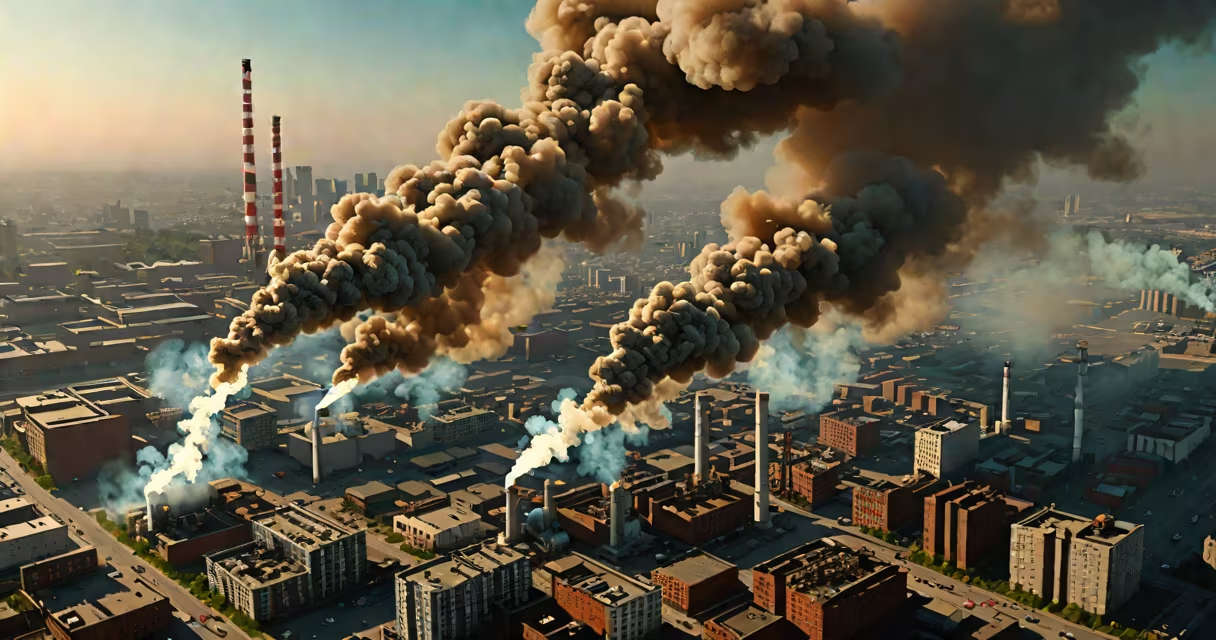
Current events about pollution refer to ongoing environmental incidents involving harmful substances released into air, water, or soil, often with immediate public health risks or long-term ecological consequences. These include chemical spills, wildfires, industrial emissions, plastic waste accumulation, and policy shifts affecting environmental enforcement.
These events are tracked by scientific agencies, government regulators, and media outlets due to their impact on human health, biodiversity, and climate stability. Recent examples include toxic algal blooms in Lake Erie, methane leaks from oil fields in Texas, and severe smog episodes in Delhi during winter months.
Monitoring systems like NASA's Earth Observing System and the World Health Organization's Air Quality Database provide real-time data on pollution levels. When thresholds are exceeded, alerts trigger emergency responses such as school closures, mask distribution, or evacuation orders.
Reports begin with ground sensors, satellite imagery, or citizen observations. For example, in June 2023, residents near the Niger Delta reported a fish kill after a pipeline rupture. Local authorities confirmed the spill using infrared imaging from drones and water samples analyzed by the Nigerian Environmental Standards and Regulations Enforcement Agency (NESREA).
Verification requires cross-referencing data from multiple sources. The U.S. Environmental Protection Agency (EPA) uses its AirNow system to validate air quality readings in real time. When PM2.5 levels exceed 50 micrograms per cubic meter, the EPA issues a health advisory. This threshold was breached in Los Angeles for 12 consecutive days in September 2023 due to nearby wildfires.
False reports can spread quickly. In 2022, a viral video claimed a river in Indonesia was flowing red due to pollution. Fact-checkers from Reuters verified it was actually a natural mineral deposit. Accurate reporting relies on lab analysis, peer-reviewed studies, and official statements from accredited institutions.
Pollution events fall into categories based on medium and cause. The table below outlines major types, their sources, and documented effects.
| Type | Primary Source | Health & Ecological Impact | Recent Example |
|---|---|---|---|
| Air pollution | Vehicle exhaust, power plants, wildfires | Respiratory illness, premature death, crop damage | Delhi's AQI hit 460 in November 2023; schools closed for five days |
| Water contamination | Industrial runoff, sewage overflow, agricultural pesticides | Waterborne diseases, fish die-offs, groundwater poisoning | Flint, Michigan, detected lead levels above 15 ppb in 2023 despite prior remediation |
| Plastic waste | Single-use packaging, fishing gear, microplastics | Marine life ingestion, toxin transfer through food chains | Great Pacific Garbage Patch now spans 1.6 million square kilometers (NASA, 2023) |
| Soil degradation | Heavy metal leaching, improper pesticide use, mining | Reduced crop yields, bioaccumulation in food | Lead contamination in urban gardens in Baltimore reached 200 ppm in 2023 |
Each category involves distinct monitoring tools. Air quality uses particle counters and gas analyzers. Water testing relies on spectrophotometry and microbial culturing. Soil samples are analyzed via atomic absorption spectroscopy to detect heavy metals.
Many assume pollution events are isolated or limited to developing nations. In reality, high-income countries report frequent incidents. The U.S. had 1,200 reported hazardous material releases in 2023, according to the EPA's Toxics Release Inventory (TRI).
Another myth is that "natural" pollution-like volcanic ash or forest fires-is harmless. Volcanic eruptions release sulfur dioxide and fine particulates that contribute to acid rain and respiratory distress. The 2023 eruption of Mauna Loa in Hawaii caused air quality alerts across the Big Island, with PM10 levels exceeding WHO guidelines by 300%.
Some confuse pollution with climate change. While both involve emissions, they differ in scale and mechanism. Climate change results from long-term greenhouse gas buildup (CO₂, CH₄). Pollution refers to acute or chronic exposure to toxins. A coal plant emitting CO₂ contributes to climate change; leaking mercury from a factory causes localized pollution.
In April 2023, a freight train derailment in Germany spilled 12 tons of formaldehyde and benzene into the Rhine River near Ludwigshafen. The incident triggered immediate response protocols under the European Union's Water Structure Directive.
Local authorities deployed floating booms and activated carbon filters within six hours. Water samples showed benzene levels at 18 parts per billion (ppb)-above the EU safety limit of 10 ppb. The German Federal Environment Agency issued a ban on drinking water extraction downstream.
Over 72 hours, 300 fish were found dead in affected zones. Toxicologists from the University of Heidelberg confirmed bioaccumulation in perch populations. The event led to a temporary halt in industrial rail transport along the Rhine corridor and prompted calls for stricter handling of volatile organic compounds.
During this crisis, I observed a local community group using handheld air monitors to track fumes. Their data, shared via a public dashboard, helped verify official reports and exposed delays in initial response. This demonstrated how grassroots monitoring complements institutional oversight.
Trusted sources include the World Health Organization's Global Health Observatory, the U.S. EPA's EnviroFlash service, and the European Environment Agency's Copernicus Atmosphere Monitoring Service. These platforms publish daily summaries, maps, and alerts.
When evaluating a report, check for three elements: the name of the organization issuing the alert, the date of measurement, and the methodology used. A claim without these details lacks credibility.
Understanding current events about pollution requires distinguishing between short-term spikes and systemic failures. A single oil spill may be contained in weeks. But repeated violations by a company indicate deeper regulatory gaps. Tracking both types informs better policy and personal action.