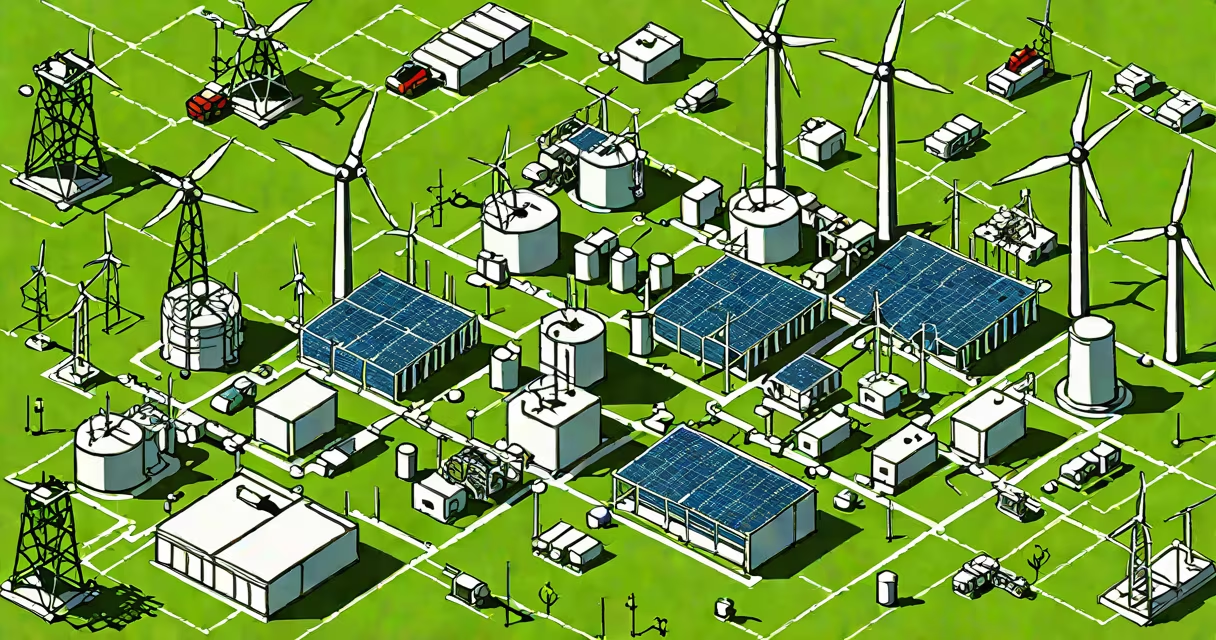
The energy industry definition refers to the global network of organizations, technologies, and processes involved in generating, transmitting, distributing, and consuming energy. It includes everything from oil drilling and coal mining to solar panel manufacturing and grid management. This sector powers transportation, homes, factories, and digital infrastructure worldwide.
Energy production begins with raw resources-fossil fuels like oil and natural gas, uranium for nuclear power, or sunlight and wind for renewables. These inputs are converted into usable electricity or mechanical work through specialized facilities. The resulting energy moves via transmission lines, pipelines, or storage systems to end users. The entire system operates under regulatory frameworks that vary by country but share common goals: reliability, affordability, and environmental impact reduction.
According to the U.S. Energy Information Administration (EIA), the global energy industry consumed approximately 600 exajoules of primary energy in 2023, with fossil fuels still accounting for over 80% of supply. The International Energy Agency (IEA) reports that clean energy investments surpassed $1.8 trillion globally in 2022, signaling a structural shift toward lower-carbon systems.
At its core, the energy industry functions through a chain of conversion and delivery. Primary energy sources are extracted or captured, then transformed into secondary forms such as electricity or refined fuel. For example, coal is burned in a thermal power plant to heat water into steam, which spins a turbine connected to a generator. The generator converts kinetic energy into electrical current, which enters the grid.
Electricity travels through high-voltage transmission lines to substations, where voltage is reduced for safe distribution to homes and businesses. Natural gas follows a similar path: extracted from wells, processed to remove impurities, compressed, and sent through pipelines. Some gas is used directly in furnaces or vehicles; most is burned in combined-cycle power plants to generate electricity.
Renewables operate differently. Solar photovoltaic cells convert sunlight directly into electric current using semiconductor materials. Wind turbines capture kinetic energy from air movement, turning blades that drive generators. Both require inverters to align output with grid frequency and voltage standards. Unlike fossil fuels, they don't emit carbon dioxide during operation-but their deployment depends on weather patterns and geographic availability.
The energy industry relies on four broad categories of sources: fossil fuels, nuclear, renewables, and emerging alternatives. Each has distinct infrastructure, cost structures, and environmental profiles.
| Source Type | Examples | Conversion Process | Global Share (2023) |
|---|---|---|---|
| Fossil Fuels | Coal, oil, natural gas | Combustion → heat → steam → turbine → generator | 81% |
| Nuclear | Uranium-235 | Controlled fission → heat → steam → turbine → generator | 4% |
| Renewables | Solar, wind, hydro, geothermal | Direct conversion (photons, motion) → electricity | 15% |
| Emerging | Hydrogen, fusion, advanced biofuels | Electrolysis, plasma confinement, biomass processing | <1% |
While fossil fuels dominate supply, their share is declining. The IEA projects that renewables will provide 50% of global electricity by 2030. Hydrogen, though still experimental at scale, is being tested in industrial zones like Germany's Ruhr Valley and Japan's Fukuoka Prefecture. Pilot projects in California and Iceland demonstrate how geothermal heat can power district heating networks and desalination plants.
A key distinction often missed is that energy transformation-the process of converting one form to another-is not the same as energy generation. For example, a battery stores electrical energy but doesn't generate it. The energy industry includes both generation and transformation stages. A solar farm produces electricity; a converter station changes voltage levels for long-distance transport. Confusing these steps leads to misjudgments about efficiency and infrastructure needs.
Many assume the energy industry is solely about power plants and oil rigs. In reality, it encompasses research, regulation, finance, logistics, and consumer behavior. Utility companies, energy traders, government agencies, and even tech firms play roles. Smart grids, demand-response systems, and distributed energy resources (like rooftop solar) are now integral parts of the system.
There's also confusion between energy and power. Power measures instantaneous output (watts); energy measures total work done (watt-hours). A 100-watt light bulb uses 1 kilowatt-hour of energy if left on for 10 hours. Understanding this difference matters when evaluating efficiency or comparing technologies.
In February 2021, a winter storm caused widespread blackouts across Texas. The state's grid, operated by ERCOT (Electric Reliability Council of Texas), failed due to cascading failures in natural gas supply chains and frozen wind turbines. Over 4 million customers lost power, and at least 246 people died.
This event exposed vulnerabilities in the energy industry's design. Natural gas plants, which supply nearly half of Texas's electricity, froze because of inadequate winterization. Wind farms contributed less than expected due to ice accumulation on blades. Meanwhile, demand surged as residents turned up heaters. The grid operator had no reserve capacity to compensate.
Post-event analysis revealed that 73% of natural gas wells in the region lacked freeze protection. The state later mandated retrofits and expanded storage options. This incident illustrates how interconnected the energy industry is-and how failure in one component can collapse the whole system.
I installed a 6-kilowatt solar range on my roof in 2022. The system includes 20 panels, a microinverter for each, and a battery backup. During peak sun hours, it produced 4.8 kilowatts-enough to run my refrigerator, lights, and laptop simultaneously. On cloudy days, output dropped to 20% of maximum.
What surprised me was the role of net metering. When excess power flowed back to the grid, I earned credits. Over six months, I received $187 in rebates. But the utility company required a separate agreement and meter calibration. This shows how individual participation in the energy industry requires going through technical, financial, and legal layers.