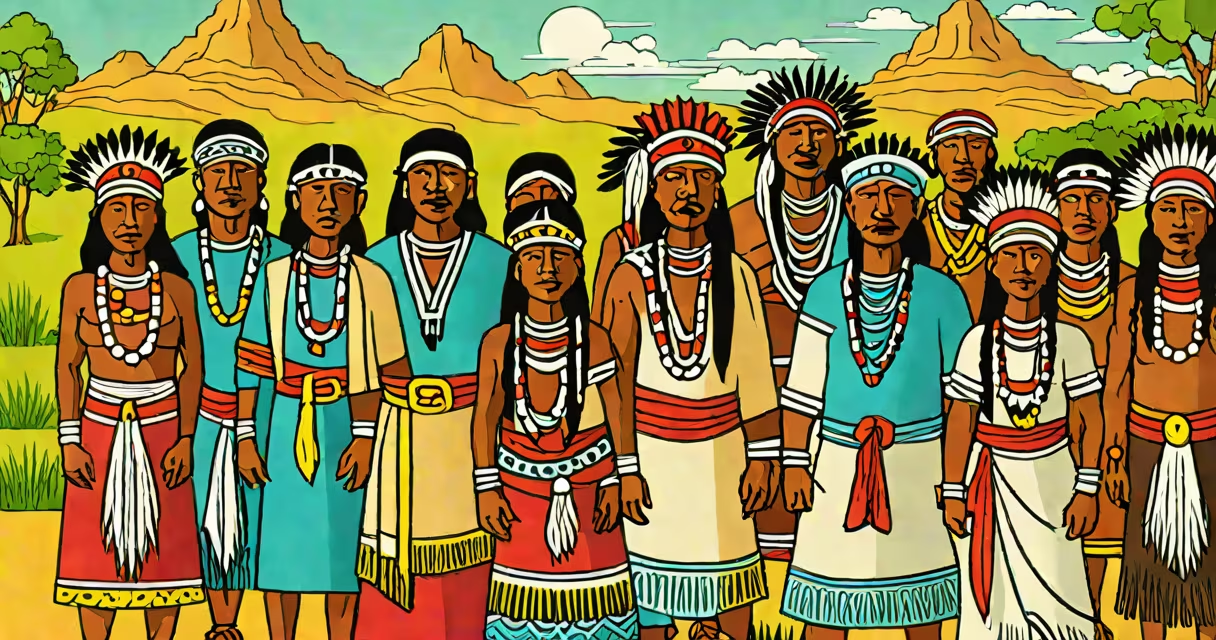
Famous Indigenous people are individuals from Native American, First Nations, Métis, Inuit, Māori, Aboriginal Australian, and other Indigenous communities who have gained public recognition for their contributions to history, culture, politics, science, or the arts. Recognition stems from leadership, innovation, resilience, or influence beyond their communities.
These figures emerge from distinct nations and regions across the globe. Their fame often results from actions that challenge dominant narratives, preserve languages and traditions, or achieve breakthroughs in fields like education, environmental policy, or entertainment. Not all are celebrated during their lifetimes-some gained wider recognition posthumously due to renewed cultural awareness.
Recognition varies by region and time period. In North America, famous Indigenous people include leaders like Sitting Bull and Tecumseh, activists such as Russell Means and Wilma Mankiller, and artists like Sherman Alexie and Taika Waititi. In Australia, figures like Vincent Lingiari and Ruby Hunter are widely acknowledged. In Canada, Truth and Reconciliation Commission chair Phil Fontaine and filmmaker Alanis Obomsawin hold national prominence.
Fame among Indigenous people often arises through sustained advocacy, cultural preservation, or public visibility in media. Unlike celebrity culture driven by social media, many famous Indigenous people earned recognition through decades of work in community organizing, treaty negotiations, or artistic expression.
For example, Wilma Mankiller became the first female Principal Chief of the Cherokee Nation in 1985. Her leadership in expanding healthcare access, housing programs, and tribal sovereignty efforts brought national attention. She was later awarded the Presidential Medal of Freedom in 2010, cementing her status as a nationally recognized figure.
Some gain fame through tragedy or legacy. The life of Leonard Peltier, a member of the Oglala Lakota tribe, became emblematic of U.S. government conflict with Indigenous rights after his 1976 conviction in the deaths of two FBI agents. His case drew global support and remains a touchstone in discussions about justice and Indigenous sovereignty.
Famous Indigenous people fall into several categories based on their impact:
| Type | Examples | Key Contribution |
|---|---|---|
| Political Leaders | Wilma Mankiller, Phil Fontaine, Deb Haaland | Advocated for tribal governance, land rights, and federal policy reform |
| Activists & Protesters | Russell Means, Winona LaDuke, Autumn Peltier | Challenged environmental degradation, fought for treaty rights |
| Cultural Artists | Shirley Ann Jackson, Sherman Alexie, Taika Waititi | Reframed Indigenous stories in literature, film, and science |
| Historical Figures | Sitting Bull, Tecumseh, Crazy Horse | Resisted colonial expansion; symbols of resistance and identity |
Many famous Indigenous people are not household names globally. Their visibility often depends on geography, language, and access to media platforms. For instance, Canadian journalist and activist Leanne Betasamosake Simpson, while influential in academic and activist circles, remains less known outside Indigenous studies and environmental networks.
A common misconception is that fame equates to universal acclaim. Some famous Indigenous people face criticism within their own communities for perceived assimilation, political compromise, or media alignment. This reflects complex internal debates about representation and authenticity.
One frequent error is conflating "Indigenous" with "Native American." While both terms refer to original peoples of the Americas, "Indigenous" is a global term encompassing First Nations in Canada, Māori in Aotearoa (New Zealand), Aboriginal Australians, and others. Using "Native American" exclusively limits recognition to U.S.-based groups.
Another misstep is assuming all famous Indigenous people are from the past. Contemporary figures like Autumn Peltier, a 17-year-old Anishinaabe water protector from Ontario, have gained international attention for climate activism. She addressed the United Nations in 2018 and continues to speak at global forums, proving that leadership and influence are ongoing, not historical relics.
Some assume that being famous means being wealthy or widely celebrated in mainstream media. Many famous Indigenous people live modestly and operate outside commercial systems. For example, activist and scholar Leanne Betasamosake Simpson lives on her family's territory in northern Ontario and publishes through independent presses rather than major publishers.
Winona LaDuke, a member of the Anishinaabe nation, exemplifies how sustained grassroots work leads to lasting fame. Born in 1959, she co-founded the White Earth Land Recovery Project in 1981 to reclaim ancestral lands lost through forced allotment under the Dawes Act.
She ran as the Green Party's vice-presidential candidate in 1996 and 2000, advocating for environmental sustainability and Indigenous self-determination. Her book *All Our Relations* (1999) became a foundational text in Indigenous environmentalism.
LaDuke's influence extends beyond politics. She helped establish the Oak Creek Institute, which trains Indigenous youth in sustainable agriculture and renewable energy. Her work demonstrates that fame can stem from long-term commitment, not viral moments.
In 2019, I attended a gathering at the National Museum of the American Indian in Washington, D.C., where a panel included several living famous Indigenous people. One speaker, Dr. Mary Crow Dog, daughter of Leonard Crow Dog, spoke about the 1973 Wounded Knee occupation. Her quiet authority and precise recall of events-such as the number of days the siege lasted (71)-revealed how personal memory anchors historical significance. Her presence reminded me that fame among Indigenous people often grows from lived experience, not performance.
Understanding famous Indigenous people corrects historical omissions. According to the National Congress of American Indians, only 14% of U.S. high school curricula include accurate content on Native history. When students learn about Sitting Bull or Wilma Mankiller, they encounter counter-narratives to colonization myths.
As noted by the Smithsonian Institution, "Indigenous perspectives are not footnotes-they are central to understanding North American history." Recognizing famous Indigenous people fosters respect for ongoing cultures, not just past ones.
Famous Indigenous people are not a monolith. They represent diverse nations, languages, and experiences. Their recognition reflects both individual achievement and collective resilience. True understanding requires moving beyond stereotypes and honoring the complexity of their legacies.