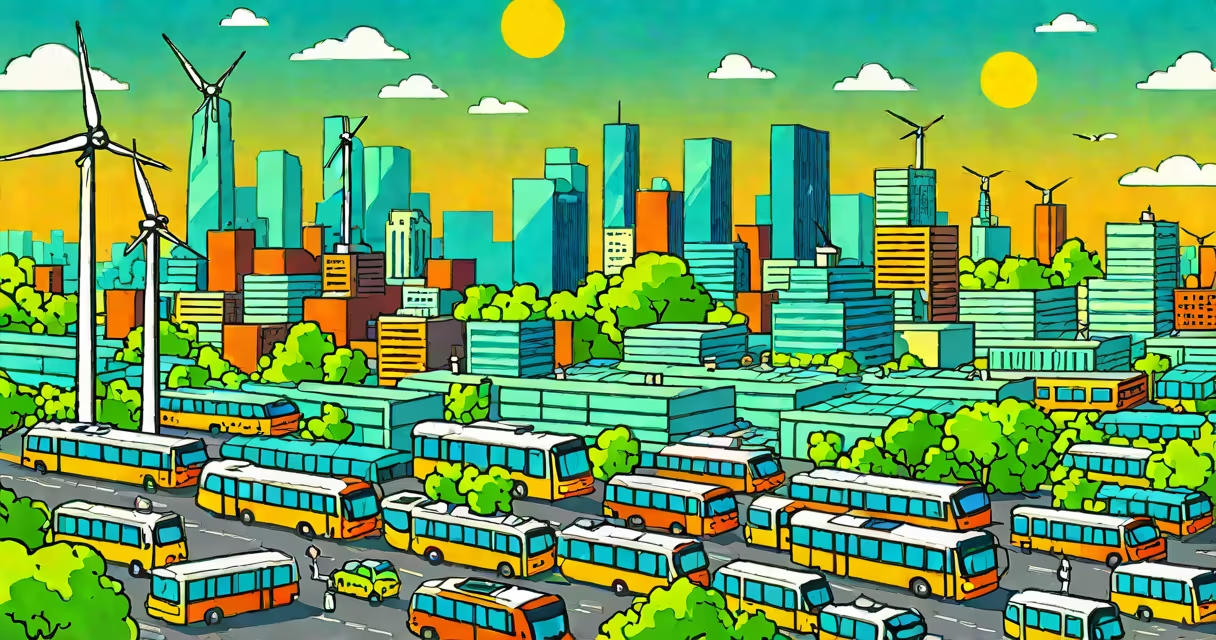
How can we get rid of air pollution? Effective strategies include transitioning to renewable energy, enforcing strict emissions standards, expanding green spaces, and adopting clean transportation systems. These measures reduce harmful pollutants like nitrogen oxides, particulate matter, and volatile organic compounds in urban and industrial areas.
Air pollution stems from vehicles, power plants, industrial processes, and residential heating. The World Health Organization (WHO) identifies outdoor air pollution as responsible for 4.2 million premature deaths annually. Indoor air pollution adds another 3.2 million deaths each year, primarily due to cooking with solid fuels in poorly ventilated homes. Reducing exposure requires systemic changes beyond individual behavior.
Key pollutants include PM2.5 (fine particulate matter), NO₂ (nitrogen dioxide), SO₂ (sulfur dioxide), and ground-level ozone. PM2.5 penetrates deep into lungs and bloodstream, increasing risks of heart disease, stroke, and respiratory illness. A 2021 study published in *The Lancet Planetary Health* linked long-term exposure to PM2.5 with reduced life expectancy by up to 2.2 years in high-impact regions.
Reducing air pollution demands coordinated action across sectors. The most effective approaches focus on eliminating emission sources at their origin rather than treating symptoms.
Switching from fossil fuels to renewable energy sources like wind and solar eliminates major contributors to sulfur dioxide and nitrogen oxide emissions. In 2022, the U.S. Environmental Protection Agency (EPA) reported that replacing coal-fired power plants with solar installations reduced regional PM2.5 levels by 34% within five years. Germany's Energiewende policy, which phased out nuclear and coal power between 2010 and 2020, cut national CO₂ emissions by 42% while maintaining grid stability.
Transportation accounts for nearly 25% of global CO₂ emissions. Electrifying public transit and incentivizing zero-emission vehicles lower urban air pollution. London's Ultra Low Emission Zone (ULEZ), expanded in 2021, reduced NO₂ concentrations by 44% in central zones. Electric buses in Shenzhen, China, replaced 16,000 diesel buses by 2020, resulting in a 60% drop in fleet-related PM2.5 emissions.
Control methods fall into three categories: source elimination, emission capture, and atmospheric removal. Not all are equally effective or scalable.
| Method Type | How It Works | Example Application | Effectiveness (PM2.5 Reduction) |
|---|---|---|---|
| Source Elimination | Removes pollutant at origin through fuel or process change | Replacing coal boilers with biomass heaters in Delhi | Up to 70% |
| Emission Capture | Traps pollutants before release using filters or scrubbers | Flue gas desulfurization in steel mills | 85-95% |
| Atmospheric Removal | Uses engineered systems to extract pollutants from air | Direct air capture plants in Iceland | Currently limited to 4,000 tons/year globally |
Source elimination delivers the highest net benefit. For example, replacing wood-burning stoves with electric cookstoves in rural Nepal reduced household PM2.5 levels from 300 µg/m³ to under 20 µg/m³-levels below WHO safety thresholds. In contrast, atmospheric removal technologies remain experimental and energy-intensive, capturing less than 0.1% of global emissions annually.
Many assume air pollution is purely a problem of developing nations. In reality, advanced economies face persistent challenges. The U.S. EPA found that 12% of Americans live in counties exceeding the National Ambient Air Quality Standard for ozone. California's Central Valley consistently ranks among the worst U.S. regions for PM2.5, despite stringent regulations.
Another myth is that personal actions like recycling or using reusable bags drastically reduce air pollution. While beneficial for waste management, these behaviors have negligible impact on airborne pollutants. A 2023 analysis by the University of Michigan showed that switching to a reusable shopping bag reduces carbon footprint by 0.5 kg CO₂ equivalent per year-insignificant compared to vehicle or industrial emissions.
One overlooked factor is the rebound effect: efficiency gains can increase consumption. When cleaner engines were introduced in the 1990s, fuel economy improved by 25%, but vehicle miles traveled rose by 40%. This offset gains in emissions reduction. Policies must pair efficiency improvements with demand-side controls such as congestion pricing or fuel taxes.
In the 1990s, Mexico City had one of the world's worst air pollution records. Smog levels exceeded WHO guidelines by 10 times. By 2000, the city implemented a multi-pronged strategy: banning older vehicles, mandating catalytic converters, shifting to low-sulfur fuels, and creating a network of bike lanes and metro extensions.
Results were measurable. Between 1990 and 2010, annual average PM10 levels dropped from 180 µg/m³ to 50 µg/m³. Ozone concentrations fell by 60%. The program required political will, cross-agency coordination, and public investment-but proved that systemic reform works.
I witnessed the transformation firsthand during a 2018 visit. On a clear morning, I walked through Chapultepec Park and saw children playing without masks-something unheard of in the early 2000s. The city's air quality index improved from "unhealthy" to "moderate" in under a decade.
Individual choices matter, but they cannot replace structural change. A 2022 report from the Intergovernmental Panel on Climate Change (IPCC) concluded that even if every household in the U.S. adopted energy-efficient appliances, the national emissions reduction would be less than 3%-far below what's needed to meet climate targets.
Systemic interventions deliver scale. Replacing a single coal plant with a solar farm can eliminate 1 million tons of CO₂ annually. Expanding a city's bus rapid transit system can reduce traffic emissions by 15-20% across corridors. These outcomes require funding, regulation, and long-term planning-not just lifestyle adjustments.
For lasting progress, governments must enforce emission caps, subsidize clean technologies, and prioritize public transit. Cities like Copenhagen and Oslo have set net-zero goals for transportation by 2030 through integrated policies. Oslo's congestion charge reduced traffic volume by 18% and lowered NO₂ levels by 12% in central districts.
Understanding how we can get rid of air pollution begins with rejecting the idea that change must come from consumers alone. Real progress happens when cities invest in infrastructure, industries adopt cleaner processes, and policies enforce accountability. The tools exist. What remains is political courage and sustained commitment.