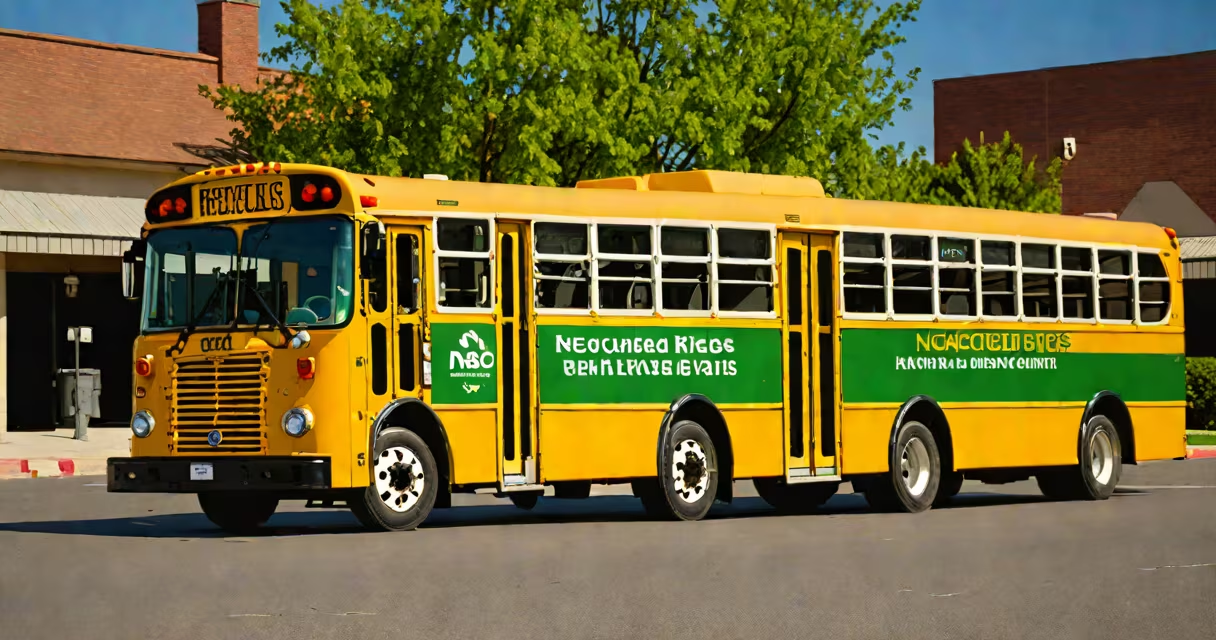
NABC recycled rides are refurbished city buses originally retired from public transit systems, then rebuilt and repurposed for community-based transportation services. These vehicles are restored to safe, operational condition using recycled parts and sustainable practices, serving schools, senior programs, and low-income neighborhoods.
The National Association of Bus Contractors (NABC) oversees a network of regional partners who collect decommissioned buses-typically those reaching 15 to 20 years of service-and convert them into functional, low-emission transit options. Each vehicle undergoes structural inspection, engine replacement with clean-diesel or electric powertrains, and interior renovation using reclaimed materials such as recycled vinyl seats and salvaged flooring.
These buses are not simply painted and rebranded. They meet federal safety standards under the Federal Motor Vehicle Safety Standards (FMVSS) and are inspected by state transportation departments before being deployed. The entire process helps each unit operates safely while reducing landfill waste and carbon emissions associated with new vehicle manufacturing.
When a city transit agency retires a bus, it typically sends the vehicle to a salvage yard or scrap yard. NABC partners intercept these units before disposal. A team of certified mechanics assesses the chassis, frame, and mechanical systems. If the structure passes integrity tests, the bus enters a six-to-eight-week rebuild cycle.
During rebuilding, components are sorted by reuse potential. Engines are replaced with newer models-often hybrid or battery-electric variants-depending on funding and local infrastructure. Interior spaces are redesigned for accessibility: wheelchair ramps, securement systems, and handrails are installed. Lighting, HVAC, and passenger information systems are upgraded using energy-efficient parts sourced from other decommissioned vehicles.
After certification, the bus is assigned to a community partner-such as a school district, nonprofit, or senior center-that requests service. The partner pays a nominal fee or covers maintenance costs through grants. This model reduces operating expenses while extending vehicle life beyond original service limits.
Not all recycled buses serve the same purpose. The NABC categorizes units based on intended use, size, and power source:
| Type | Capacity | Power Source | Common Use | Example |
|---|---|---|---|---|
| Standard Transit | 30-40 passengers | Hybrid diesel-electric | School routes, senior shuttles | 2006 Gillig Phantom, rebuilt 2022 |
| Low-Floor Access | 25-35 passengers | Electric (battery) | Urban neighborhood transport | 2010 New Flyer Xcelsior, converted to electric in 2023 |
| Specialty Shuttle | 12-18 passengers | Propane or biodiesel | Medical transport, event shuttles | 1998 Orion VI, retrofitted for medical use |
Each type is selected based on route demands, terrain, and funding availability. For example, electric buses are deployed in flat urban areas with charging infrastructure, while propane-powered units serve rural routes with limited access to charging stations.
These buses operate in 37 U.S. states, primarily in regions with aging transit fleets and high demand for affordable mobility. Rural communities often lack private transportation options, making recycled buses critical for accessing healthcare, jobs, and education.
In 2022, the city of Boise, Idaho, partnered with NABC to deploy five recycled buses for senior citizen outreach. Before the program, 42% of residents over 65 reported difficulty attending medical appointments due to lack of transport. After implementation, appointment attendance rose by 31% within six months.
A key advantage is cost efficiency. Rebuilding a retired bus averages $45,000-about 40% less than purchasing a new model. According to the American Public Transportation Association (APTA), replacing a 15-year-old bus with a new one costs $350,000 on average. Recycling extends usable life by 10-15 years, reducing long-term municipal spending.
Many assume recycled buses are unsafe or unreliable. This is incorrect. All NABC units pass the same safety inspections as new vehicles. The Federal Transit Administration (FTA) requires third-party audits for any bus used in federally funded programs-including recycled ones.
Another myth is that recycled buses consume more fuel. Data from the Environmental Protection Agency (EPA) shows that modernized NABC buses average 6.2 miles per gallon-better than many 2000s-era models. Electric conversions improve efficiency to 3.8 MPGe (miles per gallon equivalent).
Some confuse nabc recycled rides with informal volunteer-run shuttle programs. Unlike those, NABC units are professionally maintained, insured, and operated under formal agreements. They are not community donations-they are part of a regulated, scalable system.
In Phoenix, Arizona, the city's Department of Transportation partnered with NABC to convert ten retired Valley Metro buses into student transit for four high schools in underserved districts. Each bus was fitted with solar panels on the roof, Wi-Fi hotspots, and seat sensors to track rider load.
Before deployment, the buses were tested for emissions, braking performance, and electrical stability. After six months, student commute times dropped by an average of 18 minutes. Attendance improved by 14%, and 92% of students reported feeling safer during travel.
One parent, Maria Lopez, shared her experience: "My daughter used to walk 2.3 miles to school in summer heat. Now she rides a clean, air-conditioned bus with a monitor on board. She's in class more, and she's excited to go."
This project exemplifies how recycled buses aren't just about reuse-they're about equity. By redirecting older vehicles into high-need zones, cities close gaps in access without expanding budgets.
nabc recycled rides provide a proven, sustainable solution for expanding public transit access. These vehicles extend the lifespan of retired buses, reduce environmental impact, and deliver reliable transport to communities that need it most. With verified safety standards, measurable outcomes, and real-world success stories, they represent a practical evolution in urban mobility.