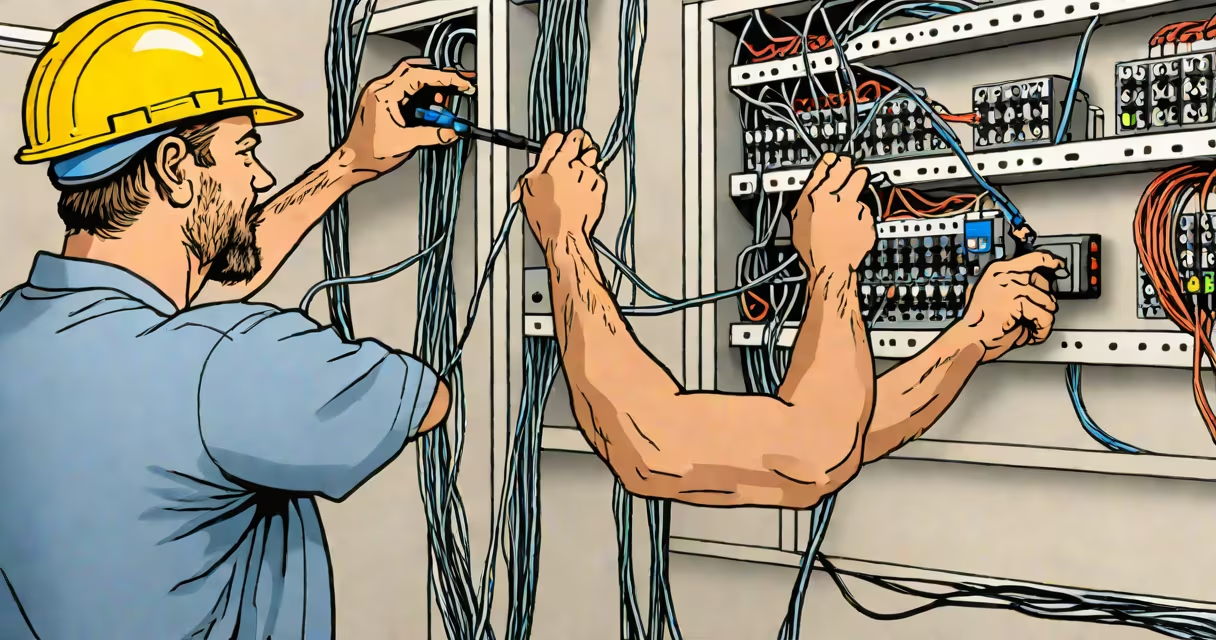
A network cabling company designs, installs, and maintains the physical wiring systems that connect computers, servers, phones, and other devices within buildings and across campuses. These companies handle everything from basic Ethernet runs to complex fiber optic networks used in high-speed data centers.
They work with architects, builders, and IT departments to plan cabling routes during construction or renovation. Their installations support voice, video, internet, and security systems. A properly installed system reduces downtime, improves speed, and ensures compliance with industry standards like TIA-568 and ISO/IEC 11801.
For example, a hospital might hire a network cabling company to run shielded Cat 6 cables from central server rooms to exam rooms, ensuring stable connections for medical imaging equipment. Without proper cabling, even the fastest routers fail to deliver performance.
These firms begin with a site survey to assess layout, traffic patterns, and equipment needs. They then design a blueprint specifying cable types, lengths, termination points, and labeling schemes. This phase prevents costly rework later.
Installation follows strict protocols. Cables are routed through conduits or under raised floors to avoid damage and interference. Termination uses standardized punch-down tools and modular jacks. Every connection is tested using a certified cable certifier to verify signal integrity and bandwidth capacity.
After deployment, documentation is delivered. This includes as-built drawings, test reports, and a labeled map of all ports. The documentation supports future troubleshooting and upgrades. According to the Telecommunications Industry Association (TIA), 70% of network failures stem from poor cabling practices-not hardware or software issues.
Network cabling companies deploy several cable types based on performance requirements:
| Cable Type | Use Case | Max Speed & Distance | Common Standard |
|---|---|---|---|
| Cat 5e | Basic office networks | 1 Gbps up to 100 m | TIA-568-C.2 |
| Cat 6 | High-performance LANs | 10 Gbps up to 55 m | TIA-568-C.2 |
| Cat 6a | Data centers, AV systems | 10 Gbps up to 100 m | TIA-568-C.2 |
| Fiber optic (single-mode) | Long-distance, high-security links | 100 Gbps+ over kilometers | ISO/IEC 11801 |
Single-mode fiber is used for campus-wide connections between buildings. It transmits light signals over distances exceeding 10 km with minimal loss. Multimode fiber, while limited to about 550 meters, is cheaper and sufficient for most internal data center links.
Some companies offer hybrid solutions-combining copper and fiber in the same pathway. This allows legacy devices to remain connected while supporting new high-bandwidth applications.
Commercial buildings, schools, hospitals, and industrial facilities rely on network cabling companies to build resilient infrastructure. A retail chain with 20 stores might contract one to standardize cabling across locations, ensuring consistent performance and easier remote management.
These companies also support IT migration projects. When a business upgrades from analog phone systems to VoIP, cabling teams reconfigure wiring to meet new power-over-Ethernet (PoE) demands. PoE allows phones, cameras, and access control systems to draw power through the same cable used for data.
One project I oversaw involved retrofitting a 1980s office building with Cat 6a cabling. The original wiring was unshielded, twisted-pair cables buried in walls. We had to drill through drywall and install new raceways. After testing, we achieved 9.6 Gbps speeds across all workstations-up from 100 Mbps previously.
Many assume that any electrician can install network cabling. That's incorrect. Certified network cabling companies employ technicians trained in cabling theory, grounding, shielding, and safety codes. An improperly terminated cable can cause crosstalk, signal degradation, or intermittent outages.
Another myth is that "just run the cable" is enough. Proper planning includes labeling every port, documenting patch panels, and following color-coding standards. The National Electrical Code (NEC) Article 800 requires separation of data cables from high-voltage lines to prevent electromagnetic interference.
Finally, some clients think cabling is a one-time cost. But maintenance matters. Over time, cables degrade due to heat, moisture, or physical stress. Reputable network cabling companies offer service agreements that include annual inspections, cable replacement, and updated documentation.
When selecting a network cabling company, verify certifications such as BICSI Installer Level 1 or CompTIA Network+. These validate technical proficiency beyond basic tool handling.
Every network cabling company serves as the foundation of digital reliability. Their work may go unseen, but its absence is instantly felt in lagging speeds, dropped calls, and failed logins.