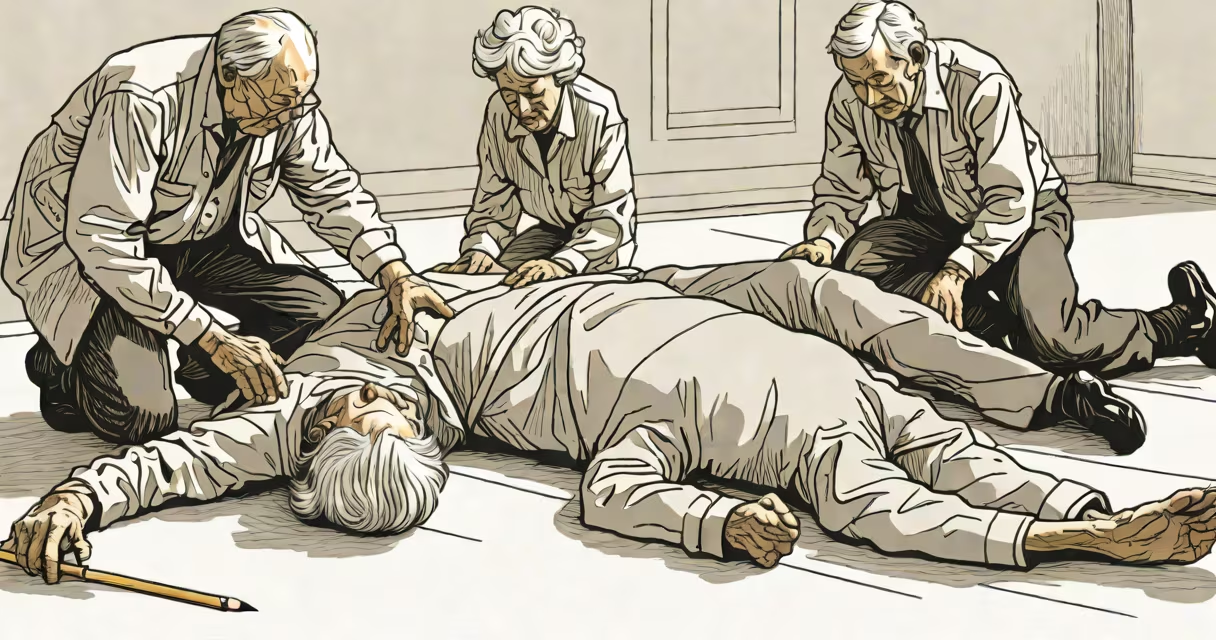
Old people fainting refers to transient loss of consciousness due to reduced blood flow to the brain, commonly caused by orthostatic hypotension, heart rhythm disorders, or medication side effects. Fainting in older adults is not normal and often signals an underlying health issue requiring evaluation.
Fainting, medically known as syncope, occurs when the brain doesn't receive enough oxygen-rich blood. In older adults, this can happen during simple actions like standing up quickly. The body's ability to regulate blood pressure declines with age, making sudden drops more likely. A 2021 study in Journal of the American Geriatrics Society found that 1 in 6 older adults who visit emergency departments report a recent fainting episode, with half linked to cardiovascular issues.
Common triggers include dehydration, prolonged standing, sudden changes in posture, or medications such as blood pressure drugs, antidepressants, or sedatives. Some cases stem from arrhythmias-irregular heartbeats-that disrupt blood flow. Others arise from structural heart disease, such as aortic stenosis or cardiomyopathy. The risk increases after age 65, especially in those with multiple chronic conditions.
Fainting results from a temporary drop in cerebral perfusion. The autonomic nervous system normally adjusts heart rate and blood vessel tone to maintain stable blood pressure when moving from lying to standing. In older adults, this reflex slows or fails. As a result, blood pools in the legs, reducing return to the heart and lowering cardiac output. The brain senses low pressure and triggers unconsciousness to restore blood flow by lying down.
This process is called neurocardiogenic syncope when it involves a misfiring of the vagus nerve. However, in older adults, it's more likely to be due to impaired baroreceptor sensitivity-the body's natural mechanism for detecting blood pressure changes. Research from the National Institutes of Health shows that baroreceptor function declines by about 30% between ages 60 and 80, increasing susceptibility to orthostatic hypotension.
A key warning sign is dizziness upon standing. If an older adult experiences lightheadedness within 30 seconds of rising, it may indicate a significant drop in systolic blood pressure-defined as a fall of 20 mm Hg or more. This condition affects nearly 30% of community-dwelling adults over 70, according to the American Heart Association.
Old people fainting can be categorized by mechanism. The most frequent types in seniors are:
| Type | Primary Cause | Prevalence in Seniors | Red Flags |
|---|---|---|---|
| Orthostatic hypotension | Impaired blood pressure regulation on standing | ~25% | Dizziness within 3 minutes of standing; history of falls |
| Cardiac syncope | Heart rhythm or structural problems | ~15% | Fainting during exertion; family history of sudden death |
| Neurological syncope | Seizures or stroke-like events | ~5% | Post-faint confusion; limb weakness; seizure activity |
| Medication-induced | Side effects of antihypertensives, diuretics, or antidepressants | ~20% | Fainting shortly after taking new meds; dose-dependent |
Orthostatic hypotension is the most common cause in older adults. It occurs when blood pressure drops too much upon standing. A 2022 review in Clinical Interventions in Aging reported that 38% of hospitalized seniors had orthostatic hypotension documented during admission. The condition is often underdiagnosed because symptoms are subtle or attributed to aging.
Cardiac syncope, while less frequent, carries higher risk. It includes arrhythmias like atrial fibrillation or ventricular tachycardia. These can lead to sudden collapse and require urgent evaluation. The European Society of Cardiology notes that up to 40% of unexplained fainting episodes in patients over 65 are due to cardiac causes, many of which are treatable.
One non-obvious distinction: fainting from neurological causes (like seizures) often presents with post-ictal confusion, tongue biting, or incontinence-signs absent in true vasovagal or orthostatic episodes. Misdiagnosis is common. A 2020 study in Neurology found that 1 in 4 older adults initially labeled as "fainting" were later diagnosed with epilepsy.
Any fainting episode in someone over 60 warrants prompt medical evaluation. The American College of Cardiology recommends assessment within 72 hours if the event occurred during physical activity, was associated with chest pain, or involved palpitations. Fainting while lying down or during sleep raises concern for arrhythmia or structural heart disease.
I once observed a 74-year-old man in a primary care clinic who fainted while brushing his teeth. He had no prior history of fainting, but his blood pressure dropped from 130/80 mm Hg lying down to 90/60 mm Hg standing. After testing, he was diagnosed with severe orthostatic hypotension due to a combination of lisinopril and fludrocortisone. Adjusting his medication and adding compression stockings resolved the issue.
Red flags include: fainting during exercise, family history of sudden cardiac death, palpitations before losing consciousness, or recovery taking longer than five minutes. These suggest potentially life-threatening causes and require immediate cardiology referral.
Many assume fainting in older adults is simply "age-related." That's incorrect. While aging increases risk, fainting is not a normal part of getting older. It's a symptom, not a diagnosis. Ignoring it leads to preventable injuries-about 30% of older adults who faint sustain fractures, particularly hip fractures, from falling.
Another misconception is that fainting always involves a dramatic collapse. In reality, many episodes are subtle-brief dizziness, blurred vision, or muscle weakness-before consciousness fades. These "near-fainting" events still require attention.
Some believe hydration and salt intake can prevent all fainting. While maintaining fluid balance helps, it won't correct underlying cardiac or neurological issues. Over-reliance on home remedies delays diagnosis and treatment.
Understanding the root cause of old people fainting is essential. Early intervention prevents injury, improves quality of life, and identifies treatable conditions. If you or a loved one experiences fainting, consult a healthcare provider promptly-not to wait for a second episode.
Old people fainting is not inevitable. With proper screening and management, most cases are preventable or treatable. Recognizing the signs early ensures timely care and better outcomes.