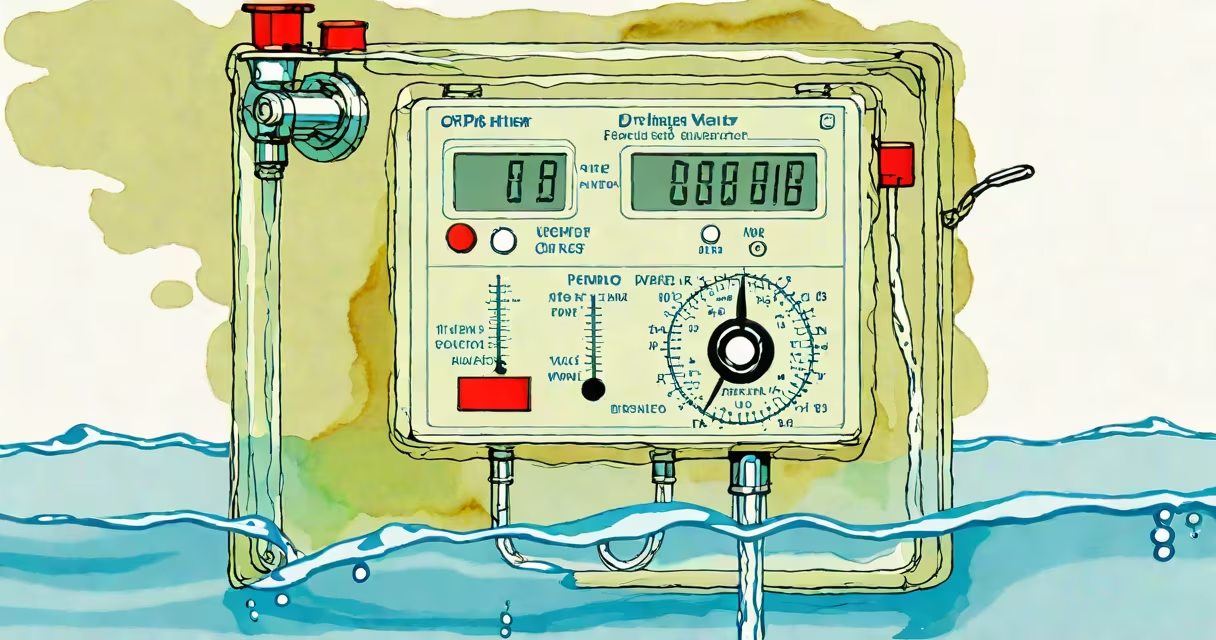
An ORP meter for drinking water measures oxidation-reduction potential (ORP), a direct indicator of a water sample's ability to oxidize or reduce contaminants. It provides a numerical reading in millivolts (mV) that reflects the water's oxidative capacity, helping determine whether it can neutralize pathogens, chlorine residuals, or dissolved pollutants.
ORP meters work by using a platinum or gold electrode that detects electron transfer between the water and the probe. When electrons flow from the water to the electrode (oxidation), the meter registers a positive mV value. When electrons move from the electrode to the water (reduction), it shows negative values. The higher the positive reading, the greater the water's oxidizing power.
For drinking water, ORP readings above +650 mV typically indicate strong disinfectant activity-common in chlorinated municipal supplies. Readings below +200 mV suggest reduced oxidative capacity, which may signal contamination or degraded treatment. A stable reading around +400 to +600 mV is ideal for safe, treated water.
ORP meters do not measure specific substances like chlorine or bacteria. Instead, they detect the redox state-the balance between oxidation and reduction reactions-in the water. This makes them useful for assessing the effectiveness of disinfection processes, especially those relying on oxidants like chlorine, ozone, or hydrogen peroxide.
The sensor responds to free radicals, dissolved oxygen, and oxidizing agents. For example, in a well-maintained municipal system, residual chlorine raises ORP levels. If ORP drops unexpectedly, it may indicate microbial regrowth or failure in the disinfection chain. This is why facilities monitor ORP continuously alongside chlorine levels.
A real-world example: A public swimming pool uses an ORP meter to verify sanitizer efficacy. Even if chlorine levels appear normal, low ORP signals poor disinfection. Operators adjust chemical dosing based on ORP, not just concentration, because ORP reflects actual biological kill capability.
ORP meters come in handheld, portable, and fixed-installation models. Handheld units are common for field testing, while permanent sensors integrate into water treatment systems.
| Type | Use Case | Typical Range (mV) | Accuracy |
|---|---|---|---|
| Handheld | Home testing, field checks | −200 to +1000 | ±10 mV |
| Fixed Probe | Municipal plants, industrial systems | −300 to +800 | ±5 mV |
| Lab-grade | Research, regulatory compliance | −400 to +1200 | ±2 mV |
Most consumer-grade ORP meters cost $50-$150 and require calibration with standard solutions (e.g., 0 mV and +100 mV buffers). Calibration ensures accuracy-without it, readings can drift by ±50 mV or more.
One non-obvious fact: ORP readings are temperature-dependent. Most meters auto-compensate, but readings taken at 10°C differ from those at 30°C. Always check the device's temperature compensation range. According to the American Water Works Association (AWWA), uncorrected temperature variance can lead to misinterpretation of water quality.
ORP meters are often mistaken for pH meters. While both use electrodes, pH measures hydrogen ion concentration (acidity), whereas ORP measures electron transfer potential. A water sample can have a neutral pH (7.0) but still have high ORP due to strong oxidizers like ozone.
Another confusion: ORP doesn't confirm the absence of pathogens. High ORP indicates disinfection strength, but it cannot detect viruses, heavy metals, or organic toxins. For example, trihalomethanes in drinking water-byproducts formed when chlorine reacts with organic matter-do not affect ORP. These compounds require separate testing via gas chromatography.
I once tested a home reverse osmosis system with an ORP meter. The feed water showed +520 mV (good), but post-filtration readings dropped to +280 mV. The drop wasn't due to loss of disinfectant-it was because RO membranes remove ions needed for electron transfer. The system was working correctly, but the ORP reading misled me until I understood the role of ion availability.
ORP is a rapid, real-time proxy for disinfection efficiency. Regulatory bodies like the U.S. Environmental Protection Agency (EPA) recognize ORP as a supplementary metric in water treatment validation. While not a standalone standard, it supports decisions on chemical dosing and system maintenance.
For households, an ORP meter helps verify the performance of point-of-use filters or UV systems. After installing a new filter, measuring ORP before and after can show whether the unit maintains oxidative capacity. A consistent drop suggests clogging or biofilm formation.
When choosing an ORP meter for drinking water, prioritize models with automatic temperature compensation and NIST-traceable calibration. Avoid devices marketed as "health indicators" or "alkaline water testers"-those lack scientific basis and often misrepresent ORP's purpose.
For deeper insights into water quality, consider testing for trihalomethanes in drinking water, especially in older plumbing systems. These carcinogenic byproducts form during chlorination and are invisible to ORP meters. Combining ORP with targeted contaminant testing gives a complete picture of safety.
Understanding your ORP meter for drinking water improves confidence in water safety. It's not a replacement for lab analysis, but it's a practical, immediate check on oxidative strength-especially useful in homes with private wells or aging infrastructure.