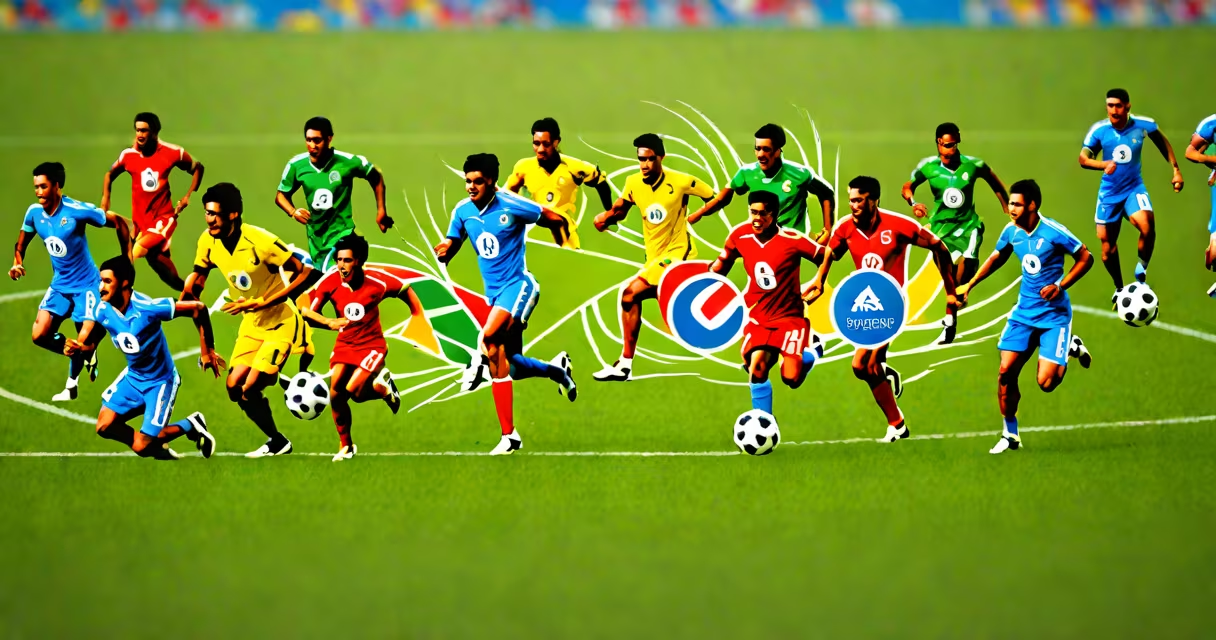
The South American Games are a biennial multi-sport competition organized by the South American Sports Organization (ODESUR), featuring athletes from 15 member nations across South America. The event includes over 30 sports and serves as a regional qualifier for the Pan American Games and Olympic teams.
Hosted every two years since 1986, the South American Games are governed by ODESUR, which oversees continental sports policy and coordinates regional events. Member countries include Argentina, Brazil, Colombia, Chile, Ecuador, Peru, Venezuela, Uruguay, Paraguay, Bolivia, Guyana, Suriname, French Guiana, and the Falkland Islands (as a guest participant). The competition spans 14 to 21 days and typically features 3,000 to 4,000 athletes competing in disciplines ranging from athletics and swimming to gymnastics and combat sports.
Unlike the Olympics, which are held every four years, the South American Games occur annually in even-numbered years. This schedule allows for consistent development of athletic talent across the continent and provides a platform for emerging athletes to gain international exposure. The event is not part of the Olympic program but plays a critical role in identifying athletes who may qualify for the Pan American Games and, the Summer Olympics.
Each participating nation selects athletes based on national trials and rankings. Competitors must meet minimum performance standards set by ODESUR and their respective national federations. Events are structured around a points system, with medals awarded in individual and team categories. The host country often hosts additional demonstration sports not included in the official program.
Medal counts are tracked by ODESUR and published on the official website. Countries earn points based on placements: gold = 7 points, silver = 5, bronze = 3, and fourth through eighth place = 1 point. The medal tally determines the top-performing nation, though no formal ranking system exists beyond the cumulative score.
For example, at the 2022 edition held in Asunción, Paraguay, Brazil topped the medal table with 128 total medals, including 48 golds. Argentina came second with 102 medals, and Colombia third with 75. These results were used by national Olympic committees to select athletes for the 2023 Pan American Games in Santiago, Chile.
The South American Games feature multiple categories of competition:
| Type | Scope | Examples | Frequency |
|---|---|---|---|
| Senior | Open to athletes aged 18+ | Track and field, swimming, football | Biennial |
| Youth | Under-18 athletes | Artistic gymnastics, judo, taekwondo | Biennial (alternate cycle) |
| Para-sports | Disability-competitive events | Wheelchair racing, goalball, para-swimming | Biennial |
While the senior competition is the most prominent, youth and para-sports events have grown in prominence since 2010. The inclusion of para-sports was formalized in 2014, aligning with the International Paralympic Committee's global standards. These events are hosted alongside the main competition and share facilities, ensuring equal access and visibility.
A common misconception is that the South American Games are equivalent to the Pan American Games. They are not. The Pan American Games involve nations from North, Central, and South America, plus the Caribbean, and are held every four years. The South American Games focus exclusively on South American nations and serve as a preliminary stage for qualification. For example, Brazil's men's football team qualified for the 2024 Paris Olympics via the South American Games, while the U.S. and Canada earned spots through the CONCACAF qualifiers.
Host cities are selected through a bidding process managed by ODESUR. The selection considers infrastructure readiness, security, transportation access, and environmental impact. Hosts must provide venues meeting International Olympic Committee (IOC) standards for major events. Past venues include Bogotá (2010), Medellín (2018), and Asunción (2022).
For athletes, the South American Games offer a chance to compete internationally without the pressure of Olympic-level scrutiny. Success here can lead to sponsorship, media attention, and selection for higher-tier events. For example, Colombian swimmer Mariana Pajón won gold in the 200m butterfly at the 2018 Games, leading to her inclusion in the 2020 Tokyo Olympics team.
From a regional perspective, the Games promote unity among South American nations. They are used to strengthen bilateral relations and support cross-border cooperation in sport. In 2022, ODESUR launched a joint training initiative between Brazil and Uruguay to improve athlete development programs, funded by the Inter-American Development Bank.
Many assume the South American Games are organized by the IOC. They are not. The IOC does not oversee continental events. ODESUR operates independently under the structure of the International Olympic Committee's recognition of continental bodies. The IOC only recognizes the South American Games as a qualifying event for the Pan American Games and Olympics.
Another error is believing the Games are held every year. They are not. The event occurs every two years, alternating with the South American Youth Games. The 2024 edition will be held in Quito, Ecuador, following the 2022 event in Paraguay. This biennial structure ensures adequate time for athlete preparation and host city planning.
One non-obvious fact: the South American Games do not award Olympic quotas directly. Instead, they serve as a benchmark for national federations to assess athlete readiness. A nation must still pass separate qualification events-such as World Championships or continental qualifiers-to secure an Olympic spot. For example, in 2022, Peru's women's volleyball team finished third at the South American Games but had to win a FIVB qualification tournament to earn a place at the 2024 Paris Olympics.
I observed the 2018 Games in Medellín during a research trip. The city transformed its public transport system to accommodate 10,000 visitors. Security was managed by local police and ODESUR-appointed coordinators. Athletes trained in temporary facilities built near the city center. The event ran smoothly despite a minor power outage during the opening ceremony, which was resolved within 15 minutes using backup generators.
The South American Games remain a important step in the regional sports pipeline. They prepare athletes for international competition, strengthen national federations, and build continental collaboration. For those seeking to understand how South American athletes qualify for global events, the South American Games are a foundational milestone.