An agriculture degree prepares graduates for careers in crop production, food systems, environmental stewardship, agribusiness, and rural development. It combines scientific study with practical application across farming, policy, and technology sectors.
Agriculture degrees cover plant sciences, animal husbandry, soil health, and sustainable practices. Students learn to analyze yield data, manage irrigation systems, and apply precision farming tools. The curriculum often includes internships with farms, government agencies, or agri-tech startups.
Graduates work in roles such as crop consultants, farm managers, food safety inspectors, and sustainability coordinators. Many enter public service through agencies like the USDA or state extension offices. Others join private firms developing fertilizers, seeds, or automated harvesting equipment.
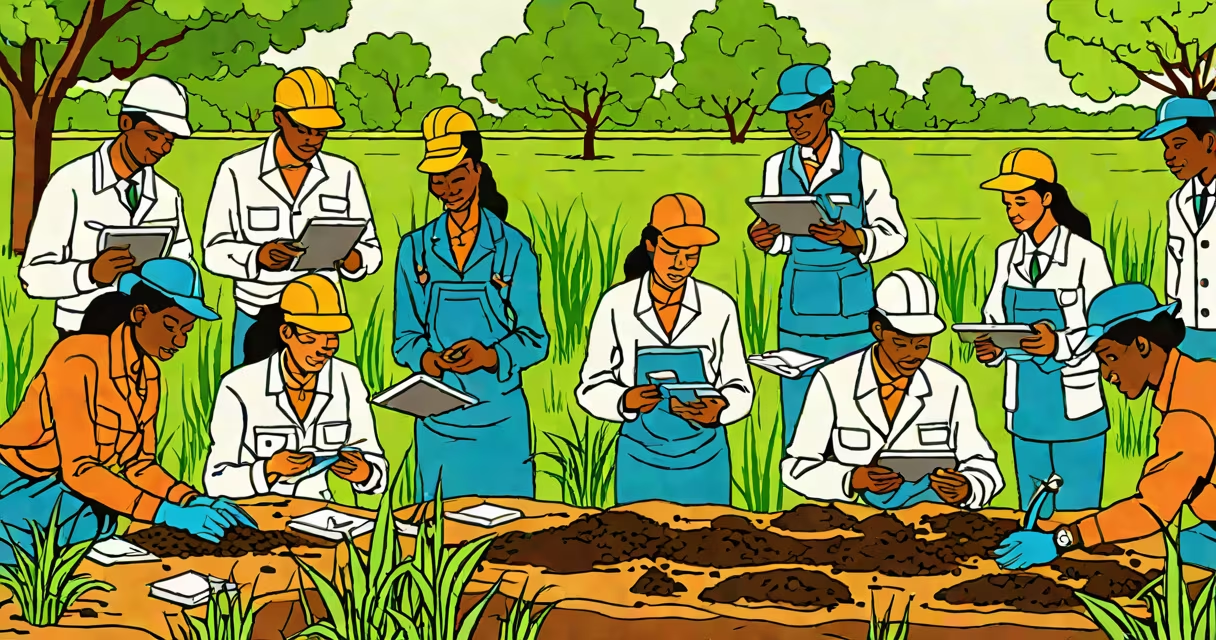
Programs emphasize hands-on learning. Students conduct soil tests, operate GPS-guided tractors, and evaluate pest resistance in crops. Courses in agricultural economics teach cost-benefit analysis for planting decisions.
At Iowa State University, students in the College of Agriculture and Life Sciences complete a capstone project analyzing regional corn yields using climate models and historical sales data. One team predicted a 12% drop in output due to prolonged drought conditions, leading to revised planting schedules for local farmers.
Fieldwork is mandatory. At the University of California, Davis, students spend 60 hours per semester working on certified organic farms. They track water usage, compost efficiency, and pollinator activity-data used in research published in the Journal of Sustainable Agriculture.
Ag degrees fall into three main categories: agronomy, animal science, and agribusiness. Each leads to distinct job markets and skill sets.
| Type | Focus Areas | Common Employers | Median Entry-Level Salary (2023) |
|---|---|---|---|
| Agronomy | Crop genetics, soil fertility, pest control | Farm cooperatives, seed companies, USDA | $48,000 |
| Animal Science | Livestock nutrition, breeding, welfare standards | Dairy processors, feed manufacturers, veterinary clinics | $51,000 |
| Agribusiness | Supply chain logistics, marketing, risk management | John Deere, Cargill, Syngenta | $55,000 |
Graduate programs deepen expertise. A master's in agricultural economics enables policy analysis at the World Bank's Food Security Division. A PhD in plant pathology may lead to research on fungal resistance in wheat, contributing to global food stability.
Non-traditional paths exist. Some agriculture graduates work in urban farming nonprofits, designing rooftop gardens in cities like Detroit and Brooklyn. Others join climate resilience teams at organizations like the Nature Conservancy, modeling how changing rainfall patterns affect crop viability.
Food production relies on agriculture graduates. In 2022, U.S. farms generated $420 billion in revenue. Over 60% of that output depended on trained personnel managing inputs, monitoring growth, and adapting to weather shifts.
Agribusinesses use data from agriculture majors to forecast demand. For example, PepsiCo's supply chain team uses predictive models developed by agricultural economists to adjust potato procurement based on regional harvest forecasts. This reduces waste and stabilizes prices.
Sustainable farming initiatives depend on trained staff. The USDA's Natural Resources Conservation Service employs thousands of agriculture graduates to advise farmers on reducing nitrogen runoff. Their recommendations have lowered nutrient pollution in the Mississippi River basin by 18% since 2015, according to a 2023 EPA report.
Many assume an agriculture degree only leads to farming. That's incorrect. Only about 25% of graduates work directly on farms. The rest serve in technical, managerial, or research roles.
Another myth: "This degree doesn't prepare you for tech jobs." In reality, precision agriculture requires skills in GIS mapping, drone operation, and data analytics. A 2023 report from the National Association of Colleges and Employers found that 41% of agriculture degree holders were hired by tech-focused agri-firms.
Some confuse agriculture with environmental science. While both address land use, agriculture focuses on productive output-feeding people and animals-while environmental science prioritizes system protection. A graduate in agriculture might design a system that increases soybean yields while maintaining soil carbon levels. A colleague in environmental science would assess the long-term impact on native insect populations.
One non-obvious fact: Agriculture degrees are increasingly relevant in disaster response. After Hurricane Ian in 2022, Florida's Department of Agriculture deployed agriculture graduates to assess crop damage and coordinate emergency seed distribution. Their training in crop stress indicators allowed rapid evaluation of flooded fields.
In 2021, a student at North Carolina State University designed a mobile app during her senior year that used satellite imagery and soil moisture sensors to predict optimal planting dates for small-scale cotton farmers. She partnered with a local cooperative to test the tool on 14 farms across the Piedmont region.
Results showed a 17% increase in yield within one season. The app was later adopted by the state's extension service and integrated into outreach programs. The student now works as a program coordinator for the USDA's Climate-Smart Agriculture Initiative.
This illustrates how an agriculture degree translates into measurable outcomes. Technical training, applied research, and community engagement combine to solve real problems.
What can you do with an agriculture degree? The answer spans from fieldwork to boardrooms, from rural villages to international policy forums. It's a foundation for addressing food security, climate adaptation, and economic resilience in a changing world.