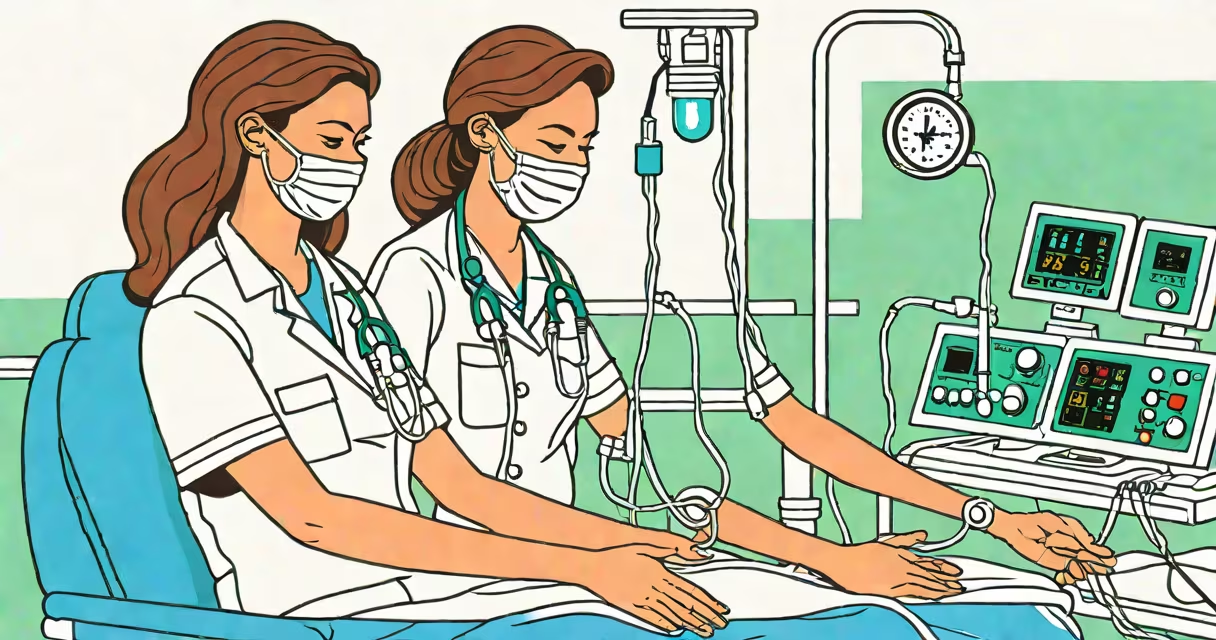
A dialysis nurse performs clinical assessments, operates dialysis machines, administers medications, and provides emotional support to patients with end-stage renal disease during scheduled hemodialysis treatments. These nurses work in outpatient clinics, hospitals, and home care settings, ensuring safe and effective treatment for individuals whose kidneys no longer function adequately.
Dialysis nurses specialize in managing patients undergoing hemodialysis, a process that filters waste and excess fluid from the blood when the kidneys can no longer perform this task. This treatment typically occurs three times per week, lasting about four hours per session. The nurse is responsible for setting up the dialysis machine, establishing vascular access (usually an arteriovenous fistula or graft), monitoring important signs throughout the procedure, and responding to complications such as hypotension, cramping, or clotting.
According to the National Kidney Foundation, nearly 750,000 people in the U.S. live with end-stage renal disease, requiring regular dialysis. Dialysis nurses play a central role in maintaining patient safety and treatment efficacy. They document changes in condition, adjust treatment parameters based on physician orders, and educate patients on diet, medication adherence, and self-care between sessions.
Dialysis nurses follow a structured workflow during each treatment. Before starting, they verify the patient's identity, review medical history, check lab results (especially electrolytes like potassium and sodium), and assess vascular access sites for signs of infection or poor flow. They then initiate the dialysis machine, set prescribed blood flow rates, dialysate composition, and ultrafiltration goals.
During the session, nurses monitor blood pressure, heart rate, temperature, and oxygen saturation every 30 minutes. They also observe for symptoms such as nausea, dizziness, or muscle cramps. If a patient experiences a drop in blood pressure, the nurse may slow blood flow, administer saline, or stop the treatment temporarily. All interventions are documented in the electronic health record.
After treatment ends, the nurse removes needles, applies pressure to the access site, and ensures the patient is stable before discharge. They also provide instructions for home care, including wound care, recognizing signs of infection, and scheduling follow-up appointments. A single shift may involve caring for five to eight patients, depending on facility staffing levels.
Dialysis nurses fall into distinct categories based on their work environment and responsibilities:
| Type | Work Setting | Key Responsibilities | Required Certification |
|---|---|---|---|
| Hemodialysis Nurse | Clinic, hospital, home care | Operates dialysis equipment, monitors patient status, manages complications | CCRN (Critical Care), CNN (Nephrology Certified Nurse) |
| Peritoneal Dialysis Nurse | Home care, outpatient clinics | Teaches patients catheter insertion, sterile technique, fluid exchange procedures | CPN (Certified Peritoneal Dialysis Nurse) |
| Nephrology Nurse Practitioner | Specialty clinics, hospital units | Diagnoses complications, prescribes medications, manages chronic conditions | CRNP, FNP, additional nephrology certification |
While all dialysis nurses require a registered nurse license and experience in acute care, only those who pursue specialty certification demonstrate advanced knowledge in renal physiology, fluid balance, and treatment protocols. The American Nephrology Nurses Association (ANNA) reports that certified nephrology nurses have lower rates of treatment-related adverse events compared to non-certified staff.
Dialysis nurses are essential in facilities treating patients with chronic kidney disease (CKD) stage 5. Without dialysis, uremia develops rapidly-elevated creatinine levels above 10 mg/dL can lead to confusion, seizures, and death within days. Dialysis restores electrolyte balance and prevents fluid overload, which can cause pulmonary edema or heart failure.
For example, a 62-year-old man with diabetes and hypertension was admitted to a dialysis center with a serum potassium level of 6.8 mmol/L-a life-threatening elevation. The dialysis nurse initiated emergency hemodialysis, reduced potassium to 4.9 mmol/L within two hours, and stabilized the patient. Without timely intervention, cardiac arrest would have occurred.
These nurses also manage comorbidities common in dialysis patients, such as anemia, bone disorders, and hypertension. They collaborate with nephrologists, dietitians, social workers, and pharmacists to create individualized care plans. In home dialysis programs, nurses train patients and caregivers to perform treatments safely, reducing hospitalizations by up to 30%, according to a 2022 study published in Advances in Chronic Kidney Disease.
Many assume dialysis nurses simply operate machines. In reality, they make real-time clinical decisions. For instance, if a patient's blood pressure drops below 90/60 mmHg during treatment, the nurse must decide whether to pause ultrafiltration, reduce blood flow, or administer intravenous fluids-all based on judgment, not protocol alone.
Another misconception is that dialysis is a cure. It is not. It replaces kidney function temporarily. Patients remain dependent on ongoing treatments unless they receive a transplant. Dialysis nurses help patients understand this reality while supporting mental health and quality of life.
Some confuse dialysis nursing with general medical-surgical nursing. While both require critical thinking and patient monitoring, dialysis nurses possess unique expertise in fluid dynamics, membrane transport, and electrolyte management. A nurse without nephrology training may misinterpret a sudden drop in hematocrit as normal, missing early signs of internal bleeding.
One non-obvious fact: dialysis nurses often spend more time communicating than performing technical tasks. A 2021 ANNA survey found that 68% of dialysis nurses reported spending over half their shift on patient education, emotional support, and care coordination. This interpersonal component is important-patients who feel heard report better adherence and fewer hospitalizations.
I once worked alongside a dialysis nurse in a rural clinic where transportation barriers limited patient access to urban centers. She developed a weekly outreach schedule, visiting homes to supervise peritoneal dialysis exchanges. One patient, a retired teacher with severe peripheral neuropathy, struggled with hand tremors. The nurse taught her to use a mechanical dialysis bag changer and adjusted her prescription to reduce cramping. Over six months, the patient avoided hospitalization and maintained independence.
This experience reinforced that dialysis nursing extends beyond the machine-it's about building trust, adapting care, and empowering patients. The nurse wasn't just administering treatment; she was enabling autonomy.