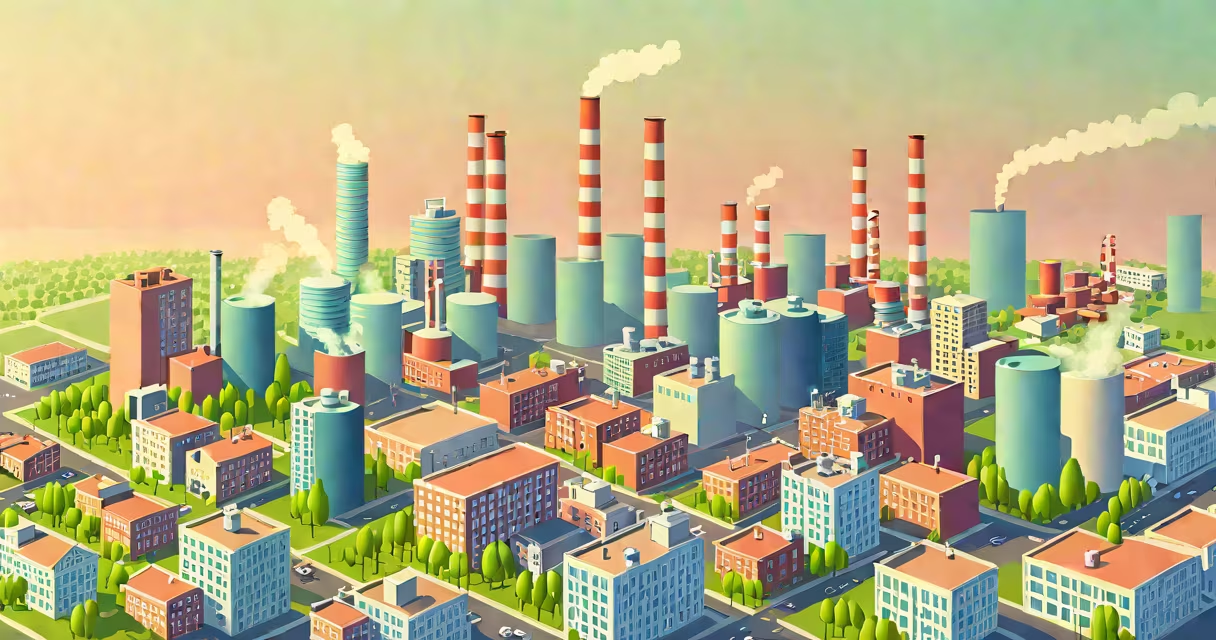
Air pollution means the presence of harmful substances in the atmosphere that degrade air quality and threaten human health, ecosystems, and climate stability. These pollutants come from vehicles, factories, power plants, agriculture, and household activities. The World Health Organization identifies air pollution as a leading environmental cause of premature death worldwide.
When we talk about air pollution, we're referring to both natural and human-made contaminants. Natural sources include wildfires, volcanic eruptions, and dust storms. Human-caused emissions dominate in populated areas. Common pollutants include nitrogen oxides (NOx), sulfur dioxide (SO₂), ground-level ozone (O₃), particulate matter (PM2.5 and PM10), carbon monoxide (CO), and volatile organic compounds (VOCs).
Particulate matter under 2.5 micrometers in diameter (PM2.5) is especially dangerous. It penetrates deep into lungs and enters the bloodstream. A 2021 study published in *The Lancet Planetary Health* linked long-term exposure to PM2.5 with increased risk of stroke, heart disease, and lung cancer. Even short-term spikes in pollution correlate with higher hospital admissions for asthma and bronchitis.
Air pollution forms through chemical reactions in the atmosphere. For example, nitrogen oxides and VOCs react in sunlight to form ground-level ozone-a key component of smog. Unlike protective ozone in the upper atmosphere, ground-level ozone irritates airways and reduces lung function. In Los Angeles, ozone levels routinely exceed safe thresholds during summer months due to vehicle exhaust and sunlight.
Secondary pollutants like ozone don't come directly from sources. They form when primary pollutants interact. This makes air quality management complex. Reducing NOx emissions alone may not lower ozone if VOCs remain high. Cities often implement targeted controls, such as restricting older diesel trucks during peak pollution periods.
Indoor air pollution presents a different challenge. In homes using wood stoves, kerosene heaters, or poorly ventilated gas appliances, pollutant concentrations can exceed outdoor levels. The WHO estimates that 3.8 million people die annually from illnesses linked to household air pollution, primarily in low- and middle-income countries.
The following table outlines major air pollutants, their typical sources, and associated health effects.
| Pollutant | Primary Sources | Health & Environmental Impact |
|---|---|---|
| PM2.5 | Vehicle exhaust, coal-fired power plants, wildfires | Respiratory distress, cardiovascular events, reduced life expectancy |
| Ground-level Ozone (O₃) | Reactions between NOx and VOCs in sunlight | Lung irritation, decreased lung function, worsened asthma |
| Sulfur Dioxide (SO₂) | Coal combustion, oil refining | Respiratory issues, acid rain formation |
| Nitrogen Oxides (NOx) | Vehicle engines, power plants | Contributes to smog and acid rain; damages lung tissue |
| Carbon Monoxide (CO) | Incomplete combustion in vehicles, heaters | Reduces oxygen delivery in blood; causes dizziness, headaches |
One non-obvious fact: Some pollutants travel thousands of miles. Sulfur dioxide from European coal plants can contribute to acid rain in Scandinavia. Black carbon from Indian crop burning reaches the Himalayan glaciers, accelerating ice melt. These transboundary flows show that air pollution is not confined by borders.
Urban centers face the highest exposure. In Delhi, India, average PM2.5 levels reach 150 µg/m³ in winter-over 15 times the WHO's recommended limit of 10 µg/m³. During Diwali celebrations, fireworks spike pollution to hazardous levels. Monitoring stations record hourly readings above 400 µg/m³, triggering emergency health advisories.
Rural areas aren't immune. Agricultural practices release ammonia (NH₃), which reacts with other pollutants to form secondary PM2.5. In the U.S. Midwest, farm runoff and livestock operations contribute to regional haze. The Environmental Protection Agency tracks these emissions under the Clean Air Act.
There's a common misconception that air pollution only affects cities. In reality, remote regions suffer too. Arctic air contains elevated levels of persistent organic pollutants (POPs), which travel via atmospheric currents and accumulate in polar ecosystems. These chemicals bioaccumulate in food chains, affecting indigenous populations who rely on traditional diets.
Air pollution is not synonymous with "smell." Many pollutants are odorless. Carbon monoxide, for example, has no smell and can be fatal without warning. Similarly, PM2.5 particles are invisible to the naked eye. You can't see them, but they still harm your lungs.
Another misunderstanding: air pollution doesn't always appear as visible smog. While photochemical smog forms yellowish-orange haze in cities like Los Angeles, indoor air pollution often goes unnoticed. A kitchen with a gas stove running without ventilation can produce CO levels exceeding safety standards within minutes.
I once measured indoor CO levels in a rented apartment during winter. The heater was vented improperly. After five hours of continuous use, the CO detector triggered an alarm at 60 ppm-well above the 9 ppm 8-hour standard set by the EPA. The tenant had no symptoms until the device sounded. That experience confirmed how invisible threats can be deadly.
Understanding what air pollution means requires recognizing its invisible, systemic nature. It's not just smoke or smog-it's a mix of gases, particles, and chemical reactions that impact health, weather, and biodiversity. The term encompasses both immediate dangers, like acute respiratory failure, and long-term risks, such as chronic disease and climate change.
Recognizing what air pollution means leads to better decisions-about transportation, home ventilation, energy use, and advocacy. The goal isn't perfection, but informed action. Knowing the facts changes behavior. And behavior shapes air quality.