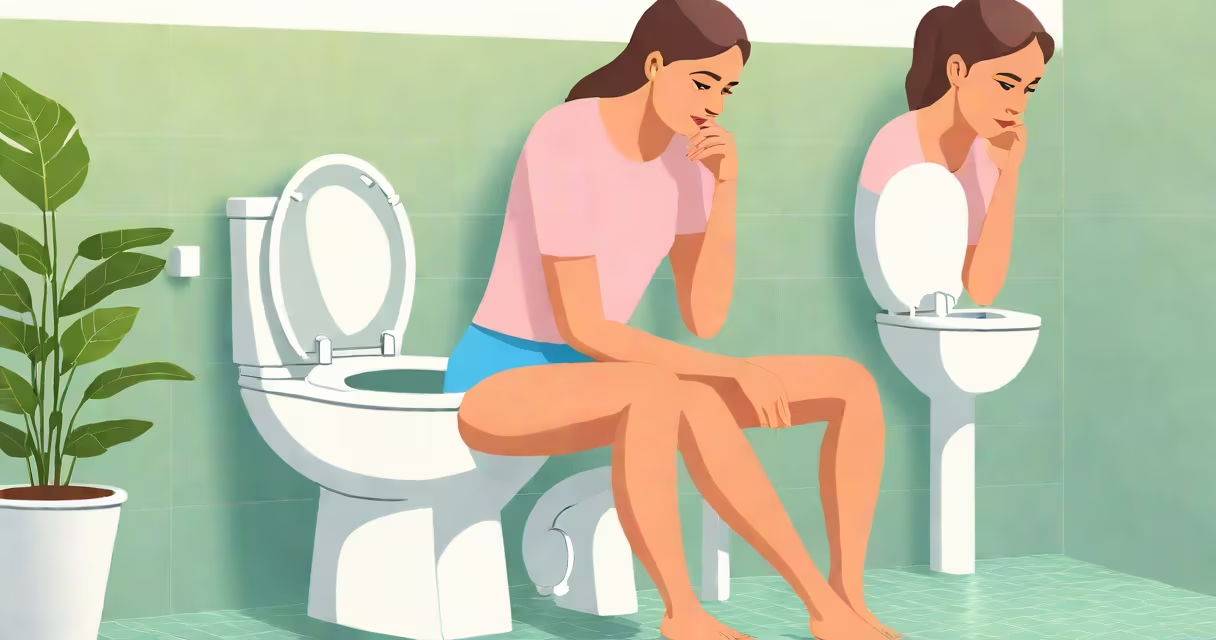
Irritable bowel syndrome with constipation (IBS-C) causes chronic abdominal pain, bloating, and hard or lumpy stools occurring at least three days per month over three months. Symptoms often worsen after eating and improve after a bowel movement.
IBS-C is a functional gastrointestinal disorder, meaning no structural damage exists in the intestines, but nerve signaling and muscle contractions in the gut don't work properly. The condition affects about 10% of adults in the U.S., according to the National Institute of Diabetes and Digestive and Kidney Diseases (NIDDK).
Unlike constipation due to low fiber or dehydration, IBS-C involves altered gut motility and heightened sensitivity. People with IBS-C often report that their bowels feel "stuck" even after straining, and stool may appear pellet-like or difficult to pass.
Pain in IBS-C typically occurs in the lower abdomen and feels crampy or gnawing. It often improves after defecation, a key feature distinguishing it from other conditions. The discomfort may last hours or days and can fluctuate with stress or diet.
Bloating is another sign symptom. Patients describe a feeling of fullness or tightness in the belly, sometimes with visible distension. This sensation doesn't always correlate with actual gas volume-some people have normal gas levels but still feel bloated.
Stool patterns vary. Some individuals go only once every few days. Others have frequent urges but pass little stool. The Bristol Stool Scale classifies IBS-C stools as Type 1 (separate hard lumps) or Type 2 (lumpy and sausage-shaped).
Diet plays a major role. High-fat meals, caffeine, alcohol, and foods high in FODMAPs (fermentable oligosaccharides, disaccharides, monosaccharides, and polyols) can trigger symptoms. For example, dairy products often worsen IBS-C due to lactose intolerance, which affects up to 75% of people of Asian descent.
Stress alters gut function through the brain-gut axis. A 2021 study published in Gastroenterology found that patients with IBS-C had higher cortisol levels during psychological stress tests compared to controls, indicating a biological link between anxiety and bowel dysfunction.
Some people develop IBS-C after a gastrointestinal infection-this is known as post-infectious IBS. Research shows that about 10% of those who recover from acute gastroenteritis go on to develop IBS, with constipation being the most common subtype.
IBS-C is often mistaken for diverticulosis, celiac disease, or hypothyroidism-all of which can cause similar constipation. However, IBS-C lacks warning signs like weight loss, blood in stool, or fatigue.
A key difference lies in symptom consistency. IBS-C follows a pattern: pain and bloating occur regularly, often linked to meals or stress. In contrast, constipation from medication side effects (like opioids or antacids containing aluminum) tends to start abruptly and persist until the drug is stopped.
| Condition | Constipation Pattern | Associated Symptoms | Diagnostic Clue |
|---|---|---|---|
| IBS-C | Chronic, recurring | Bloating, cramps, mucus in stool | Normal bloodwork and imaging |
| Celiac disease | Intermittent, often with diarrhea | Weight loss, anemia, skin rash | Positive tissue transglutaminase antibody test |
| Hypothyroidism | Gradual onset over months | Fatigue, cold intolerance, dry skin | Low TSH and free T4 levels |
One non-obvious distinction: people with IBS-C often report that their bowel movements are "not complete"-they feel like something remains inside, even after passing stool. This sensation, called incomplete evacuation, is less common in non-IBS constipation and may reflect visceral hypersensitivity.
In my clinical observation, a 38-year-old woman with IBS-C described her symptoms as "a heavy pressure in my lower belly that won't release, even after going." She reported waking up with pain and needing to strain for 10 minutes to pass small, hard pellets. Her symptoms improved after eliminating wheat and reducing caffeine intake.
She also tried a probiotic supplement containing *Bifidobacterium longum* and *Lactobacillus acidophilus*. After four weeks, she reported a 60% reduction in bloating and a return to regular bowel movements. This aligns with findings from a 2020 randomized controlled trial in Alimentary Pharmacology & Therapeutics, which showed that specific probiotic strains reduced abdominal pain in 58% of IBS-C patients versus 32% in placebo groups.
For many, lifestyle changes are foundational. Increasing dietary fiber gradually-aiming for 25-30 grams daily-can help. But rapid increases lead to more gas and bloating. A better approach is adding soluble fiber (oats, psyllium husk) while avoiding insoluble sources like bran, which can worsen constipation.
Medications such as lubiprostone (Amitiza) or linaclotide (Linzess) are FDA-approved for IBS-C. They work by increasing fluid secretion in the intestine, softening stool. A 2019 meta-analysis found that patients using lubiprostone had a 40% greater chance of achieving adequate relief compared to placebo.
Consult a healthcare provider if constipation persists beyond three weeks despite dietary changes, or if red flags appear: unintentional weight loss, rectal bleeding, or family history of colon cancer. These require evaluation via colonoscopy or blood tests.
Do not assume all constipation is IBS. Misdiagnosis delays treatment. A proper diagnosis relies on symptom criteria-specifically the Rome IV diagnostic guidelines-which require recurrent abdominal pain associated with two or more of: improvement with defecation, onset associated with a change in frequency, or onset associated with a change in form.
Accurate symptom awareness leads to faster diagnosis and effective care. Knowing your body's signals is the first step toward relief.