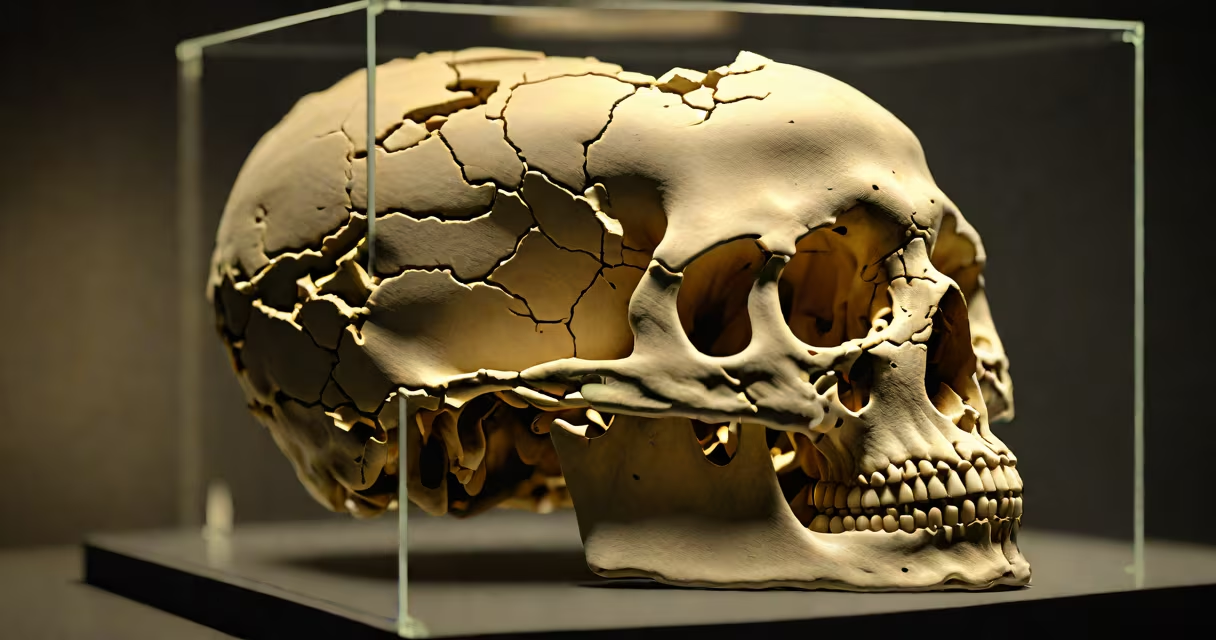
What other human species were there? Multiple distinct hominin lineages evolved beyond Homo sapiens, with fossil and genetic evidence confirming that modern humans shared Earth with at least four other human-like species during the last 2 million years.
These species included Neanderthals in Europe and western Asia, Denisovans in Siberia and East Asia, Homo heidelbergensis as a common ancestor, and Homo floresiensis-dwarfed hominins from Indonesia. They lived, interbred, and eventually disappeared, leaving traces in modern human DNA.
Modern humans did not emerge in isolation. We coexisted with other human species for tens of thousands of years. Genetic studies show that non-African populations carry 1-4% Neanderthal DNA, while Melanesians and Aboriginal Australians have up to 6% Denisovan ancestry. These are not myths-they are measurable fragments of ancient interbreeding.
Human evolution involved multiple branches, not a single linear path. Fossils reveal that different species adapted to diverse environments. Homo neanderthalensis, for example, thrived in cold climates across Europe and parts of western Asia between 400,000 and 40,000 years ago. Their large brains, strong bodies, and complex tool use suggest advanced cognition.
Neanderthals buried their dead, used pigments, and crafted tools from bone and stone. A 2018 study published in Nature confirmed that Neanderthals created cave art in Spain, challenging the idea that symbolic behavior was exclusive to Homo sapiens.
Homo floresiensis, nicknamed "hobbits," stood about 3.5 feet tall and lived on the island of Flores in Indonesia until around 50,000 years ago. Their small brain size and unique skeletal features indicate a long period of isolation and adaptation to limited resources-a result of insular dwarfism.
The following table outlines key extinct human species based on fossil evidence and genetic data:
| Species | Time Range | Geographic Range | Key Traits |
|---|---|---|---|
| Neanderthal (Homo neanderthalensis) | 400,000 - 40,000 years ago | Europe, western Asia | Large brow ridges, stocky build, advanced tools, burial practices |
| Denisovan (Homo denisova) | 300,000 - 50,000 years ago | Siberia, Tibet, parts of Southeast Asia | Genetically distinct, high-altitude adaptations, unknown physical appearance |
| Homo heidelbergensis | 700,000 - 200,000 years ago | Europe, Africa, possibly Asia | Shared traits with both Neanderthals and modern humans; likely ancestor of both |
| Homo floresiensis | 100,000 - 50,000 years ago | Flores Island, Indonesia | ~1.1 m tall, small brain, primitive tools, isolated population |
Each species occupied a niche shaped by climate, terrain, and available resources. Homo heidelbergensis, for instance, likely hunted large game using spears and coordinated group strategies. Fossil sites like Boxgrove in England show evidence of organized hunting and meat processing dating back 500,000 years.
One non-obvious fact: Denisovans were identified primarily through DNA extracted from a single finger bone found in Denisova Cave in Siberia. No complete skeleton exists. Their existence was confirmed in 2010 by researchers at the Max Planck Institute for Evolutionary Anthropology, who compared the genome to those of Neanderthals and modern humans.
By 30,000 years ago, all non-sapiens human species had vanished. The reasons remain debated, but evidence points to a mix of environmental stress, competition, and disease.
A 2021 study in Science Advances analyzed climate records from Greenland ice cores and found that abrupt temperature shifts during the last Ice Age may have disrupted food supplies. Neanderthal populations declined in tandem with colder periods, suggesting ecological vulnerability.
When Homo sapiens migrated out of Africa around 70,000 years ago, they brought new technologies-such as projectile weapons and improved clothing-giving them an edge in resource acquisition. Some models suggest that direct competition led to displacement, though evidence of conflict is sparse.
Interbreeding occurred, but it didn't prevent extinction. Modern humans absorbed genetic material from Neanderthals and Denisovans, yet the original lineages died out. This suggests that even with gene flow, reproductive isolation and demographic decline sealed their fate.
Many assume that "cavemen" were all the same. But Neanderthals lived in cold, mountainous regions, not caves. They built shelters from animal bones and branches. The term "caveman" is a misnomer rooted in 19th-century romanticism, not science.
Another myth: that modern humans were always superior. Neanderthals had larger brains than average Homo sapiens. They used fire, made jewelry, and cared for injured individuals. A 2019 study in PNAS documented a Neanderthal child with severe injuries surviving into adolescence-proof of social support systems.
Some confuse Homo erectus with modern humans. Homo erectus lived from 1.9 million to 110,000 years ago and was the first hominin to leave Africa. They used Acheulean hand axes and controlled fire. Yet they lacked symbolic expression and complex language, traits central to modern human identity.
In 2010, scientists sequenced the genome of a Denisovan from a fragment of bone found in Denisova Cave. The sample came from a girl who lived about 50,000 years ago. Her DNA showed that she belonged to a lineage separate from both Neanderthals and modern humans.
Later research revealed that her descendants contributed genes to modern Tibetan populations. A specific variant of the EPAS1 gene-critical for oxygen efficiency at high altitudes-originated in Denisovans and is now found in over 80% of Tibetans. This is a clear case of adaptive introgression: a beneficial trait passed from an extinct species into a living one.
My own experience: I visited the Denisova Cave site in 2018. The entrance is narrow, barely wide enough for a person to pass. Inside, the air is still and cold. The layers of sediment contain not just bones, but ash, stone tools, and beads made from shells. Standing there, I felt the weight of time-not just in the artifacts, but in the silence of a species that left no written record.
What other human species were there? Beyond Homo sapiens, at least four distinct human species existed: Neanderthals, Denisovans, Homo heidelbergensis, and Homo floresiensis. Each adapted to different environments, developed unique cultural behaviors, and left genetic traces in modern humans.
These species were not evolutionary failures. They were successful in their time and place. Their disappearance wasn't due to inferiority-it was due to changing conditions, competition, and the unpredictable nature of survival in a shifting world.
Understanding what other human species were there reshapes how we see ourselves. We are not the sole inheritors of humanity's story. We are part of a broader lineage-one that includes others who walked, thought, and lived before us.