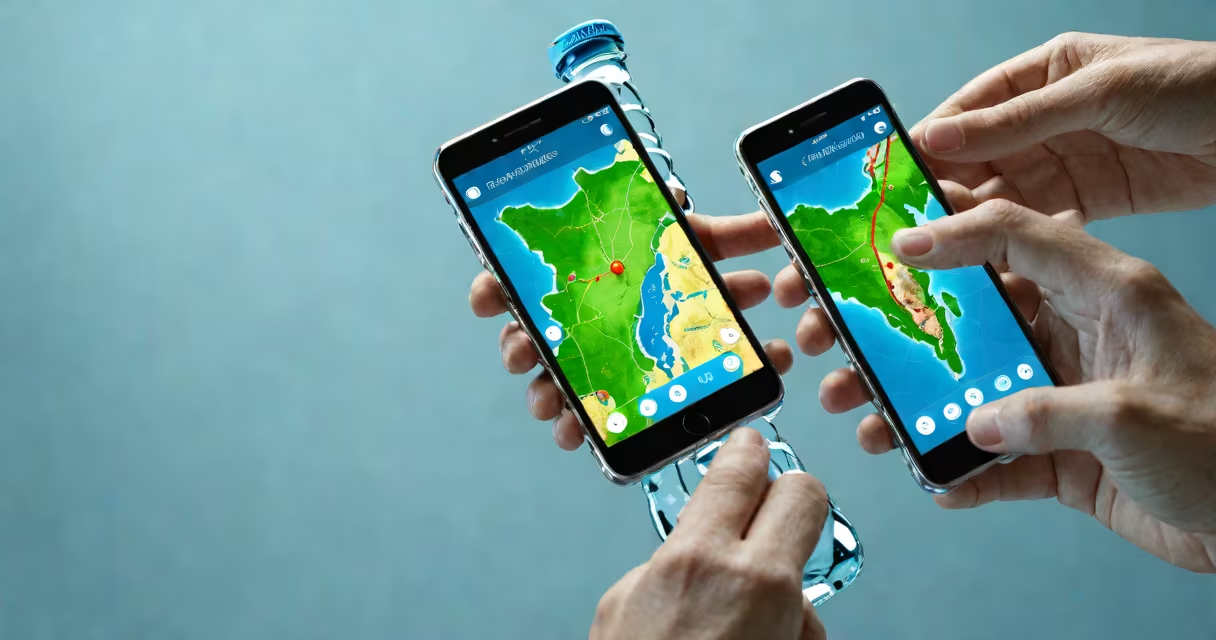
"Where my water" is a practical inquiry into the specific source and physical location of your drinking water at any given time. It identifies the origin-such as a municipal supply, private well, or bottled source-and tracks its path from source to consumption. This concept matters most when assessing safety, quality, and reliability, especially during contamination events or infrastructure failures.
Water doesn't travel through invisible pipes alone. When you turn on a tap, the water may have traveled hundreds of miles, passed through treatment plants, and sat in storage tanks before reaching your home. Knowing "where my water" comes from allows you to verify whether it meets local health standards, detect potential risks like lead leaching from old pipes, or respond quickly if a boil advisory is issued.
The U.S. Environmental Protection Agency (EPA) requires public water systems to test for contaminants regularly and publish annual reports. These reports detail the source, detected pollutants, and compliance status. For example, the city of Portland, Oregon, draws 90% of its water from the Bull Run watershed, which is protected by strict land-use regulations. Knowing this helps residents understand their water's natural purity and vulnerability to runoff or climate shifts.
When you ask "where my water," you're not just asking about geography-you're tracing a system. Municipal water moves through a network: intake (river, lake, or aquifer), treatment (filtration, disinfection), storage (reservoirs or tanks), and distribution (pipes to homes). Each stage introduces variables that affect quality.
Private wells bypass municipal oversight. A homeowner relying on a well must test water annually for nitrates, coliform bacteria, arsenic, and radionuclides. The Centers for Disease Control and Prevention (CDC) warns that untreated well water can carry pathogens like *Cryptosporidium* or *E. coli*, which cause gastrointestinal illness. In 2021, a cluster of cryptosporidiosis cases in Wisconsin was traced to a single contaminated well, underscoring why knowing your source is essential.
Even bottled water isn't likely to be safe. The FDA regulates bottled water, but not all brands disclose source locations. Some claim "natural spring" water but draw from municipal supplies. A 2022 investigation by Consumer Reports found that 16% of bottled water samples contained microplastics, with no consistent labeling of source or filtration method.
Understanding the type of water source determines how you monitor "where my water."
| Source Type | Typical Origin | Tracking Method | Key Risk |
|---|---|---|---|
| Municipal Supply | River, lake, or groundwater treated by city system | Annual consumer confidence report (CCR) | Lead pipes, aging infrastructure |
| Private Well | Underground aquifer tapped via drilled borehole | Annual lab testing, well log records | Nitrates, arsenic, bacterial contamination |
| Bottled Water | Spring, municipal source, or purified water | Label disclosure, brand transparency reports | Microplastics, inconsistent regulation |
| Filtered Tap Water | Same as municipal, but filtered at point of use | Filter replacement logs, filter performance data | Expired filters, incomplete removal of PFAS |
For instance, a family in rural Pennsylvania discovered high levels of PFAS (per- and polyfluoroalkyl substances) in their well water after a nearby military base released firefighting foam into the soil. The EPA lists PFAS as emerging contaminants linked to cancer and immune suppression. Once identified, they switched to a reverse osmosis filter and began tracking filter life using a smart water meter app.
People often assume that "filtered" means "safe." But filtration methods vary widely. Carbon filters reduce chlorine and some pesticides but do not remove heavy metals or PFAS. Reverse osmosis removes 95% of dissolved solids, including fluoride and nitrates-but also strips beneficial minerals like calcium and magnesium.
Another misconception is that bottled water is purer than tap. In reality, 40% of bottled water is sourced from municipal tap systems, according to the Natural Resources Defense Council (NRDC). Bottling adds plastic waste and carbon emissions. A study published in *Environmental Science & Technology* found that bottled water production generates 2.5 kg of CO₂ per liter-equivalent to driving a car 10 miles.
There's also confusion between "where my water" and "how much I drink." Hydration tracking focuses on volume and timing. "Where my water" focuses on origin and integrity. You can drink 2 liters daily from a contaminated source and still suffer health effects. Knowing your source prevents this risk.
In 2020, a household in Colorado noticed a metallic taste in their tap water. They checked their local CCR and found elevated chromium-6 levels-linked to industrial pollution. The EPA classifies chromium-6 as a known carcinogen. The family then installed a certified reverse osmosis system and began logging monthly water tests.
They used a free online tool called Water Quality Database (administered by the University of California, Berkeley) to cross-reference their results. The database includes over 100,000 water samples from U.S. states. Their results matched a known plume near a former textile factory. After installing a filter, taste improved, and follow-up tests showed chromium-6 below detection limits.
This case shows that "where my water" isn't passive-it's proactive. It involves checking official reports, using independent tools, and acting based on data.
I once helped a friend in New Mexico test his well water after he developed skin rashes and fatigue. His well had no maintenance record. We sent a sample to a state-certified lab. Results showed arsenic at 12 parts per billion-above the EPA limit of 10 ppb. Arsenic exposure increases long-term cancer risk and causes neurological issues.
We traced the contamination to a nearby mining operation that had leaked runoff decades ago. The well was still functional but unsafe. He installed a specialized arsenic filter and now checks water quality quarterly. His symptoms resolved within six months.
This experience confirmed that "where my water" isn't just about location-it's about accountability. You can't manage risk if you don't know the source.
Access to clean water is a human right, but not equally distributed. In Flint, Michigan, the switch to a new water source in 2014 led to lead contamination that poisoned thousands of children. The crisis exposed how ignoring "where my water" leads to systemic harm.
Low-income communities often rely on outdated infrastructure. A 2023 report by the National Association of Clean Water Agencies found that 1 in 5 U.S. water systems serve populations with higher-than-average rates of lead service lines. Knowing "where my water" helps advocate for upgrades and funding.
Environmental justice hinges on transparency. Communities downstream from industrial sites or agricultural runoff need to know if their water is compromised. Tools like the EPA's ECHO database allow anyone to search water system violations by zip code.
Knowing "where my water" is not a luxury-it's a necessity. Whether you live in a city with regulated taps, a rural area with a private well, or rely on bottled water, understanding your source ensures safety, supports informed decisions, and enables action when problems arise.