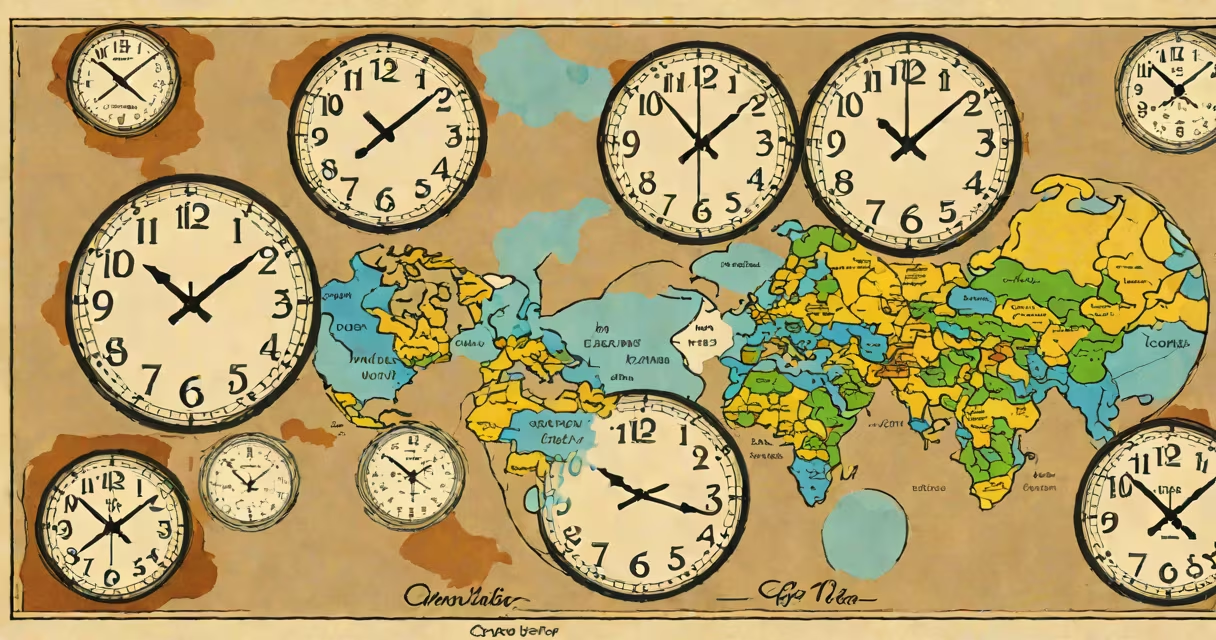
2 pm PDT (Pacific Daylight Time) is 2:00 PM in the Pacific Time Zone during daylight saving period. It corresponds to 5:00 PM Eastern Time (EST) and 8:00 PM in Central European Time (CET).
Pacific Daylight Time runs from the second Sunday in March through the first Sunday in November. During this window, clocks in the Pacific Time Zone are set forward by one hour from standard time (PST). The current date determines whether 2 pm PDT is valid. Outside of daylight saving, the same local time is called PST.
For example, on March 10, 2024, which falls within daylight saving, 2:00 PM in Los Angeles is 2 pm PDT. On November 3, 2024, the same local time becomes 2 pm PST because daylight saving ends. This shift happens annually and affects all US states observing daylight saving, including California, Oregon, Washington, and parts of Nevada.
When it's 2 pm PDT, the time varies across the United States and globally. The difference between time zones is based on longitudinal distance from Greenwich Mean Time (GMT).
For example:
A single event scheduled at 2 pm PDT will occur at different local times depending on location. A webinar hosted at 2 pm PDT on April 15, 2024, would start at 8:00 PM in Berlin (CET), 11:00 AM in Sydney (AEST), and 11:00 AM in Tokyo (JST).
| Time Zone | Local Time | UTC Offset |
|---|---|---|
| PDT (Pacific Daylight Time) | 2:00 PM | UTC-7 |
| CST (Central Standard Time) | 1:00 PM | UTC-6 |
| EST (Eastern Standard Time) | 12:00 PM | UTC-5 |
| CET (Central European Time) | 6:00 PM | UTC+1 |
| JST (Japan Standard Time) | 11:00 PM | UTC+9 |
These conversions are consistent year-round when daylight saving is active. However, during standard time, the offset changes. For instance, when it's 2 pm PST (not PDT), the time in New York is 5 pm EST - same as during daylight saving, but the zone name differs.
Many people assume 2 pm PDT is always 5 pm EST. That's correct only when both regions are observing daylight saving. But in winter, when the Pacific Time Zone reverts to PST, the time difference remains the same - 3 hours behind Eastern Time. The confusion arises from mixing zone names (PDT vs PST) with actual time differences.
Another mistake is assuming all US West Coast cities follow the same schedule. While California, Oregon, and Washington observe PDT, Nevada's eastern counties use Mountain Time. A call scheduled at 2 pm PDT in Reno, Nevada, may actually be 1 pm MST - one hour earlier than in San Francisco.
Fact: According to the National Institute of Standards and Technology (NIST), the US time zones are synchronized to UTC via atomic clocks. NIST maintains time servers that provide accurate time signals across the country. You can verify 2 pm PDT using NIST's Network Time Protocol (NTP) service.
Suppose a team in Seattle (PDT) wants to hold a meeting at 2 pm PDT on June 10, 2024. They need to inform colleagues in London, Mumbai, and Sydney.
Using standard conversion:
The meeting starts at 8:00 PM in London and 1:30 AM in Mumbai. Team members in Mumbai must attend early in the morning. The same meeting at 2 pm PDT is 11:00 PM in Sydney - late evening. This illustrates why time zone awareness matters in global collaboration.
I once coordinated a product launch across three continents. We chose 2 pm PDT as the anchor time because it fell during business hours in North America and Europe. In Asia, it was late evening. We recorded sessions and shared them afterward. Without clear time alignment, coordination would have failed.
PDT (Pacific Daylight Time) and PST (Pacific Standard Time) are not separate systems. They are two phases of the same time zone. PDT is used during daylight saving; PST applies during standard time. The difference is not in the time offset - both are UTC-7 - but in the name and timing.
UTC (Coordinated Universal Time) serves as the reference point. All time zones are expressed as offsets from UTC. For example, 2 pm PDT is 11:00 UTC. When it's 11:00 UTC, it's 2 pm PDT. This makes UTC ideal for international scheduling tools.
Tools like Google Calendar and Outlook automatically adjust for daylight saving. If you enter "2 pm PDT" in a calendar, the system converts it to the correct local time for each attendee. But manual entry requires knowing whether the region is observing daylight saving.
Understanding 2 pm PDT is essential for remote work, travel planning, and cross-border communication. It's not just a time - it's a coordinate in a global network of schedules.
Knowing how 2 pm PDT translates across time zones prevents missed calls, delayed responses, and scheduling conflicts. Always confirm the time zone context - especially when coordinating with teams in multiple regions.