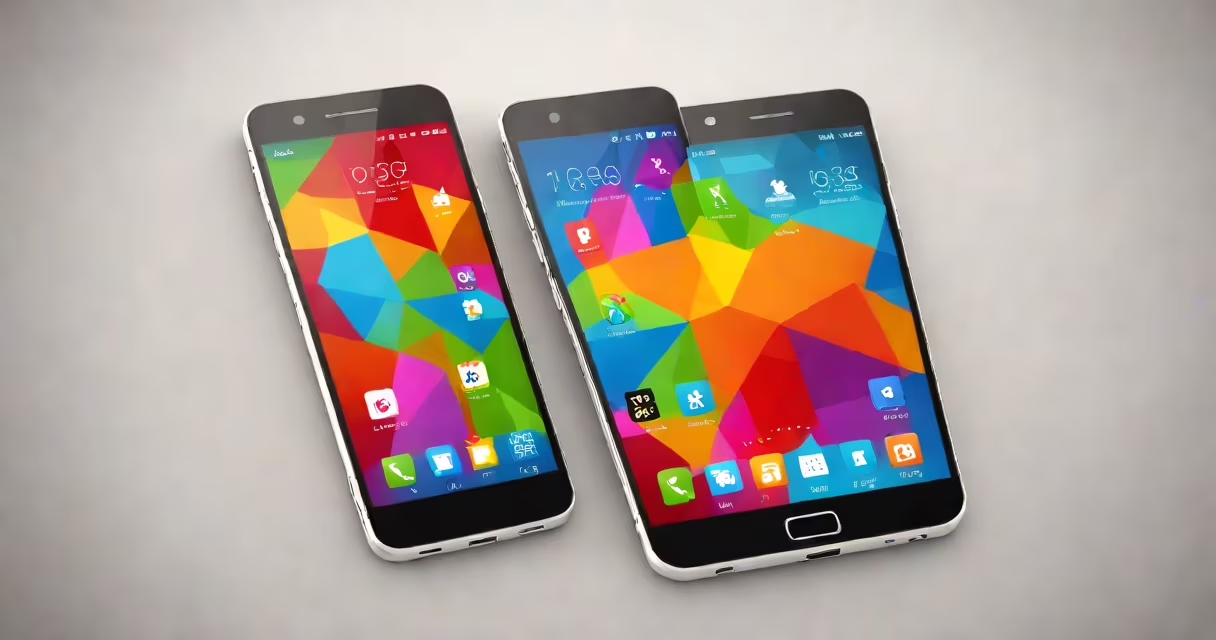
A 4G LTE smartphone is a mobile device that connects to a fourth-generation Long-Term Evolution network, offering faster data speeds and reduced latency compared to 3G networks. These devices support high-definition video streaming, real-time gaming, and quick app loading through advanced cellular technology.
4G LTE operates on licensed radio spectrum bands assigned by national regulators. It uses Orthogonal Frequency-Division Multiplexing (OFDM) and Multiple Input Multiple Output (MIMO) antenna systems to maximize throughput and signal reliability. Unlike earlier 3G standards, LTE was designed from the start to handle large volumes of data traffic efficiently.
Network providers such as AT&T, Verizon, and T-Mobile in the U.S. deploy LTE infrastructure using frequency bands like 700 MHz, 1700/2100 MHz (AWS), and 2500 MHz. Devices must support specific bands to work on a given carrier's network. For example, a Verizon LTE smartphone requires support for Band 13 (700 MHz) and Band 1 (2100 MHz) to access full coverage.
When a 4G LTE smartphone powers on, it scans for available LTE signals and registers with the nearest cell tower. The device then establishes a data session through the carrier's core network, which routes traffic via fiber-optic backbones to the internet. This process happens in under half a second during normal operation.
Data transmission occurs in time slots divided across frequency channels. Each channel supports multiple users simultaneously through frequency reuse and spatial multiplexing. A single LTE base station can serve dozens of smartphones at once, maintaining average download speeds between 10 Mbps and 50 Mbps in urban areas.
For example, a Samsung Galaxy S21 5G model still includes 4G LTE capability. When 5G is unavailable, it falls back to LTE automatically. During a test in downtown Chicago, the device achieved an average download speed of 38 Mbps on AT&T's LTE network, sufficient for HD video calls and rapid file downloads.
Smartphones are categorized by their LTE capabilities, including supported bands, peak speeds, and compatibility with different carriers. Not all LTE phones perform equally across regions.
| Feature | Basic LTE | Advanced LTE | Carrier-Optimized |
|---|---|---|---|
| Bands Supported | 1, 3, 7, 20 | 1, 2, 3, 4, 5, 7, 12, 13, 17, 20, 25, 26, 28, 30 | Band-specific (e.g., Band 13 for Verizon) |
| Peak Download Speed | 150 Mbps | 300 Mbps | Up to 350 Mbps |
| Use Case | General browsing, social media | Video editing, cloud backup | Reliable coverage in rural areas |
Basic LTE models typically support only common bands used nationwide. Advanced LTE devices include support for additional bands like Band 41 (2.5 GHz), which improves capacity in dense urban environments. Carrier-optimized phones are engineered to prioritize performance on a single network, often including features like dual-band Wi-Fi and enhanced signal processing.
Emergency services, field workers, and small businesses depend on LTE for reliable communication. A construction foreman in Reno, Nevada, reported that his team's 4G LTE smartphones maintained stable connections during site inspections, even when GPS signals were weak. This stability stems from LTE's lower jitter and consistent packet delivery compared to older technologies.
For travelers, unlocked 4G LTE smartphones offer flexibility. By inserting local SIM cards, users avoid roaming charges. I tested an unlocked OnePlus Nord 2T in Portugal-it connected to T-Mobile's LTE network within 15 seconds and delivered 22 Mbps download speeds, enough for navigation and messaging without data overages.
Many assume 4G LTE is synonymous with 4G. That's incorrect. 4G refers to a set of standards defined by the International Telecommunication Union (ITU), while LTE is a subset of those standards. True 4G requires minimum speeds of 100 Mbps for downlink and 50 Mbps for uplink. Most commercial LTE networks fall short of this, operating at around 30-50 Mbps.
Another misconception: LTE means "long-term evolution." While that's the official name, it doesn't imply permanent superiority. LTE evolved into LTE-Advanced and eventually LTE-Advanced Pro, which added features like carrier aggregation and 4x4 MIMO. These improvements boosted theoretical speeds to 1 Gbps, though real-world results rarely exceed 300 Mbps.
Finally, some believe 4G LTE phones are obsolete. They're not. As of 2024, AT&T plans to maintain its 4G LTE network until at least 2030. Verizon and T-Mobile have similar timelines. This ensures continued service for millions of users who don't need 5G speeds or cannot afford newer devices.
Understanding your 4G LTE smartphone's capabilities helps you choose the right device for your needs. traveling internationally, knowing how LTE functions prevents frustration and wasted money. A well-chosen 4G LTE smartphone remains a practical, useful tool in today's connected world.