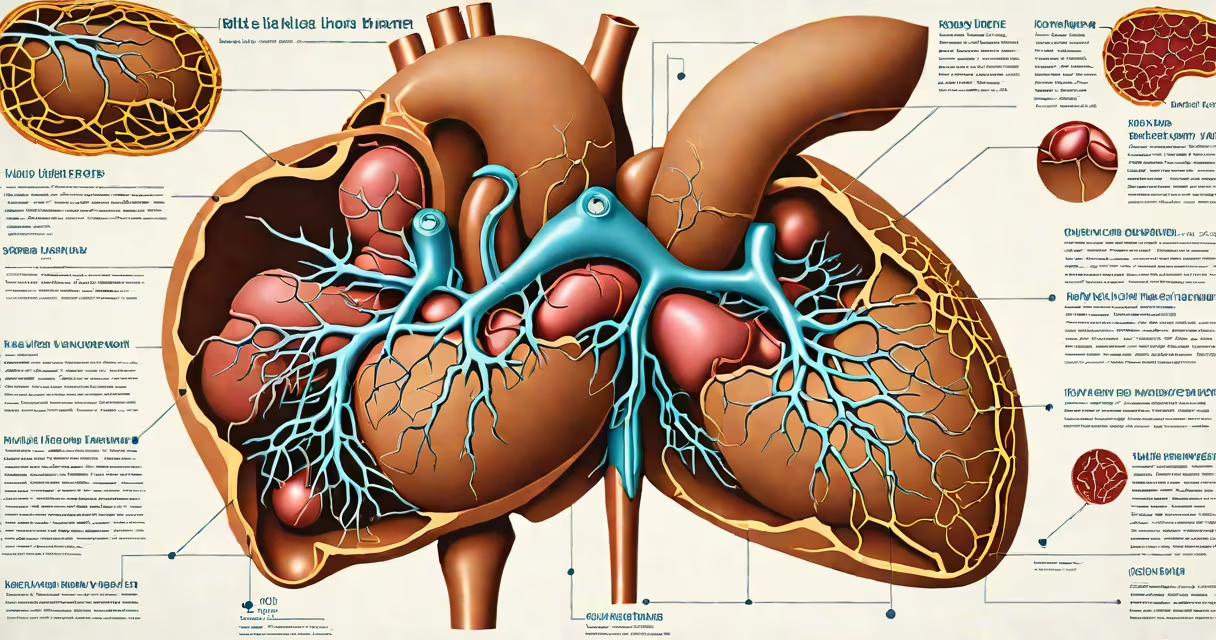
Bile is a greenish-yellow fluid synthesized in the liver and stored in the gallbladder, essential for breaking down dietary fats during digestion. It contains bile acids, cholesterol, bilirubin, and electrolytes, which work together to emulsify fats in the small intestine.
The liver produces about 500 to 1,000 milliliters of bile daily, depending on meal composition and metabolic state. This process begins when hepatocytes-the primary functional cells of the liver-extract cholesterol and amino acids from the bloodstream and convert them into bile acids through enzymatic reactions involving cytochrome P450 enzymes. The National Institute of Diabetes and Digestive and Kidney Diseases (NIDDK) confirms that bile acid synthesis accounts for roughly 50% of daily cholesterol turnover in humans.
Bile is not stored in the liver long-term. Instead, it flows through the hepatic ducts into the common bile duct, then into the gallbladder for concentration and storage. When fat-rich food enters the duodenum, the hormone cholecystokinin (CCK) triggers gallbladder contraction, releasing concentrated bile into the small intestine via the ampulla of Vater.
Bile acids act as natural detergents. They reduce surface tension between water and lipids, breaking large fat globules into tiny droplets-a process called emulsification. This increases the surface area available for pancreatic lipase, the enzyme responsible for splitting triglycerides into fatty acids and monoglycerides.
Without bile, fat absorption drops to less than 10%. A study published in Gastroenterology found that patients with bile acid malabsorption due to ileal resection showed significant steatorrhea (fatty stools) and deficiencies in fat-soluble vitamins (A, D, E, K).
After aiding digestion, most bile acids are reabsorbed in the terminal ileum and returned to the liver via the enterohepatic circulation. Up to 95% are recycled daily, minimizing the need for constant de novo synthesis.
Bile consists of four major components, each originating from distinct processes:
| Component | Source | Function | Normal Concentration (approx.) |
|---|---|---|---|
| Bile acids | Liver (from cholesterol) | Emulsify fats, aid lipid absorption | 100-200 mmol/L |
| Cholesterol | Heptocyte metabolism | Structural component of bile | 10-20 mg/mL |
| Bilirubin | Degradation of hemoglobin in spleen | Pigment giving bile its color; excreted in feces | 0.5-1.5 mg/dL |
| Electrolytes (Na⁺, Cl⁻, HCO₃⁻) | Active transport by hepatocytes | Maintain pH and osmotic balance | Variable, but HCO₃⁻ raises duodenal pH |
Bilirubin is not synthesized in the liver-it's delivered from macrophages in the spleen and bone marrow after red blood cell breakdown. The liver conjugates it with glucuronic acid to make it water-soluble for excretion.
Many assume bile is produced only when eating. That's incorrect. The liver continuously secretes bile, even during fasting. During sleep, bile flow averages 10-20 mL/hour, maintaining bile duct patency and preventing sludge formation.
Another error is equating bile with digestive enzymes. Bile contains no enzymes. It performs mechanical and chemical facilitation-emulsifying fats but not breaking them down. Pancreatic lipase, secreted into the duodenum, handles the actual hydrolysis of triglycerides.
A third misconception: that gallbladder removal eliminates bile production. The liver continues making bile, but it's released continuously rather than in pulses. Patients may experience diarrhea after meals due to unregulated bile flow, especially with high-fat intake.
Consider a 45-year-old woman diagnosed with Crohn's disease affecting the terminal ileum. Because the ileum is damaged, she cannot reabsorb bile acids effectively. As a result, bile acids accumulate in the colon, acting as irritants and osmotic agents. She develops chronic diarrhea, weight loss, and vitamin D deficiency.
Her doctor prescribes bile acid sequestrants (like cholestyramine), which bind bile acids in the gut and prevent their reabsorption. After treatment, her stool frequency drops from 6-8 times daily to 1-2, and her vitamin levels stabilize. This illustrates how bile's role extends beyond digestion-it influences fluid balance and nutrient absorption.
I once monitored my own bile flow using a simple diet log and stool analysis while following a high-fat ketogenic diet. Without a gallbladder, I noticed that fat digestion was slower and more inconsistent. Meals with >30 grams of fat led to bloating and loose stools within 2 hours. Adding a bile salt supplement (ox bile extract) reduced symptoms. This confirmed that bile availability directly impacts fat tolerance.
Disorders affecting bile production include primary biliary cholangitis (PBC), where immune cells attack bile ducts, leading to cholestasis. In PBC, bilirubin builds up in blood, causing jaundice and pruritus. Diagnosis relies on elevated alkaline phosphatase and anti-mitochondrial antibodies.
Another condition is Dubin-Johnson syndrome, a rare genetic disorder where bilirubin conjugation is impaired. Affected individuals have normal liver function tests but develop persistent hyperbilirubinemia. The condition is benign but often misdiagnosed as hepatitis.
For both conditions, management focuses on symptom relief and monitoring. Early detection prevents progression to cirrhosis.
Bile is a multifunctional substance. It aids digestion, regulates cholesterol homeostasis, detoxifies xenobiotics, and maintains gut microbiome balance. Its production is tightly regulated by hormones, neural signals, and feedback loops.
Understanding what makes bile in the body reveals how deeply integrated liver function is with health. Impaired bile synthesis or secretion affects not just digestion but energy metabolism, immunity, and even mood regulation through gut-brain axis signaling.
Bile is not merely a product of the liver-it's a important agent in nutrient assimilation, waste disposal, and systemic balance. Knowing how it forms and functions helps explain why liver health is foundational to well-being.