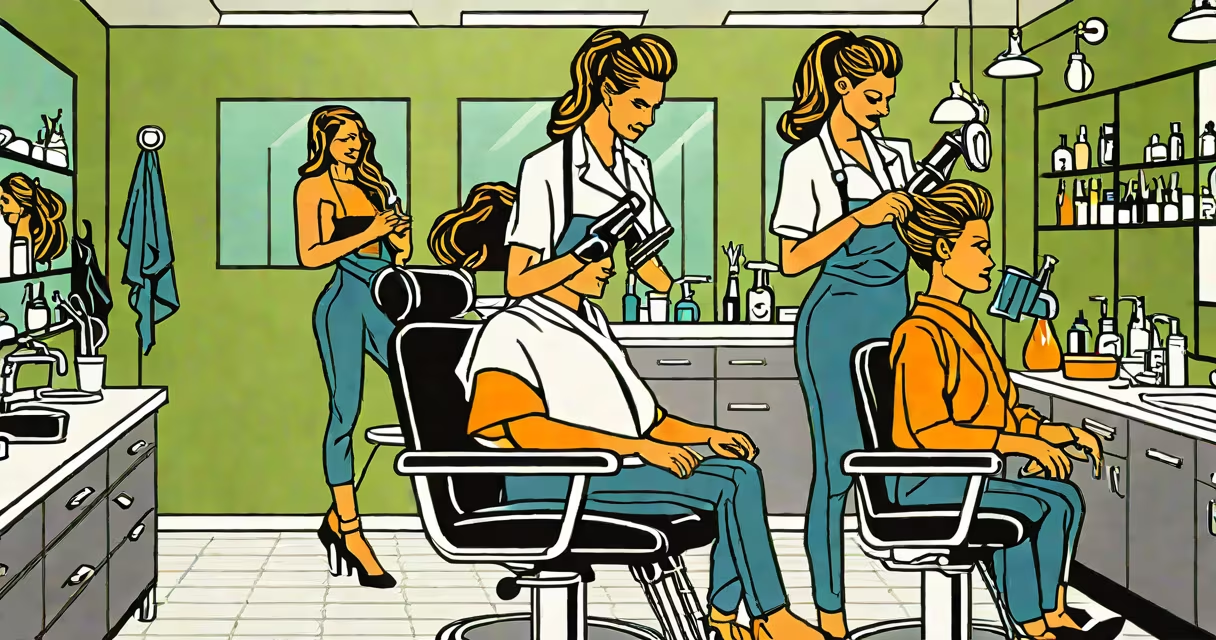
A hair stylist is a trained professional who cuts, shapes, colors, and styles hair. Terms like barber, cosmetologist, and hairstylist are often used interchangeably but differ in scope, licensing, and focus areas.
Hair stylists work in salons, spas, and private studios. They assess facial structure, hair texture, and client goals to recommend styles. A typical session includes shampooing, conditioning, cutting, and finishing with products. Most states require licensure through a state board exam covering safety, sanitation, and technique.
The term "hair stylist" is broad. More specific roles include barber (focused on men's hair and grooming), cosmetologist (licensed to do skin, nails, and hair), and hairstylist (specializing in women's and mixed-gender hair services). These roles have different training hours and certification requirements.
Stylists begin with a consultation. They ask about lifestyle, maintenance preferences, and desired look. They then assess hair density, porosity, and natural texture. This determines whether a chemical treatment like balayage or relaxer is safe.
Cutting involves sectioning hair, using shears or clippers, and layering for volume. Color application follows a precise timeline-typically 30 to 60 minutes depending on coverage. Finishing includes blow-drying, styling with heat tools, and applying product to set the style.
For example, a client with thick, curly hair seeking a low-maintenance bob might request a blunt cut with subtle highlights. The stylist uses a thermal iron to define curls, applies a heat-protectant serum, and finishes with a lightweight mousse. The entire process takes 90 minutes and costs $120 at a mid-tier salon.
Not all titles mean the same thing. The table below shows key differences in training, scope, and common services.
| Term | Training Hours | Scope of Practice | Common Services |
|---|---|---|---|
| Barber | 1,000-1,500 | Men's hair, beard shaping, scalp care | Short fades, crew cuts, hot towel shaves |
| Hairstylist | 1,200-1,600 | Women's and gender-neutral haircuts, coloring | Balayage, braids, updos, keratin treatments |
| Cosmetologist | 1,200-2,100 | Full-service beauty: skin, nails, hair | Facials, manicures, permanent waves, makeup |
Barbers typically train in trade schools or apprenticeships. Cosmetologists complete accredited programs and pass state exams. Hairstylists may specialize further-some focus on bridal styling, others on celebrity looks or textured hair care.
One non-obvious distinction: barbers are not legally permitted to perform chemical relaxers or color on women's hair in most states. This restriction exists because their training emphasizes male anatomy and grooming techniques, not female hair biology.
"Hair stylist" is often mistaken for "beauty consultant" or "makeup artist." The latter two do not cut or color hair. A beauty consultant advises on products based on skin tone and type. A makeup artist applies foundation, contour, and eye shadow for events or photoshoots.
Some clients assume all stylists offer extensions or weave-in services. Not true. Extensions require additional certification. A stylist without a license in hair weaving risks damaging client hair and violating state regulations.
I once observed a client pay $200 for a "full transformation" at a boutique salon. The stylist used a flat iron on wet hair, causing severe breakage. The client later discovered the stylist was not certified in heat protection techniques-a gap in training that many salons overlook.
Using the correct term avoids misunderstandings. Saying "I need a barber" sets clear expectations. Requesting a "cosmetologist" signals interest in a full-service experience. Asking for a "hairstylist" focuses the session on hair design.
When booking online, search terms matter. Typing "barber near me" returns results focused on men's grooming. Using "hairstylist" pulls up women's salons. Platforms like Yelp and Google Maps use these keywords to filter results.
For clarity, always specify your goal. Need a fade? Say "barber." Want a red ombre? Say "hairstylist." Looking for a full spa day? Use "cosmetologist."
Understanding the difference between these roles ensures better service and safer outcomes. The right title leads to the right professional.
Another word for hair stylist includes barber, cosmetologist, and hairstylist. Each term reflects a distinct skill set and legal scope. Knowing which to use prevents mismatched expectations and poor results.