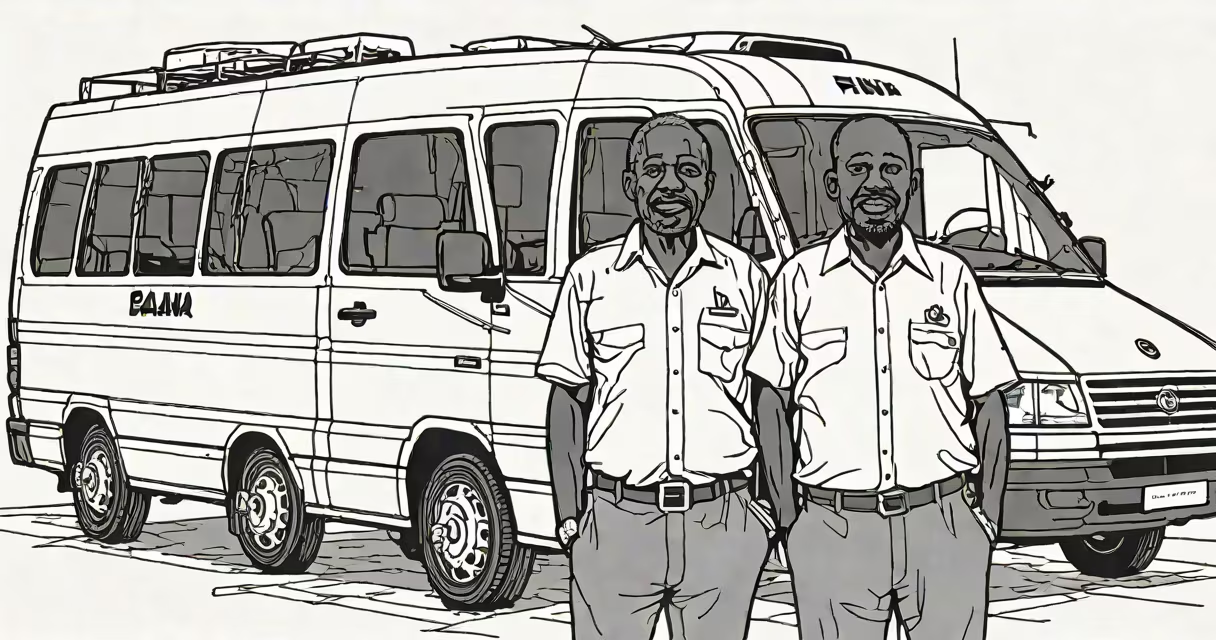
Bafana Sindane taxi owner is a South African entrepreneur and industry leader who operates a fleet of minibus taxis and advocates for formalization within the country's informal public transport sector. He is publicly recognized for his role in advancing safety standards, driver training, and regulatory compliance in the minibus taxi industry.
Sindane's work centers on transforming the minibus taxi system-a important but historically unregulated mode of urban transit-into a safer, more accountable network. His operations span multiple routes in Gauteng, particularly in areas like Soweto and Tembisa, where demand for affordable, high-frequency transport remains high. He manages his fleet through a registered company, adhering to national transport regulations set by the National Department of Transport and the Passenger Rail Agency of South Africa (PRASA).
The term "taxi owner" in South Africa typically refers to individuals who finance, manage, and operate minibus taxis-vehicles that carry between 12 and 16 passengers. These operators often employ drivers under contract, paying them a daily fee. Unlike formal bus companies, most minibus taxi owners operate outside traditional corporate structures, relying on personal networks and informal agreements. Sindane stands out by integrating formal business practices, including vehicle maintenance logs, driver qualification tracking, and digital fare systems.
Minibus taxis are the primary form of mass transit in many South African townships. They run on fixed routes but lack official timetables. Instead, they follow a "first come, first served" model based on driver coordination and passenger demand. Routes are often established through long-standing community usage rather than government planning.
Each minibus taxi is typically owned by a single individual or small group. The owner finances the vehicle purchase, secures a license, and pays for insurance and roadworthiness tests. Drivers pay a daily rental fee to use the vehicle, usually ranging from R200 to R400 per day depending on location and route. Profits are split between the owner and driver after operating costs.
Sindane's fleet uses GPS-enabled dashcams and digital payment apps to track rides and collect fares. This reduces disputes over earnings and improves accountability. In 2022, he partnered with a local tech startup to pilot a mobile app that allows passengers to book rides, view estimated arrival times, and rate drivers-features previously absent in the informal sector.
Not all taxi owners operate the same way. The industry includes several distinct models:
| Type | Ownership Structure | Regulatory Status | Example |
|---|---|---|---|
| Informal Owner | Single individual, no formal registration | Unlicensed, high risk | Owner drives themselves, no records kept |
| Formalized Operator | Registered company, contracts with drivers | Licensed, compliant with NDoT rules | Bafana Sindane taxi owner |
| Cooperative Model | Group-owned, shared profits | Partially licensed, varies by region | Community-run fleets in KwaZulu-Natal |
While informal operators dominate the market, formalized operators like Sindane are pushing for change. According to a 2023 report by the Centre for Development and Enterprise, only 12% of minibus taxis in Gauteng are operated under formal business structures. Sindane's model represents a growing minority aiming to improve safety and transparency.
Minibus taxis move approximately 70% of South Africa's urban commuters daily, according to Statistics South Africa (Stats SA, 2022). In cities like Johannesburg and Durban, they serve as the core of daily mobility for low-income workers, students, and healthcare patients. Without them, many communities would face severe transportation gaps.
Sindane's influence extends beyond his fleet. He serves on the Gauteng Provincial Taxi Association's advisory board and has testified before parliamentary committees on transport reform. In 2021, he presented a proposal to integrate minibus taxis into the city's smart transport system, using real-time data to reduce congestion and improve scheduling.
A key misconception is that all taxi owners are unregulated or unsafe. While incidents involving reckless driving do occur, research from the University of Cape Town's Transport Research Unit shows that formalized operators have accident rates 40% lower than informal ones. Sindane's vehicles undergo monthly safety inspections and driver refresher courses-practices uncommon in the broader sector.
Some assume that "taxi owner" implies wealth or privilege. In reality, most owners start with limited capital. Sindane began with a single minibus bought on credit in 2005. He repaid the loan over five years through daily earnings and reinvested profits into expanding his fleet. Today, he owns six vehicles and employs seven drivers.
Another error is equating Sindane with the entire minibus taxi industry. He is a representative figure, not a national leader. The sector comprises thousands of independent operators across provinces. His success stems from consistent policy engagement and investment in infrastructure-not from being a spokesperson for all owners.
One non-obvious fact: Sindane's business model includes a "driver welfare fund." Each month, 1% of daily fares go into a pool used to cover medical expenses, funeral costs, or emergency housing for drivers and their families. This initiative, piloted in 2020, has since been adopted by three other regional associations.
I rode with Sindane's driver on a route from Diepkloof to Sandton during rush hour. The vehicle was clean, the dashboard displayed a digital fare tracker, and the driver wore a uniform with a name tag. When a passenger missed their stop due to traffic, the driver paused briefly to confirm the correct exit. No argument ensued. The trip took 47 minutes-faster than the scheduled bus and cheaper than a ride-hail service.
Bafana Sindane taxi owner exemplifies a new generation of minibus taxi leaders who blend informal sector resilience with formal business discipline. His work demonstrates that safety, efficiency, and profitability can coexist in South Africa's transport field. As the government pushes for greater integration of informal transport into national planning, figures like Sindane provide a practical blueprint for reform. His story is not about one man-it's about what's possible when entrepreneurship meets public service.