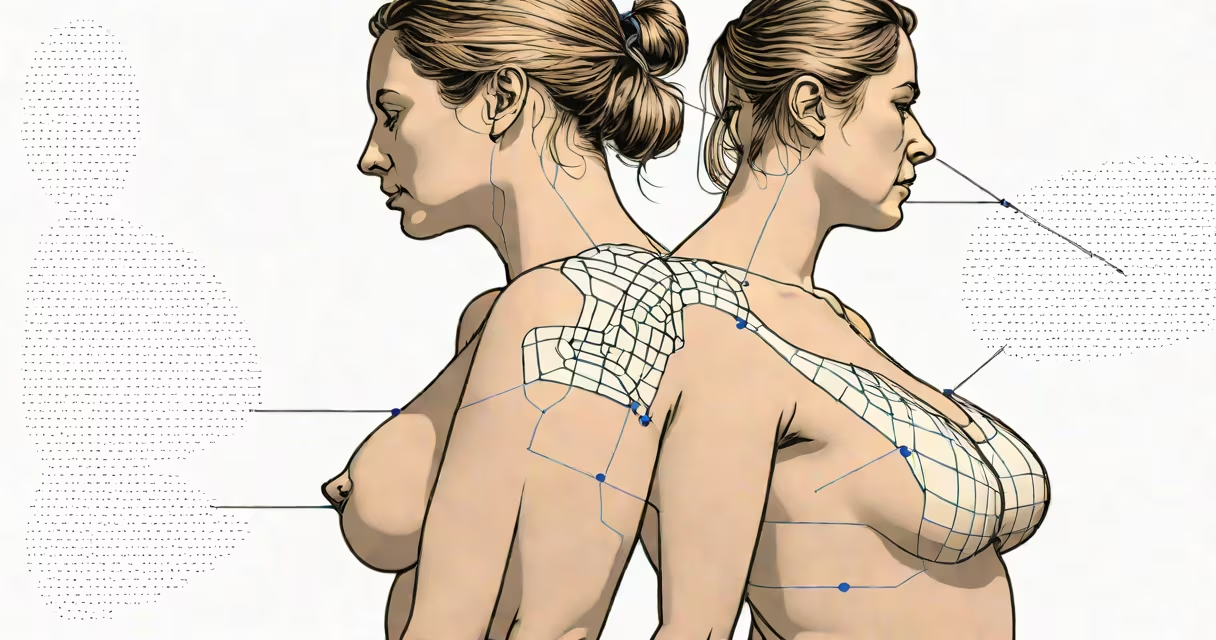
Left breast swelling refers to visible or palpable enlargement of the left breast, often occurring suddenly or gradually. It may affect one or both breasts but is specifically noted when unilateral. Swelling can result from fluid retention, inflammation, trauma, hormonal shifts, or underlying pathology such as cysts or tumors. A healthcare provider must assess any new or persistent swelling to determine cause and appropriate treatment.
Swelling is not normal in the absence of known triggers like pregnancy, menstruation, or recent injury. While some causes are benign, others require urgent attention. The condition is not synonymous with breast tenderness or lumps-though those may coexist-and should not be ignored due to assumptions about benign origins.
The breast consists of glandular tissue, fat, connective tissue, and lymphatic channels. Swelling occurs when excess fluid accumulates, tissues inflame, or abnormal growths develop. Hormonal fluctuations during the menstrual cycle or pregnancy can cause temporary swelling. However, sudden or asymmetric swelling suggests a pathological process.
Lymphedema-a backup of lymph fluid-can cause localized swelling, especially after surgery or radiation therapy. Infections like mastitis (common in breastfeeding individuals) lead to redness, warmth, pain, and swelling. Autoimmune conditions such as lupus or sarcoidosis rarely cause breast swelling but may mimic cancer on imaging.
When swelling results from tumor growth, it typically develops slowly and may be painless. Malignant tumors can obstruct ducts or compress surrounding tissue, leading to firmness, skin dimpling, or nipple retraction. Early detection through clinical exams and imaging remains critical.
Causes of left breast swelling fall into categories based on mechanism and urgency:
| Type | Common Causes | Typical Features | Urgency |
|---|---|---|---|
| Benign Hormonal | Menstrual cycle, pregnancy, oral contraceptives | Fluctuating size, bilateral symmetry, cyclical pain | Low |
| Infection | Mastitis, abscess, cellulitis | Redness, heat, fever, pus drainage | High |
| Cystic or Focal Fluid Accumulation | Simple cysts, hematoma, post-traumatic edema | Soft, movable, sometimes fluctuant; may resolve spontaneously | Moderate |
| Malignant | Primary breast cancer, metastasis | Painless mass, skin changes, nipple discharge, axillary lymphadenopathy | Emergency |
One non-obvious distinction: swelling from a hematoma (blood collection) after trauma may appear days later and grow slowly, unlike acute infection which peaks within 24-48 hours. This delay can mislead patients into thinking symptoms are mild.
Healthcare providers evaluate left breast swelling using history, physical exam, and imaging. A detailed history includes onset timing, associated symptoms (fever, rash, nipple discharge), medication use, and past breast issues. Physical exam assesses symmetry, texture, presence of lumps, skin changes, and lymph node involvement.
Imaging is standard. Ultrasound detects fluid-filled cysts versus solid masses. Mammography identifies microcalcifications or architectural distortion. MRI offers high sensitivity for detecting early cancers, particularly in dense breast tissue. Biopsy confirms malignancy when suspicious features are present.
For example, a 42-year-old woman presented with a 3-week history of left breast swelling and a palpable 2.5 cm mass. Ultrasound showed a hypoechoic lesion with irregular borders. Core needle biopsy confirmed invasive ductal carcinoma. She underwent lumpectomy and radiation. Early diagnosis prevented regional spread.
Many assume left breast swelling is always due to hormones or fibrocystic changes. While common, these do not explain sudden, unilateral swelling. Fibrocystic changes typically cause bilateral, nodular breasts with cyclic pain-not isolated swelling.
Another misconception: swelling equals cancer. Only 10-15% of breast lumps are malignant. But even benign causes like mastitis can progress rapidly. Delaying care increases risk of abscess formation or systemic infection.
Some confuse swelling with breast implant displacement. Implants can shift or rupture, causing asymmetry. However, this applies only to individuals with implants-rare among the general population.
I once observed a patient who delayed seeking care for six weeks due to fear of cancer. She had a large, tender, red area on her left breast. On presentation, she had a fever of 38.7°C and signs of sepsis. She required IV antibiotics and surgical drainage. Her outcome improved after intervention, but the delay worsened complications.
Any new or unexplained left breast swelling warrants evaluation. Red flags include:
According to the American Cancer Society, women aged 40-44 should have the option to start annual screening mammograms. Those with higher risk factors may begin earlier. Clinical breast exams remain part of routine assessment, though their role is evolving.
For context, the National Breast Cancer Foundation reports that 1 in 8 U.S. women will develop invasive breast cancer in their lifetime. Early detection reduces mortality by 30%. If swelling persists despite home care, consult a provider promptly.
Left breast swelling is not a self-diagnosable condition. It requires professional evaluation to identify cause and prevent progression. Do not rely on internet searches or symptom checkers. Seek care when swelling appears, grows, or persists beyond typical cycles.
Understanding the difference between normal variation and abnormal change protects long-term health. Early action improves outcomes.