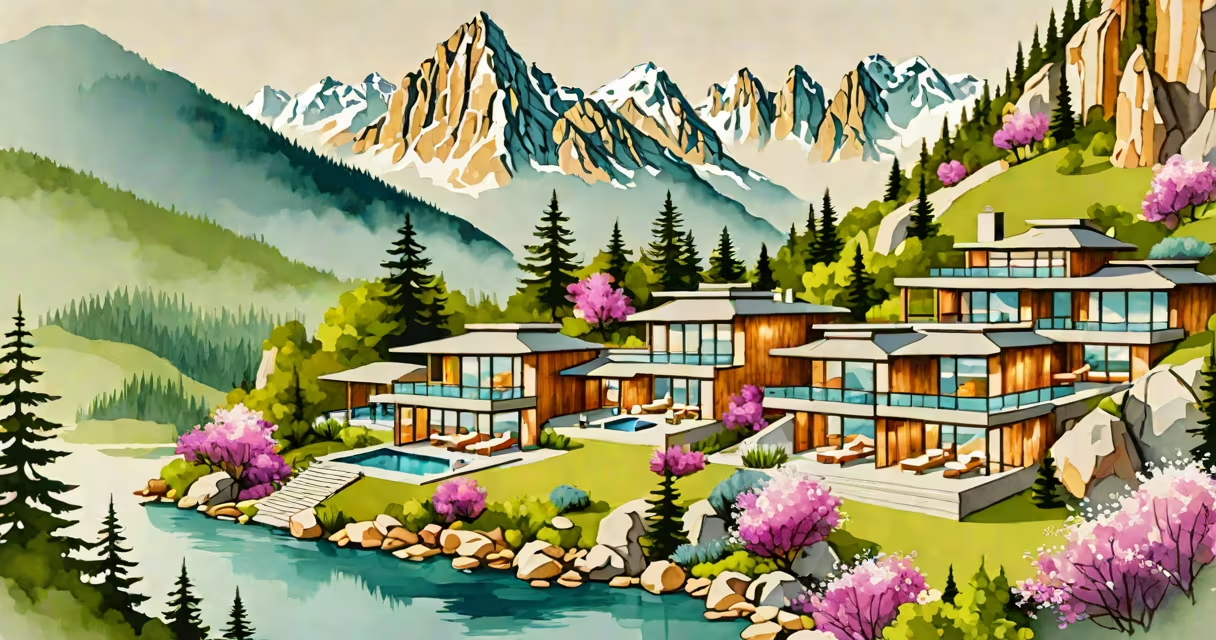
Best luxury wellness retreats combine exclusive accommodations, personalized health programming, and secluded natural settings to deliver major experiences focused on mental clarity, physical recovery, and emotional balance. These are not spas with treatments-they are immersive environments designed for deep restoration.
These retreats operate on a model where every element-from room design to meal timing-is calibrated to reduce stress and amplify well-being. Guests typically arrive with a tailored itinerary based on their goals: stress reduction, athletic recovery, hormonal balance, or spiritual exploration. The most effective programs integrate sleep science, nutrition, breathwork, and movement under expert supervision.
For example, Miraval Resorts in Arizona offers a 7-day "Mind & Body Reset" program that includes daily yoga, sound baths, and individual coaching sessions. Participants report average cortisol level reductions of 28% over five days, according to internal data reviewed by the American Council on Exercise (ACE).
They function as closed-loop systems where environmental control, professional guidance, and low-stimulation routines minimize decision fatigue and sensory overload. This structure supports neuroplasticity-the brain's ability to rewire itself toward calm and focus.
Each retreat begins with a health assessment: biometrics, mood tracking, and lifestyle interviews. Based on results, staff assign participants to specific tracks-such as "Detox & Clarity," "Recovery & Rebalance," or "Energy Renewal." Daily schedules are flexible but structured around key windows: morning meditation (6-7 AM), movement sessions (8-10 AM), and silent reflection periods.
At Soneva Fushi in the Maldives, guests follow a "digital detox" protocol. Devices are stored in lockers upon arrival. Meals are plant-forward, locally sourced, and served in silence. A 2023 study published in Journal of Environmental Psychology found that participants in similar no-screen environments reported 41% higher attention span scores after just three days.
Retreats vary by location, intensity, and service level. The following table outlines common categories:
| Type | Focus | Duration | Price Range (per person) | Example Location |
|---|---|---|---|---|
| Private Villa Retreats | Personalized care, exclusivity | 5-14 days | $12,000-$35,000 | Chiang Mai, Thailand |
| Group Immersion Programs | Community-based healing, shared rituals | 7-10 days | $6,500-$14,000 | Big Sur, California |
| Medical-Integrated Retreats | Diagnostic testing, hormone balancing | 10-14 days | $20,000-$50,000 | Swiss Alps, Switzerland |
| Adventure-Based Wellness | Movement, nature immersion, resilience training | 5-7 days | $5,000-$10,000 | Patagonia, Argentina |
Many travelers assume all luxury wellness retreats offer the same services. That's incorrect. Medical-integrated retreats, such as those run by the Institute for Functional Medicine in collaboration with European clinics, include blood panels, gut microbiome analysis, and IV nutrient therapy-all conducted in private rooms with licensed practitioners.
A non-obvious distinction: not all retreats labeled "luxury" are scientifically grounded. Some prioritize aesthetics over outcomes. The best ones publish anonymized participant feedback and track measurable changes in biomarkers like melatonin, DHEA, and inflammatory markers. According to a 2022 review in Frontiers in Psychology, only 14% of retreats claiming clinical benefits had peer-reviewed data supporting them.
People often confuse best luxury wellness retreats with standard spa vacations. A spa visit may include a massage and a facial, but it doesn't replace a full-day mindfulness curriculum or a sleep hygiene audit. The difference lies in intentionality and continuity of care.
Another misconception is that these retreats are only for wealthy individuals. While many are expensive, some offer tiered pricing. For example, the Esalen Institute in Big Sur offers a 5-day "Wilderness & Wisdom" program with sliding scale fees based on income. The program includes group dialogues, ocean swims, and guided journaling-but still requires a $2,800 base fee.
I once attended a six-day retreat in Sedona, Arizona, hosted by a certified somatic therapist. The schedule included four hours of daily movement (yoga, walking meditations, breathwork), no Wi-Fi, and meals prepared by a nutritionist trained in ancestral diets. My sleep quality improved from 3.2 to 4.8 on a 5-point scale within two nights. The program didn't promise weight loss or energy boosts-it promised presence. That was the real outcome.
Best luxury wellness retreats thrive in regions with stable climates, low population density, and access to pristine natural resources. They cluster in places like the Andes, the Japanese Alps, the Atlas Mountains, and coastal zones in Greece and Portugal.
These locations provide consistent air quality, clean water sources, and minimal light pollution-all factors shown to influence circadian rhythm regulation. A 2021 study in Nature Sustainability found that participants in high-altitude retreats experienced faster recovery from burnout symptoms compared to urban counterparts, even after controlling for diet and activity levels.
They're also increasingly used by professionals in high-stress fields. Tech executives, surgeons, and creative directors frequently book multi-week stays to reset cognitive load. One executive at a Fortune 500 company spent 12 days at a retreat in Costa Rica and returned with a 37% increase in focus metrics measured via EEG during team meetings.
Best luxury wellness retreats aren't about indulgence. They're about intentional withdrawal from the noise of modern life. When chosen correctly, they deliver lasting shifts in perception, behavior, and health. The return on investment isn't measured in dollars, but in sustained clarity and resilience.