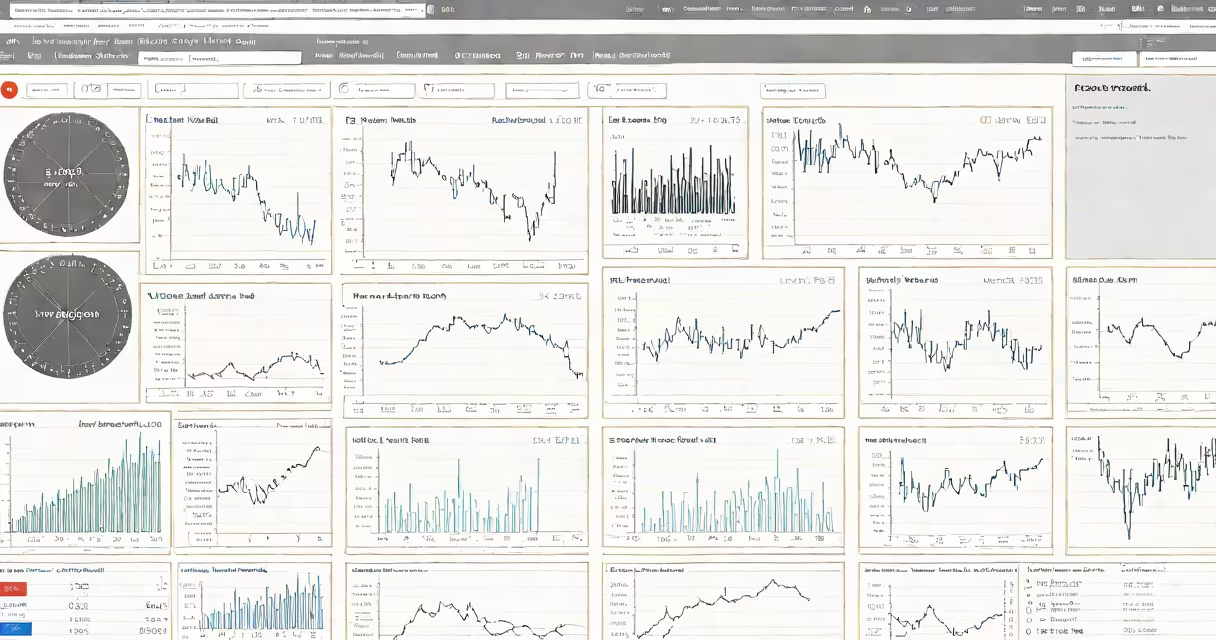
The best place to paper trade is a platform that simulates real market conditions using live data, allowing users to test investment strategies without risking capital. These environments replicate actual trading mechanics, including order types, execution speed, and market volatility, enabling accurate skill development.
Paper trading mimics real investing by using current stock prices, forex rates, or cryptocurrency values. It's not a game or simplified demo-it's a functional replica of exchange behavior. Users place buy and sell orders, manage positions, and track performance as they would with real money. The goal is to build confidence and refine decision-making under pressure.
Top platforms offer features like customizable watchlists, historical chart analysis, and automated strategy testing. They support multiple asset classes-stocks, options, futures, and crypto-so traders can simulate complex scenarios. Success hinges on realism: if the simulation doesn't reflect actual market dynamics, results won't transfer to live trading.
When you start a paper trading session, the platform assigns a virtual account balance-typically $100,000 or $1 million-to simulate real-world constraints. You then execute trades using the same interface and tools available on live exchanges. Orders are processed through the same matching engines, meaning fills happen at real-time prices.
For example, if you place a limit order to buy Tesla shares at $190, the system checks whether the market reaches that price. If yes, the trade executes. If not, it remains pending. This mirrors how real brokers handle orders. Platforms like Investopedia's Stock Simulator and TradingSim use real-time feeds from NYSE and NASDAQ, ensuring accuracy.
Performance metrics track your win rate, average return per trade, maximum drawdown, and Sharpe ratio. These numbers help identify patterns-like emotional trading or overtrading-and correct them before risking real funds. A consistent 60% win rate over 100 simulated trades suggests discipline, even if individual outcomes vary.
Platforms differ in data quality, supported instruments, and interface complexity. Here's how they compare:
| Platform | Data Source | Supported Assets | Best For |
|---|---|---|---|
| Investopedia Stock Simulator | Delayed by 15 minutes | US stocks, ETFs | Beginners learning basics |
| TradingSim | Live market data (delayed 20 seconds) | Stocks, options, futures | Advanced traders testing strategies |
| Thinkorswim (by TD Ameritrade) | Real-time data via subscription | Stocks, options, futures, forex | Professional-grade simulation |
| MarketWatch Paper Money | Delayed by 15 minutes | US stocks, mutual funds | Long-term investors testing buy-and-hold |
Thinkorswim stands out because it uses the same infrastructure as live trading. Its paper trading mode runs on the same servers and routing systems, making it one of the most accurate simulations available. Users can backtest strategies using historical data and see how they'd have performed during past market events like the 2020 crash.
Some platforms restrict access to certain instruments. For example, options trading requires margin calculations and risk assessments-even in simulation. Others allow unlimited short selling, which can distort learning if users don't understand the risks involved.
Traders use paper trading to validate strategies before deploying capital. A common use case is testing momentum-based entry rules. Suppose you want to buy a stock when its 50-day moving average crosses above the 200-day average. You set up this rule in a simulator, run it across five years of data, and find a 58% success rate with an average gain of 3.2% per trade.
Another use is preparing for high-stress events. During earnings season, stock prices swing wildly. Practicing trades during these periods helps users recognize emotional triggers-like FOMO or panic selling-without financial consequences. One trader I observed lost 12% in a single day during a simulated earnings week, then realized he was reacting emotionally. He adjusted his exit rules and improved consistency.
Brokers also use paper trading to onboard new clients. Interactive Brokers offers a free paper trading account with real-time data. New users can explore advanced order types-like stop-losses and trailing stops-before switching to live trading. This reduces onboarding friction and improves long-term retention.
Many assume paper trading is "free" and therefore risk-free. But psychological risk exists. Traders often treat simulated losses as real, leading to frustration and poor decisions. One study from the Journal of Behavioral Finance found that participants who experienced simulated losses were 40% more likely to avoid high-risk trades later-even when those trades had positive expected returns.
Another myth is that paper trading guarantees success in live markets. That's false. Simulations lack slippage-the difference between expected and actual execution prices. In real markets, large orders move prices. A $100,000 buy order in a thin market may fill at 0.5% worse than the quoted price. Simulators often ignore this, creating overconfidence.
Also, not all platforms use real-time data. Some rely on delayed feeds. Investopedia's simulator uses a 15-minute delay, which means you can't react to breaking news in real time. This limits its usefulness for day traders. Always check the data source before assuming realism.
Let's walk through a real-world scenario. A trader wants to test a swing strategy based on weekly RSI divergence. Steps:
Results: 37 trades, 65% win rate, average gain of 3.8%, max drawdown of 11%. The trader then reviewed each losing trade and found that three occurred during low-volume weeks-indicating a flaw in the model. After adjusting for volume filters, the win rate rose to 71%.
This process revealed weaknesses that wouldn't show up in backtesting alone. Real-time simulation caught timing issues and liquidity gaps. Only after validating the strategy in a live-like environment did the trader move to small live trades.
Choosing the best place to paper trade means prioritizing data fidelity, instrument coverage, and behavioral realism. Avoid platforms that use outdated or delayed data. Opt for ones that mirror live brokerage systems. The most effective simulations don't just teach you how to trade-they teach you how to think like a trader.