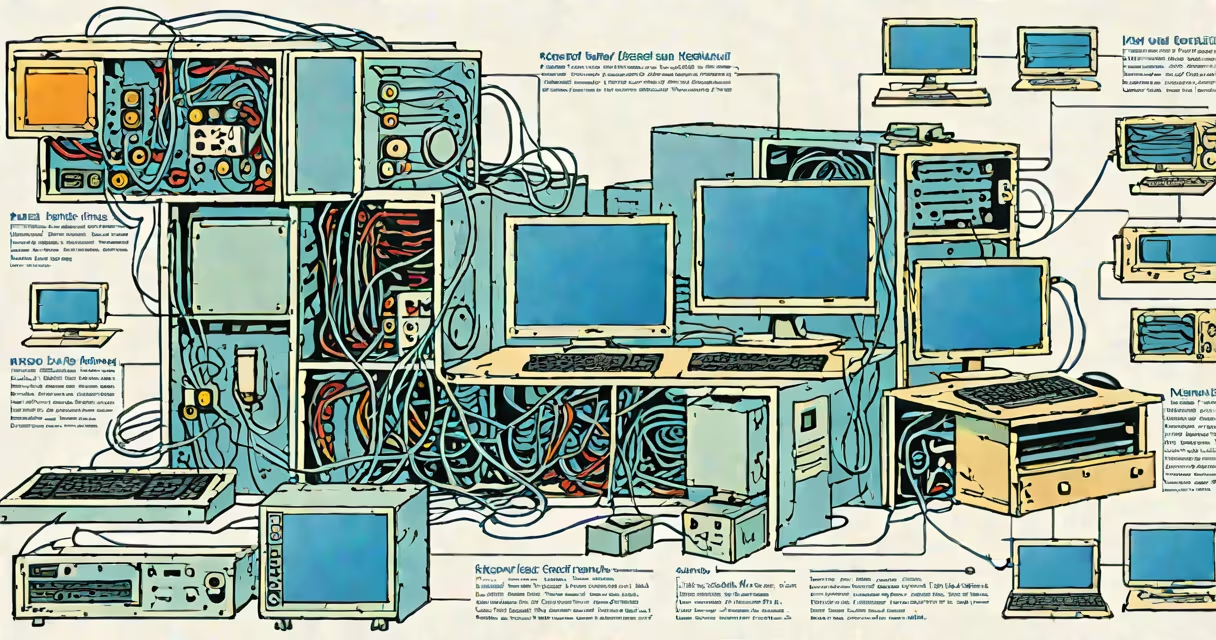
Building an operating system means designing and implementing the foundational software that controls a computer's hardware and provides services for application programs. It begins with the kernel-the central component that manages memory, processes, and device access-and extends through device drivers, system libraries, and user interfaces. The result is a platform capable of running software on physical or virtual hardware.
The process starts with a minimal boot environment. A developer writes assembly code to initialize the CPU, set up memory paging, and load the kernel into RAM. Once the kernel runs, it takes control of the system, enabling multitasking, file systems, and security policies. Modern operating systems like Linux, Windows, and macOS follow this model, though their implementations differ in complexity and design philosophy.
Operating systems are not one-size-fits-all. They're tailored for specific environments-desktops, servers, mobile devices, or embedded systems. Building one requires understanding hardware architecture, concurrency, and resource allocation. It's not just coding-it's engineering at the intersection of software and physics.
Creating an operating system begins with defining the target platform. Is it a desktop machine with x86-64 processors? A Raspberry Pi using ARM? Or a real-time controller in an industrial robot? The choice determines the instruction set, interrupt handling, and memory layout.
Next, developers write a bootloader-a small program stored in firmware or on disk-that loads the kernel into memory. The bootloader initializes basic hardware, such as the graphics card or network interface, then transfers control to the kernel's entry point. On x86 systems, this often uses the Multiboot specification, which allows compatibility across different bootloaders.
The kernel itself is divided into core subsystems: process scheduler, memory manager, file system, and device drivers. The scheduler allocates CPU time among running tasks. The memory manager handles virtual memory, translating logical addresses to physical ones. Device drivers translate high-level commands into hardware-specific signals-like sending a USB packet or reading from a hard drive.
Every operating system shares a common structure, but the implementation varies based on purpose. The most significant distinction lies between monolithic kernels and microkernels.
| Type | Architecture | Use Case | Example |
|---|---|---|---|
| Monolithic | All core functions run in kernel space | General-purpose computing | Linux, early versions of Windows |
| Microkernel | Only essential services in kernel; others in user space | High-security, real-time systems | QNX, L4, seL4 |
| Hybrid | Combines elements of both | Modern desktop and mobile OS | macOS (XNU), Windows NT |
Monolithic kernels offer performance because system calls don't require context switching. But they're less stable-if a driver crashes, the whole system may halt. Microkernels avoid this by isolating services. However, they incur overhead due to message passing between processes.
Embedded operating systems represent another category. These are lightweight, optimized for limited memory and processing power. Examples include FreeRTOS, Zephyr, and Android Things. They often lack full GUI support and focus on predictable timing and low latency.
Operating systems are the foundation of every digital interaction. Without them, computers cannot run applications. Even smartphones, smartwatches, and IoT devices rely on specialized operating systems to manage sensors, battery life, and connectivity.
Developing an OS is critical for industries requiring full control over behavior. Aerospace systems, medical devices, and autonomous vehicles demand deterministic response times and fail-safe mechanisms. Standard consumer operating systems like Windows or Android aren't designed for these constraints. Custom-built systems ensure reliability under extreme conditions.
A real-world example: the Mars Rover's onboard computer runs a custom RTOS (real-time operating system) developed by NASA engineers. It handles navigation, data collection, and communication with Earth-all within strict timing limits. A single delay could compromise mission success.
Many assume building an operating system requires a team of hundreds and years of work. While large systems like Linux take decades to mature, it's possible to create a functional minimal OS in weeks. The key is scope. A basic OS that boots, prints text, and handles interrupts can be written in under 500 lines of C and assembly.
Another myth: "Only companies like Microsoft or Apple can build an OS." That's false. The Linux kernel, released under the GNU General Public License, is maintained by thousands of contributors worldwide. Individual developers have created working OSes from scratch, such as the "xv6" system taught at MIT, which demonstrates core concepts in just 1,000 lines of code.
Some confuse building an OS with installing a distribution. Installing Ubuntu or Fedora doesn't involve building the kernel-you're using someone else's work. True OS development includes modifying the kernel source, compiling it, and testing it on actual hardware.
I once spent a weekend writing a minimal operating system for a Raspberry Pi. Using GCC cross-compilation tools, I wrote a bootloader in assembly and a kernel in C. After setting up a FAT32 partition and copying the binary, the system booted and displayed "Hello, World!" on screen. It didn't handle files or networking-but it proved the concept: you don't need a university lab to start.
Building an operating system is distinct from developing applications or writing device drivers. Application software runs *on* the OS. Drivers are part of the OS but serve a narrower function-managing individual hardware components. The OS itself orchestrates both.
It's also not the same as creating a firmware update. Firmware runs before the OS and manages low-level hardware initialization. UEFI, for example, is firmware that prepares the system for booting the OS. The OS takes over afterward.
Understanding the role of an operating system reveals why it's central to computing. Without it, hardware remains inert. With it, machines become tools for calculation, communication, and creativity. The act of building one teaches how computers truly work-not as black boxes, but as systems governed by logic, timing, and design.
Building an operating system is not just about code-it's about control, predictability, and understanding. It's the ultimate exercise in system thinking.