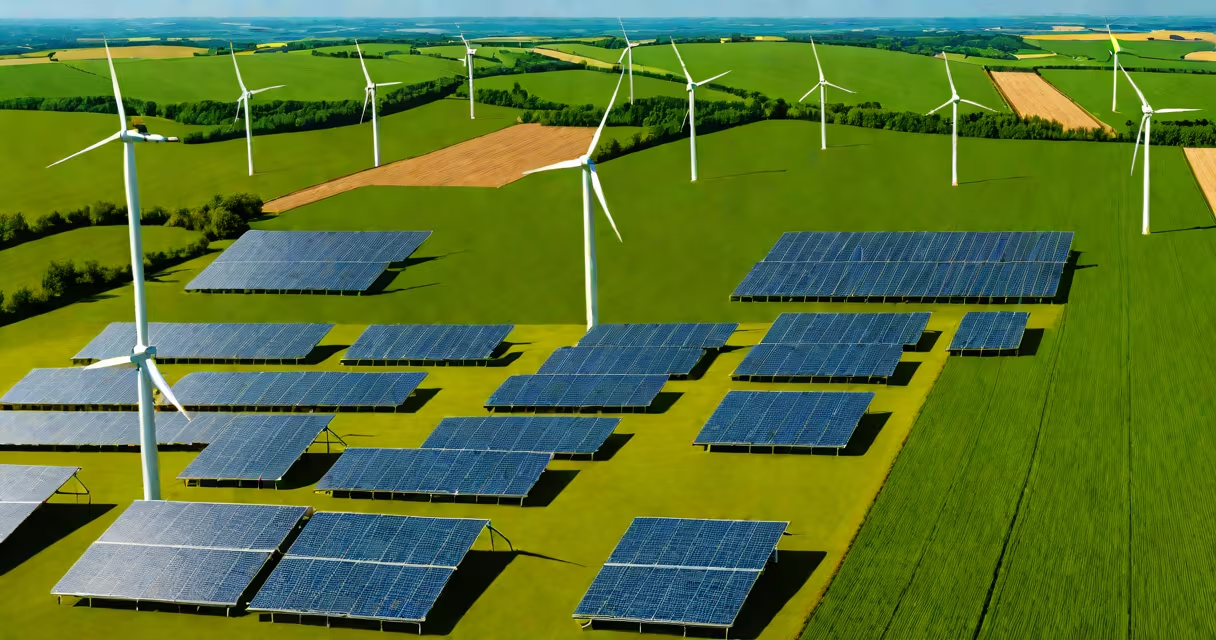
Energy independence is a country's ability to meet its total energy demand using domestically produced resources, eliminating reliance on imported fuels. This includes electricity, heating, transportation, and industrial power sourced within national borders.
Nations achieve energy independence by expanding domestic generation from renewable sources like wind, solar, and hydropower, or by developing indigenous fossil fuel reserves. The goal is long-term energy security, reduced exposure to global price volatility, and lower carbon emissions.
The United States reached a milestone in 2019 when domestic oil production exceeded imports for the first time since 1950, according to the U.S. Energy Information Administration (EIA). That shift marked a step toward energy independence, though full independence remains elusive due to ongoing natural gas and refined product imports.
Energy independence hinges on balancing supply and demand within national boundaries. A country must generate sufficient energy from local sources-whether solar farms, nuclear plants, or shale wells-to cover all consumption sectors: residential, commercial, industrial, and transportation.
Grid integration is critical. Domestic energy must flow reliably from remote generation sites to urban centers. In Germany, solar and wind output often exceeds demand during peak daylight hours, requiring storage systems or export agreements to prevent curtailment. Without such infrastructure, even high domestic production doesn't count toward independence.
Energy independence is not static. It shifts with changes in consumption patterns. For example, the rise of electric vehicles increases electricity demand. A country that previously met 80% of its energy needs domestically may see that drop to 60% if EV adoption grows faster than new generation capacity.
Domestic energy sources fall into three categories: renewable, fossil-based, and nuclear. Each contributes differently to independence goals.
| Source Type | Examples | Contribution to Independence |
|---|---|---|
| Renewables | Solar, wind, hydro, geothermal | High-local availability, low fuel costs, minimal import dependency |
| Fossil Fuels | Domestic oil, coal, shale gas | Moderate-reduces import dependence but creates emissions and extraction risks |
| Nuclear | Uranium-based reactors | High-consistent baseload power, limited fuel imports, but high upfront cost |
Renewables offer the most sustainable path to independence. Countries like Denmark and Uruguay generate over 50% of their electricity from wind and solar, with plans to reach 100% by 2030. These nations rely less on external suppliers and are better insulated from geopolitical shocks.
However, fossil fuel dependence persists in many regions. Russia supplies nearly 40% of Europe's natural gas, making energy independence difficult despite domestic coal and biomass resources. In contrast, Canada produces more oil than it consumes and exports surplus-making it energy independent in oil but not in energy mix.
Energy independence is most critical in regions vulnerable to supply disruptions. The 1973 oil embargo exposed how reliant economies could be on foreign oil. OPEC's cutoff of shipments to the U.S. caused gasoline shortages and inflation, reinforcing the strategic value of domestic production.
Today, climate policy drives energy independence efforts. The European Union's REPowerEU plan aims to cut Russian gas imports by two-thirds by 2027 through expanded solar and wind deployment. By 2030, EU member states intend to produce 42% of their energy domestically via renewables-up from 20% in 2020.
Energy independence also supports economic resilience. When a country produces its own energy, profits stay within the domestic economy. In Texas, wind power accounts for 25% of electricity generation and supports over 25,000 jobs. Local investment in infrastructure reduces transmission losses and strengthens regional grids.
Energy independence is not synonymous with energy self-sufficiency. Self-sufficiency implies complete internal coverage of all energy forms. Energy independence allows for trade-imports are permitted as long as they don't compromise national security or long-term supply stability.
Another myth is that energy independence eliminates environmental impact. Producing coal domestically still emits CO₂. A country can be energy independent while remaining a major polluter. The U.S. is energy independent in oil and gas but ranks among the top five global emitters of greenhouse gases.
A lesser-known fact: energy independence can reduce national security spending. The U.S. Department of Defense estimates that military operations to secure oil routes cost $10 billion annually. Reducing dependence on Middle Eastern oil could free up funds for domestic defense and infrastructure.
I once visited a microgrid project in rural Alaska where a community of 120 people replaced diesel generators with a hybrid system of solar panels, battery storage, and a small hydro plant. Before the upgrade, residents paid $1.50 per kilowatt-hour for diesel-generated power. After installation, rates dropped to $0.35/kWh. The system now runs 90% of the year on solar and stored energy-proof that energy independence improves both affordability and reliability.
Energy independence differs from net-zero emissions, energy equity, and energy security. Net-zero means balancing emissions with removals. A country can be energy independent but still emit heavily. Norway produces 95% of its electricity from hydropower and exports surplus-but still emits 47 million tons of CO₂ annually from oil and gas extraction.
Energy equity focuses on fair access to affordable energy. A wealthy nation may achieve energy independence through expensive offshore drilling, but low-income households still struggle with high utility bills. In contrast, a poor nation with abundant sunlight may lack capital to build solar farms-limiting its ability to achieve independence despite favorable conditions.
Energy security is broader. It includes protection against cyberattacks, grid failures, and extreme weather. A country may have domestic production but fail in security if its grid lacks redundancy. Ukraine's power grid was damaged by Russian strikes in 2022, showing that independence doesn't guarantee resilience.
Individuals and communities can support national energy independence by adopting rooftop solar, investing in energy-efficient appliances, and advocating for clean energy policies. The U.S. Inflation Reduction Act of 2022 allocates $370 billion to domestic clean energy projects, including tax credits for home solar installations and incentives for battery manufacturing.
Nations can advance independence through infrastructure modernization, regulatory reform, and public-private partnerships. India's National Solar Mission targets 500 gigawatts of renewable capacity by 2030-a key step toward reducing coal imports and enhancing energy sovereignty.