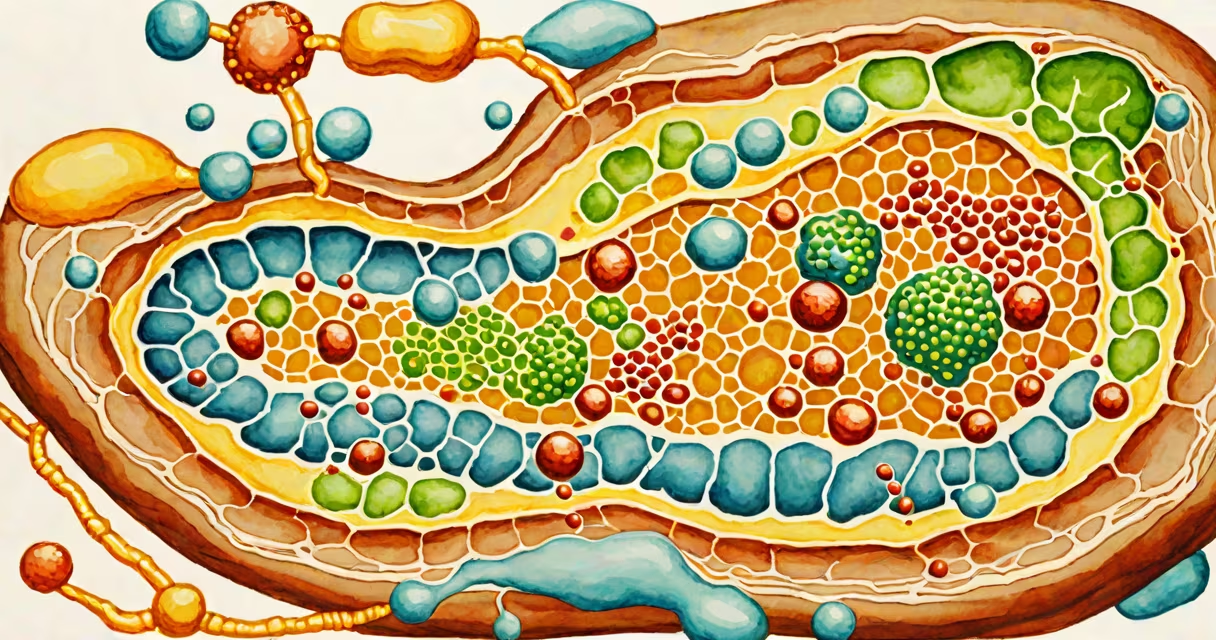
Cellular respiration is the metabolic process in which cells break down glucose and oxygen to produce carbon dioxide, water, and energy in the form of ATP. This occurs primarily in the mitochondria of eukaryotic cells and sustains life by powering cellular functions.
Cells extract energy from food molecules through a series of biochemical reactions. The most efficient pathway is aerobic respiration, which requires oxygen and yields up to 38 ATP molecules per glucose molecule. Without this process, animal and plant cells could not maintain basic operations like muscle contraction, nerve signaling, or protein synthesis.
Most living organisms rely on cellular respiration to survive. Even plants, which perform photosynthesis during daylight, depend on it at night and in non-photosynthetic tissues. The process runs continuously in cells that require sustained energy output, such as heart muscle and brain neurons.
The process unfolds in three main stages: glycolysis, the Krebs cycle (also called citric acid cycle), and the electron transport chain. Each stage takes place in specific locations within the cell and contributes to ATP generation.
Glycolysis begins in the cytoplasm and splits one glucose molecule (6 carbons) into two pyruvate molecules (3 carbons each). This step produces a net gain of 2 ATP and 2 NADH molecules. No oxygen is required at this stage, making it anaerobic.
Pyruvate then enters the mitochondria, where it is converted into acetyl-CoA. Acetyl-CoA feeds into the Krebs cycle, a series of enzyme-driven reactions that release carbon dioxide and generate high-energy electron carriers-NADH and FADH₂. For each glucose molecule, the Krebs cycle turns twice, yielding 2 ATP, 6 NADH, and 2 FADH₂.
The final stage, the electron transport chain, occurs on the inner mitochondrial membrane. Electrons from NADH and FADH₂ travel through protein complexes, pumping protons (H⁺) into the intermembrane space. The resulting electrochemical gradient drives ATP synthase to produce ATP as protons flow back into the matrix. Oxygen acts as the final electron acceptor, combining with electrons and protons to form water.
There are two primary forms of cellular respiration: aerobic and anaerobic. Aerobic respiration uses oxygen and generates more ATP. Anaerobic respiration occurs in low-oxygen environments and relies on alternative electron acceptors like sulfate or nitrate, yielding far less energy.
| Process | Location | ATP Yield | Oxygen Required? |
|---|---|---|---|
| Glycolysis | Cytoplasm | 2 ATP (net) | No |
| Krebs Cycle | Mitochondrial matrix | 2 ATP per glucose | No (but indirectly depends on O₂) |
| Electron Transport Chain | Inner mitochondrial membrane | 34-36 ATP | Yes |
Each component plays a role in efficiency. Mitochondria have a folded inner membrane (cristae) that increases surface area for electron transport proteins. Without this structure, ATP yield would drop dramatically. The entire system operates under strict pH and ion balance-disruptions cause reduced ATP output and cellular stress.
A common misconception is that cellular respiration happens only in animals. Plants perform it too. While they make glucose via photosynthesis, they burn it through cellular respiration to power growth, repair, and nutrient uptake. A mature oak tree consumes about 10 kilograms of oxygen daily through respiration, even though it's photosynthesizing during the day.
People often confuse cellular respiration with breathing. Breathing is the physical act of inhaling oxygen and exhaling carbon dioxide. Cellular respiration is the internal chemical process that uses those gases to make energy. You can breathe normally while your cells shut down due to lack of oxygen-this leads to tissue death, as seen in heart attacks.
Another error is assuming all ATP comes from the electron transport chain. While it produces the majority (about 90%), glycolysis and the Krebs cycle contribute essential intermediates. For example, NADH from glycolysis delivers electrons to Complex I, but if the chain is blocked, NAD⁺ cannot regenerate, halting glycolysis entirely.
Some believe fermentation is part of cellular respiration. It is not. Fermentation is an anaerobic backup system that regenerates NAD⁺ without oxygen or mitochondria. It produces only 2 ATP per glucose and results in lactic acid or ethanol. Muscle soreness after intense exercise stems from lactate buildup, not from cellular respiration itself.
During a 100-meter sprint, muscles switch rapidly between aerobic and anaerobic metabolism. Initially, oxygen is sufficient-cells use aerobic respiration. But after 10 seconds, demand outpaces supply. Pyruvate accumulates and gets converted to lactate via lactate dehydrogenase. This maintains glycolysis but causes acidosis and fatigue.
After the sprint, oxygen debt must be repaid. Blood flow increases to deliver oxygen to muscles. Lactate is transported to the liver, where it's converted back to glucose via the Cori cycle. That glucose can then be used in cellular respiration to restore ATP stores. This cycle illustrates how respiration integrates with other metabolic pathways.
I once observed a rat model in a lab where mitochondrial function was impaired. Despite normal glucose levels, ATP dropped below 50% of baseline. The animals showed tremors, reduced movement, and died within hours. This confirmed that cellular respiration is not just a side process-it's central to survival.
Cellular respiration is the core mechanism by which cells convert stored chemical energy into usable ATP. It involves coordinated steps across multiple cellular compartments and relies on precise molecular machinery. Understanding the definition of cellular respiration clarifies how life sustains itself at the biochemical level.