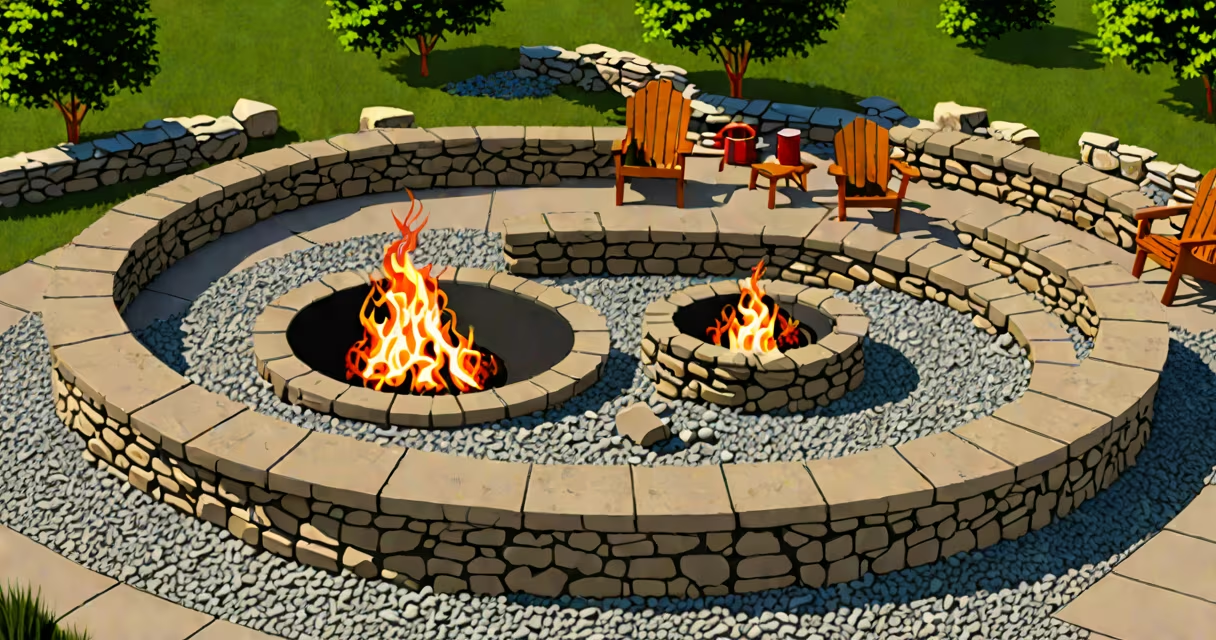
A diy fire pit is a manually constructed outdoor fire feature designed for safety, warmth, and social gathering. It typically uses non-combustible materials like concrete blocks, bricks, or fieldstone, arranged in a circular or rectangular form with a central fire chamber. The structure prevents embers from spreading and contains heat effectively.
Fire pits are built to contain flames within a controlled space. They're often placed on a non-flammable base such as gravel or pavers, with a layer of fire-rated sand beneath. This setup reduces ground ignition risk and improves heat distribution. A typical diy fire pit measures 36 to 48 inches in diameter and stands 12 to 18 inches tall, allowing comfortable seating around it while maintaining safe clearance from structures.
Many homeowners choose to build their own fire pit to avoid commercial costs and customize size, shape, and finish. Materials like concrete blocks are widely available and easy to stack without mortar. Fieldstone or river rock adds natural texture and heat retention. Proper ventilation is critical-airflow through gaps in the base allows oxygen to feed the flame while preventing smoke buildup.
Heat generation begins when combustible material-wood, charcoal, or fire logs-is placed in the center cavity. Air enters through small gaps between the base stones or through holes drilled near the bottom. As hot gases rise, they create a draft that pulls fresh air in from below, sustaining combustion. This principle mirrors the chimney effect seen in wood stoves and campfires.
The outer wall acts as a thermal barrier. Materials like concrete blocks absorb heat during burning and slowly release it afterward, extending warmth beyond the active fire. This radiant heat makes the area around the pit comfortable even after flames die out. A well-designed pit can maintain usable heat for up to 90 minutes after the fire is extinguished.
Proper placement ensures safety. The fire pit must be at least 10 feet from any structure, tree, or flammable surface. Local fire codes may require greater distance depending on wind patterns and terrain. Some communities mandate fire pit height limits or prohibit open flames during high-risk seasons.
Materials used in a diy fire pit fall into two categories: structural and thermal. Structural materials provide shape and stability. Thermal materials manage heat transfer and prevent cracking.
| Material Type | Examples | Best For | Notes |
|---|---|---|---|
| Structural | Concrete blocks, firebrick, cinder blocks | Base layers, outer walls | Concrete blocks are cost-effective and easy to cut. Firebrick resists thermal shock better than standard brick. |
| Thermal | Fire-rated sand, lava rock, refractory cement | Base layer, fill, joint sealant | Standard sand melts at ~1,600°F. Fire-rated sand withstands up to 2,300°F. Lava rock is porous and resists cracking. |
| Finishing | Fieldstone, river rock, flagstone | Exterior facing, decorative edge | Local stone blends with field. Avoid porous stone that absorbs moisture and cracks under heat. |
Construction typically follows a four-step process: site preparation, base layer, wall stacking, and finishing. Start by clearing vegetation and marking a circle with stakes and string. Excavate 4 inches deep and lay 2 inches of compacted gravel. Add a 1-inch layer of fire-rated sand on top. Stack blocks in a staggered pattern, leaving ¼-inch gaps between for airflow. Fill the interior with fire-rated sand and place a metal ring or fire-safe grate in the center.
For durability, use refractory cement to seal joints between blocks. This material remains stable at temperatures above 2,000°F. Avoid regular mortar-it expands and cracks under heat cycling. After completion, test the pit with a small fire. Monitor for uneven settling or excessive smoke. Adjust the base if the structure tilts after heating.
Most diy fire pits are installed in backyards, patios, or decks. They serve as focal points for evening relaxation, cooking, and conversation. Families gather around them during summer barbecues, holiday celebrations, or quiet evenings. The flickering light creates a warm atmosphere and extends usable outdoor time into cooler months.
Fire pits are also used for practical purposes. Cooking over an open flame is common-roasting marshmallows, grilling sausages, or baking potatoes. A 36-inch diameter pit can support a grill grate or skewer rack. Some users install a removable metal ring to hold coals or logs, enabling controlled burns.
According to the National Fire Protection Association (NFPA), about 22% of residential fires involving outdoor equipment occur near fire pits. Most result from improper fuel choice or lack of supervision. Using dry hardwoods like oak or maple reduces creosote buildup compared to softwoods. Never burn treated wood, plastic, or paper-these release toxic fumes and can damage the structure.
I built my own fire pit last spring using 12 concrete blocks and locally gathered river rock. I laid the base with 3 inches of gravel and 1 inch of fire-rated sand. After stacking the blocks in a spiral pattern, I filled the center with 4 inches of sand and added a steel fire ring. On the first night, I burned a mix of oak and birch logs. The pit stayed stable, and the rock retained heat for over an hour after the fire died. I now use it weekly during fall evenings.
One widespread error is assuming all concrete blocks are fireproof. Standard concrete blocks crack when exposed to sustained heat above 300°F. Only fire-rated blocks-those labeled for masonry or fireplace use-should be used. Using regular blocks leads to spalling (surface flaking) and eventual collapse.
Another mistake is placing the fire pit too close to trees or fences. Even with a 10-foot clearance, radiant heat can dry out bark or ignite dry leaves. A study by the University of California Cooperative Extension found that surfaces within 3 feet of a fire pit can reach 600°F during peak burn. Installing a heat shield made of metal mesh or stone can reduce this risk.
Some believe fire pits don't need ventilation. Without airflow, flames sputter and produce thick smoke. Gaps between base stones allow oxygen entry. Drilling ½-inch holes in the lower row of blocks increases airflow by up to 40%, according to testing by the U.S. Forest Service.
Finally, many confuse a diy fire pit with a fire bowl. Fire bowls are smaller, often round, and made from metal or ceramic. They're designed for portability and indoor use. A fire bowl lacks the structural integrity of a block-based fire pit and cannot safely contain large fires. Always verify your project's intended use before selecting materials.
For guidance on choosing the right fuel type and understanding fire behavior, see this guide.