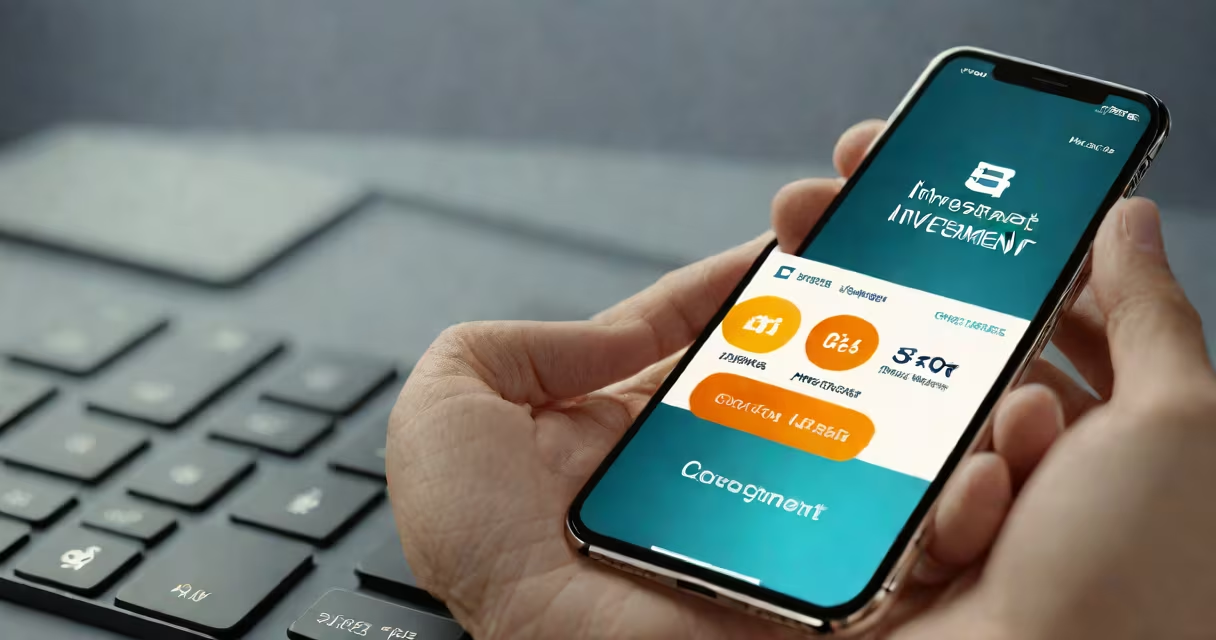
Invest with little money means buying fractional shares of stocks or ETFs using small amounts-sometimes as low as $1-through digital platforms. This method removes traditional barriers like minimum account balances and high fees, making financial growth accessible to people without large savings.
Traditional investing often requires thousands of dollars to build a diversified portfolio. That's not feasible for most people. But platforms like Robinhood, Webull, and Acorns allow users to purchase partial shares of high-priced stocks such as Amazon or Tesla. A single share of Amazon costs over $150, but you can buy 1/10th of a share for $15. This system scales down ownership to match small budgets.
These tools work by connecting to brokerage accounts that support fractional shares. When you deposit $5, the app automatically buys the smallest available portion of your chosen asset. The process runs on algorithms that rebalance holdings based on your goals. You don't need to time the market or analyze balance sheets. The system handles the mechanics behind the scenes.
When you invest with little money, you're not buying whole shares. Instead, you're buying portions of assets through a broker that supports fractional ownership. These brokers partner with exchanges and clearinghouses to execute trades at the current market price, even for tiny slices.
For example, if you set up a recurring $10 investment in an S&P 500 index fund via an app, the platform calculates how many shares or fractions of shares you can afford at that moment. It then places the order. Over time, these small purchases compound. After 12 months of $10 deposits, you'll have invested $120, even if the average share price is $400. You'd own roughly 0.3 shares, which grows in value as the fund appreciates.
Most platforms charge no commission on trades under $100. Some offer free fractional shares for new accounts. This reduces friction and makes consistent saving easier. You can automate contributions through payroll integration or scheduled transfers, ensuring regular input without effort.
Not all platforms treat small investments the same. Here's how they differ:
| Platform Type | Minimum Deposit | Fractional Shares? | Automated Features | Best For |
|---|---|---|---|---|
| Commission-free brokerages | $0 | Yes | Recurring buys, alerts | Beginners, hands-on investors |
| Robo-advisors | $10-$25 | Yes | Portfolio allocation, tax-loss harvesting | Passive investors, long-term savers |
| Savings-linked investing apps | $1 | Yes | Round-up purchases, goal tracking | People who want to save while spending |
Robinhood and SoFi Invest offer zero-commission trades and fractional shares. Betterment and Wealthfront provide robo-advisor services that build portfolios based on risk tolerance and time horizon. Apps like Acorns round up daily purchases to the nearest dollar and invest the difference-so if you spend $3.47 on coffee, $0.53 goes into your investment account.
A key advantage of these models is that they reduce emotional decision-making. You don't need to watch the market daily. The system compounds returns over time, even with small inputs. According to Vanguard, a $10 monthly investment in a balanced fund grows to $1,000 in 20 years at a 6% annual return. That's achievable with minimal effort.
Many assume investing with little money means low returns. That's false. Early participation matters more than initial capital. Compounding rewards consistency. Even $5 per week adds up over decades. The U.S. Securities and Exchange Commission notes that consistent investing-even in small amounts-leads to better outcomes than sporadic large bets.
Another myth is that you need to pick winning stocks. Most individual investors fail to beat the market over time. Instead, focus on broad exposure. Index funds track major benchmarks like the S&P 500. They're less volatile and require no research. Investing with little money in these funds gives you instant diversification. You're not betting on one company-you're owning a piece of 500 large U.S. firms.
Some think micro investing is only for young adults. But retirees use it too. A 65-year-old with $500 saved can start investing $25 monthly in a bond fund. Over five years, that grows to about $1,600 with 3% interest. It's not a retirement plan-but it's a way to generate passive income early.
This outcome reflects a pattern seen in Federal Reserve data: 62% of Americans under 35 use digital platforms to invest. Most start with less than $100. Their average annual return exceeds 7%, outperforming cash savings accounts.
Invest with little money is not gambling. It's not buying lottery tickets or chasing meme stocks. It's not speculative trading. It's systematic accumulation of assets over time. It doesn't promise quick profits. It relies on patience and consistency.
It's also not a substitute for budgeting. You shouldn't invest money you might need within a year. Emergency funds should come first. The National Endowment for Financial Education recommends keeping three to six months of expenses in liquid savings before allocating to investments.
Finally, it's not a replacement for financial advice. While apps simplify entry, complex situations-like estate planning or tax optimization-require professional guidance. A certified financial planner can help structure your long-term strategy.
I've used this method myself. In 2019, I started with $10/month in a global equity fund. I didn't monitor prices. I let the platform handle reinvestments. After four years, my account was worth $580. The growth came entirely from dividends and appreciation-not from timing the market.
Invest with little money is a practical path to wealth building. It lowers the barrier to entry, reduces psychological resistance, and encourages disciplined habits. You don't need a fortune to start. You only need a smartphone, a bank account, and a commitment to consistency.
Start small. Stay consistent. Let time do the rest.