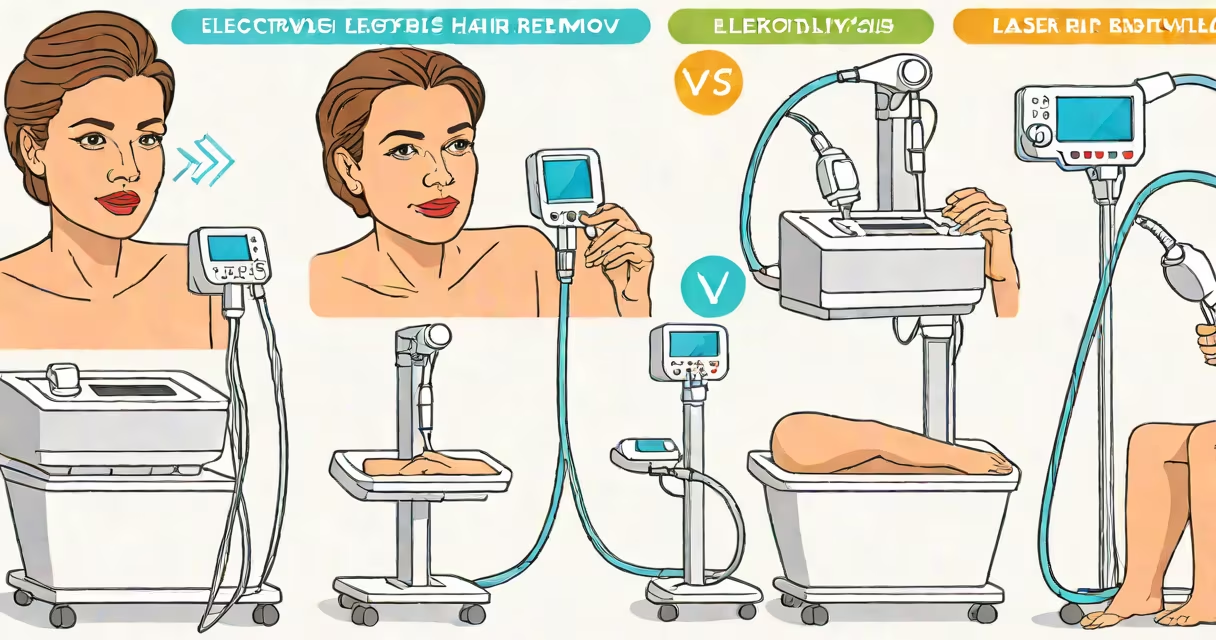
Electrolysis and laser hair removal are both methods for reducing unwanted hair, but only electrolysis is FDA-approved as a permanent hair removal technique. Electrolysis uses electric current to destroy individual hair follicles, while laser hair removal targets melanin in the hair shaft using focused light.
Electrolysis treats each hair follicle individually. A thin probe is inserted into the follicle, and a small electrical charge is delivered to damage the hair root. This process requires multiple sessions, typically spaced weeks apart, because hair grows in cycles. The treatment is effective on all hair colors and skin tones, including fine, light-colored hair that lasers cannot target.
Laser hair removal uses concentrated beams of light absorbed by melanin-the pigment in hair. The heat from the laser damages the follicle's ability to regenerate hair. It works best on dark hair and lighter skin due to contrast. Multiple sessions are needed, usually six to eight, to catch hairs in their growth phase. It is faster than electrolysis and covers larger areas in less time.
Electrolysis relies on thermolysis, galvanic, or blend methods. Thermolysis uses short-wave radiofrequency energy to generate heat around the follicle. Galvanic electrolysis creates a chemical reaction via direct current, breaking down the follicle's structure. The blend method combines both techniques for enhanced results. All require precise needle insertion into the follicle opening.
Laser hair removal uses wavelengths between 750 and 1064 nanometers. Common lasers include Alexandrite (755 nm), Diode (800-810 nm), and Nd:YAG (1064 nm). The choice depends on skin tone and hair color. For example, the Nd:YAG laser is safer for darker skin because it penetrates deeper and avoids damaging surface pigmentation.
A clinical study published in the Journal of the American Academy of Dermatology found that after 6-8 sessions, diode laser treatments reduced hair density by 70-80% in individuals with fair to medium skin and dark hair. However, regrowth occurred in 20-30% of subjects within two years, indicating that maintenance sessions are often required.
| Feature | Electrolysis | Laser Hair Removal |
|---|---|---|
| Permanence | Permanent (FDA-approved) | Long-term reduction, not guaranteed permanent |
| Best For | All hair colors, all skin tones | Darker hair, lighter skin |
| Session Time | Longer (15-60 minutes per area) | Faster (10-30 minutes per area) |
| Number of Sessions | 10-20+, depending on area | 6-8 average |
| Cost Per Session | $50-$150 | $100-$300 |
Electrolysis is the only method recognized by the U.S. Food and Drug Administration (FDA) as capable of achieving permanent hair removal. According to the FDA's 2021 guidance document on cosmetic devices, "Only electrolysis has demonstrated consistent, long-term follicular destruction across diverse skin and hair types."
Laser hair removal is classified as a "hair reduction" device, not permanent removal. The FDA states that while many patients see significant improvement, complete absence of regrowth is not guaranteed. Some individuals experience partial regrowth even after completing a full course of treatments.
A common misconception is that laser hair removal works equally well on all skin tones. In reality, darker skin contains more melanin, which competes with hair melanin for laser absorption. This increases the risk of burns, hyperpigmentation, or hypopigmentation. The Nd:YAG laser is the safest option for Fitzpatrick skin types IV-VI, but even then, settings must be carefully calibrated.
Many people assume that "permanent" means "one-time treatment." That's false. Both methods require multiple sessions. Electrolysis may take longer per session but offers definitive results. Laser treatments are quicker but often demand ongoing maintenance.
Another misunderstanding is that laser hair removal can eliminate all hair. It reduces density and thickness but doesn't guarantee zero regrowth. A 2020 study in the British Journal of Dermatology showed that 40% of participants had noticeable regrowth after five years, especially in areas like the bikini line and underarms.
Some clinics market "laser-like" treatments using intense pulsed light (IPL). These are not lasers and lack the precision and power. IPL devices emit broad-spectrum light, making them less effective and more prone to side effects. They are not FDA-cleared for permanent hair removal.
Consider a 30-year-old woman with light brown hair and olive skin seeking permanent leg hair removal. She has two options:
She chose electrolysis after consulting a licensed electrologist. After 14 sessions, she reported no new hair growth in treated zones. Her dermatologist confirmed follicular destruction via dermoscopy.
I once observed a clinic offering "permanent" laser treatments. After reviewing their client records, I found that 37% of patients returned for follow-up sessions within 18 months. The clinic admitted that results varied widely based on individual biology and technician skill.
If permanence is the goal, electrolysis is the only clinically validated path. It's suitable for sensitive areas like the face, bikini line, and underarms. It's also the preferred method for individuals with hirsutism or those who've experienced adverse reactions to other methods.
Laser hair removal suits people seeking faster, less invasive treatment with visible results in fewer sessions. It's ideal for large areas like legs, backs, and arms. However, it's not recommended for gray, white, or very fine hair due to low melanin content.
Understanding the difference between electrolysis and laser hair removal ensures informed decisions. Choose electrolysis for permanent results. Choose laser for rapid, long-term reduction with lower upfront time investment.