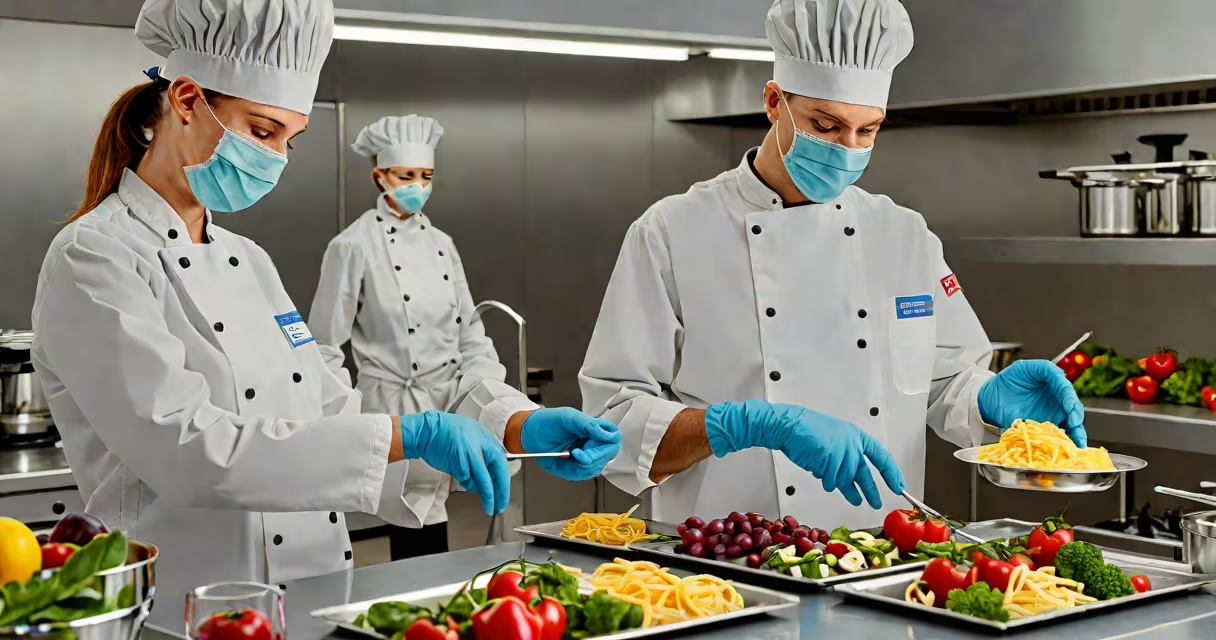
A food safety program is a documented system of procedures, responsibilities, and controls designed to prevent foodborne illness by identifying, evaluating, and mitigating hazards throughout food production, handling, and service.
It helps food is prepared, stored, and served under conditions that minimize microbial, chemical, and physical contamination. The program includes written policies, employee training, monitoring logs, corrective actions, and verification processes. Regulatory agencies such as the FDA and USDA require food safety programs in commercial kitchens, processing facilities, and food distribution centers.
Effective programs follow science-based frameworks like HACCP (Hazard Analysis and Critical Control Points), which identifies critical control points where contamination risks are highest. A well-implemented food safety program reduces outbreaks, prevents recalls, and protects public health. It is not optional-it's legally mandated in most food operations.
The core function of a food safety program is to manage risk through proactive planning rather than reactive response. It begins with hazard analysis-assessing biological, chemical, and physical threats at each stage of the food chain. For example, raw chicken may carry Salmonella (biological), improper refrigeration can cause toxin buildup (chemical), and metal fragments from equipment pose physical risks.
Once hazards are identified, the program sets critical limits-measurable thresholds such as minimum internal cooking temperatures (e.g., 165°F for poultry) or maximum storage times. These limits are monitored regularly using tools like thermometers, timers, and checklists. When a deviation occurs-such as a fridge reaching 45°F instead of 40°F-the program triggers corrective action, such as discarding affected product and recalibrating the unit.
Verification steps confirm that controls are working. This includes audits, record reviews, and testing. For instance, a restaurant might test surface swabs for Listeria weekly. Validation ensures the entire system remains effective over time. If a new supplier introduces raw shellfish, the program must assess whether current cleaning protocols are sufficient.
While all food safety programs share foundational elements, their structure varies based on scale and risk level. The most common models are:
| Type | Scope | Key Features | Regulatory Basis |
|---|---|---|---|
| HACCP-based | High-risk facilities | 7 principles: hazard analysis, CCP identification, critical limits, monitoring, corrective actions, verification, documentation | FDA Food Code, FSMA (Food Safety Modernization Act) |
| Standard Operating Procedures (SOPs) | Restaurants, cafeterias | Written steps for cleaning, cooking, storing; includes time/temperature logs | Local health codes, state regulations |
| Integrated Food Safety Management System | Manufacturers, distributors | Combines HACCP, allergen control, sanitation, traceability, and supplier audits | FSMA, ISO 22000, GFSI benchmarks |
Each type uses standardized templates. For example, a hospital cafeteria follows SOPs with daily temperature logs for hot holding units. A meat processor uses HACCP to monitor chilling rates during slaughter. A global bakery chain implements an integrated system with blockchain-enabled ingredient tracking.
One non-obvious distinction: not all programs are equally enforceable. HACCP plans are legally binding under FSMA. An SOP manual, while essential, is not itself a regulatory requirement unless tied to a specific violation. This means a facility can fail an inspection not because it lacks a document, but because it failed to follow the documented steps.
Many assume a food safety program is just a checklist or a binder of forms. In reality, it's a living system that evolves with changes in process, equipment, or supply chains. A single lapse-like failing to clean a slicer between cuts-can trigger a recall even if the program was formally in place.
Another misconception is that small operations don't need formal programs. The U.S. Centers for Disease Control and Prevention (CDC) reports that 48 million people get foodborne illness annually, with 128,000 hospitalized and 3,000 dying. Small restaurants account for nearly 30% of reported outbreaks due to inconsistent implementation of basic controls.
I once observed a food truck operator who had a printed HACCP plan hanging on the wall. During a health inspection, the inspector asked about the critical limit for reheating chili. The owner replied, "I heat it until it's warm." The inspector cited the regulation requiring 165°F for 15 seconds. The truck was shut down for 48 hours. The plan existed-but wasn't applied.
Implementing a food safety program reduces operational risk and financial exposure. A 2022 study published in the Journal of Food Protection found that restaurants with certified HACCP systems experienced 60% fewer customer complaints related to illness and 40% lower insurance premiums. The CDC estimates that every dollar spent on food safety yields $16 in avoided healthcare costs and lost productivity.
Failure to maintain a program leads to penalties. In 2021, a national chain faced a $2.5 million fine after a salmonella outbreak linked to contaminated produce. The FDA concluded that the company's food safety program lacked verification steps and employee training records. The incident led to 120 confirmed cases and 20 hospitalizations.
Every food safety program must be tailored to the operation. A school lunch program focuses on allergen control and proper cooling of leftovers. A seafood distributor prioritizes temperature control and pathogen testing. The structure is universal, but execution is context-specific.
A food safety program is not a formality-it's a safeguard. It turns food handling from guesswork into predictable, measurable protection against harm. Without it, operations face higher risk of illness, legal liability, and reputational damage. With it, they meet regulatory expectations and protect consumers.