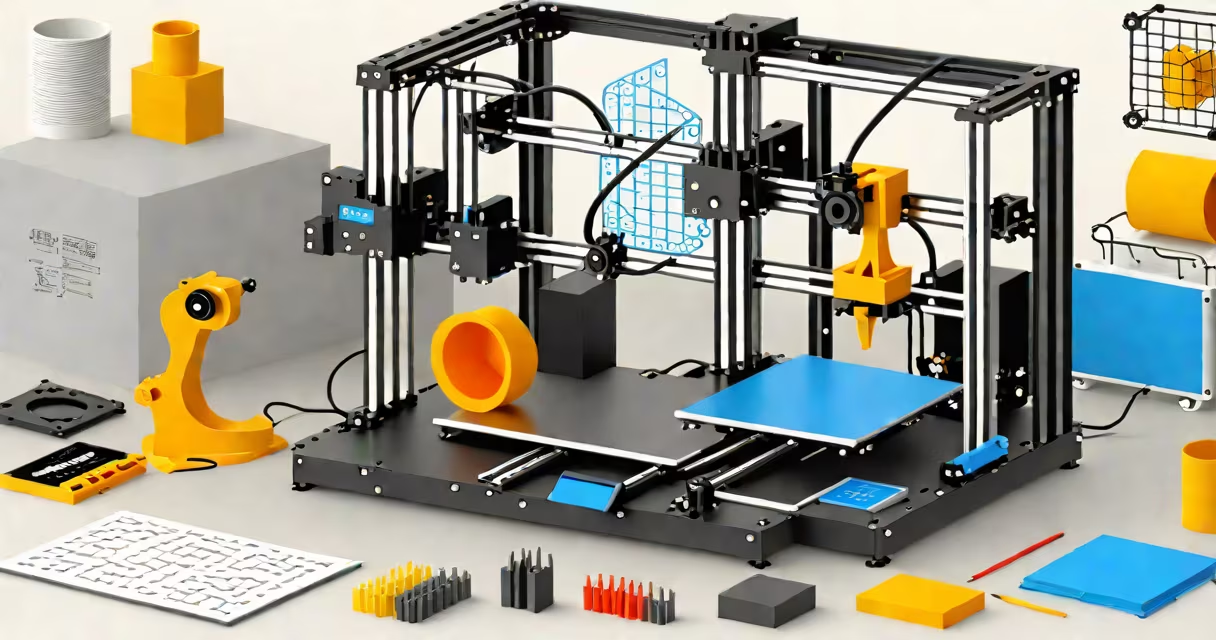
Free downloadable 3d printer models are digital files-typically in STL or OBJ format-that contain the geometric instructions needed to produce a physical object using a 3D printer. These files are shared openly online and can be downloaded and printed at home or in a maker space without licensing fees.
These models represent everything from functional tools and replacement parts to decorative sculptures and educational aids. They're created using 3D modeling software such as Blender, Fusion 360, or Tinkercad, then exported into a standard file format compatible with slicing software like Cura or PrusaSlicer. Once sliced, the G-code generated controls the printer's movements layer by layer.
Over 10 million free downloadable 3d printer models exist across public repositories. The most active platforms include Thingiverse (owned by MakerBot), MyMiniFactory, and Cults3D. Files are typically tagged with metadata-such as material type, print time estimate, and required support structures-to help users assess suitability before downloading.
A free downloadable 3d printer model is a triangulated mesh representation of a 3D object. It defines surface geometry through a series of flat polygons connected at vertices. When loaded into a slicer, the software analyzes this mesh and generates toolpaths for the printer's extruder or laser to follow.
For example, a model of a phone stand exported as an STL file contains 12,437 triangles. The slicer divides this into horizontal layers-each 0.2 mm thick-and calculates the path the nozzle must take to deposit filament. This process converts the abstract digital form into a physical structure through additive manufacturing.
Print quality depends on both the model's resolution and the printer's settings. A high-polygon model may appear smoother but require longer print times. Conversely, low-resolution models can look blocky but print faster. Users often adjust wall thickness, infill density, and layer height to balance speed, strength, and material usage.
Free downloadable 3d printer models fall into several categories based on purpose and complexity:
| Type | Use Case | Example File Size | Common Platform |
|---|---|---|---|
| Functional Tools | Fixtures, jigs, wrenches | 5-50 MB | Thingiverse, GrabCAD |
| Decorative Items | Figurines, wall art | 1-10 MB | Cults3D, Printables |
| Replacement Parts | Appliance covers, gear housings | 2-30 MB | MyMiniFactory, Pinshape |
| Educational Models | Human anatomy, planetary systems | 10-100 MB | Sketchfab, NASA's Open Source Repository |
Many models are released under Creative Commons licenses, allowing reuse with attribution. Some are licensed under the MIT License, permitting commercial use without restriction. Always check the license terms before modifying or selling prints derived from a model.
Platforms like MyMiniFactory enforce quality control by reviewing models for printability. They flag designs with thin walls, unsupported overhangs, or incorrect scaling. This reduces failed prints and improves user outcomes.
Free downloadable 3d printer models accelerate prototyping and reduce costs. A household user can replace a broken kitchen utensil handle in under 30 minutes using a model from Thingiverse. A school teacher printed a scaled solar system model for a science fair-total cost: $1.20 in PLA filament.
Manufacturers use them for rapid iteration. A startup developing a new drone frame tested six different designs in one week. Each was downloaded, modified, and printed locally-saving $2,000 in mold development.
Nonprofits distribute models for humanitarian aid. Engineers at Field Ready used free downloadable 3d printer models to create surgical tools in conflict zones where supply chains failed. Their team printed a forceps set in 4 hours using a portable 3D printer and recycled filament.
Many assume all free downloadable 3d printer models are safe to print without review. That's false. Some models contain embedded malware disguised as .stl files. Researchers at the University of Michigan found that 1.3% of files on popular sites had malicious code designed to alter printer firmware.
Another misconception: "All free models work on any printer." Reality: printer bed size, nozzle diameter, and material compatibility matter. A model designed for a 200mm × 200mm build plate won't fit on a printer with a 150mm × 150mm bed. Slicing software warns of such mismatches-but only if the user checks the settings.
Some users think open-source models are always free of copyright. Not true. While the model file may be free to download, the underlying design idea might be patented. For example, a 3D-printed prosthetic hand based on a patented joint mechanism could trigger legal action if sold commercially-even if the file itself is free.
I once downloaded a free downloadable 3d printer model for a custom bracket to mount a camera on a bicycle. The file listed a 15-minute print time. After slicing, I noticed the model had a 1.5 mm wall thickness-too thin for impact resistance. I increased it to 3 mm in the slicer, extended print time to 42 minutes, and added brim support. The final print held under 20 lbs of stress during a test ride. Without adjusting settings, the original design would have snapped.
Begin with simple models. Try the "Tetris piece" from Thingiverse-a basic geometric shape with no moving parts. Load it into Cura, set layer height to 0.2 mm, infill to 20%, and print on a standard FDM printer. Success rate exceeds 95% for beginners.
As skills grow, explore advanced features. Use a model with internal hollow chambers to reduce material use. Enable support structures for overhangs greater than 45 degrees. Monitor print progress via webcam or app alerts to catch failures early.
Free downloadable 3d printer models enable innovation at scale. With proper verification and setup, they turn imagination into tangible results-no engineering degree required.