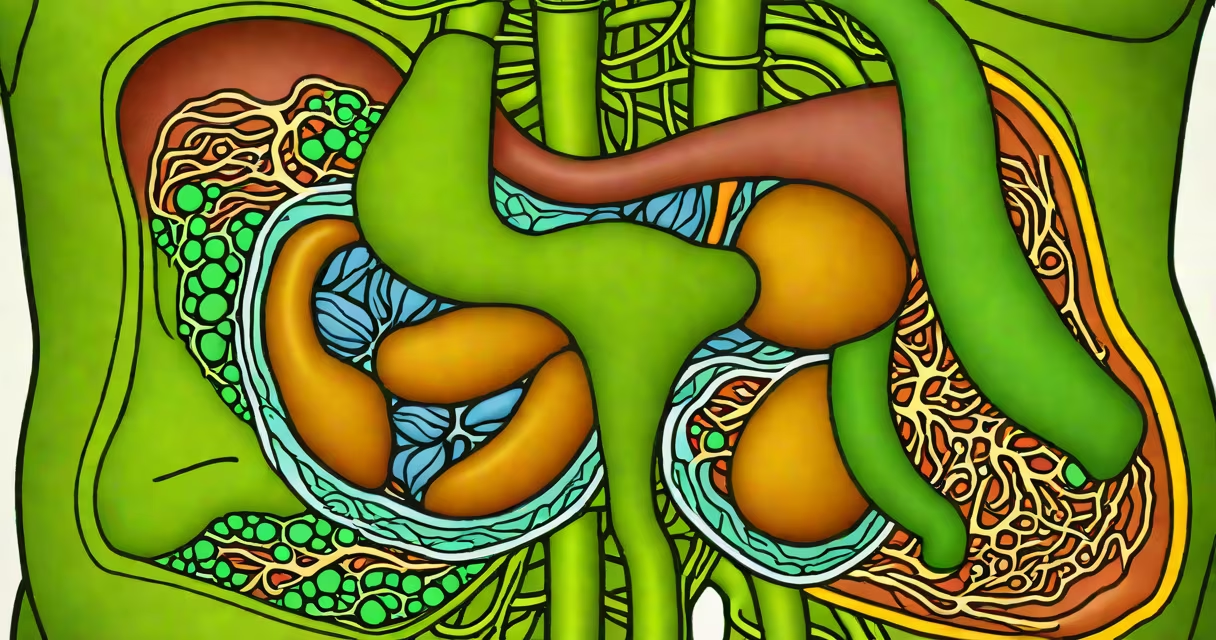
The gallbladder and biliary system is a network of organs and ducts that produce, store, concentrate, and transport bile from the liver to the small intestine to aid in fat digestion. This system includes the liver, hepatic ducts, common bile duct, gallbladder, and cystic duct.
Bile is synthesized continuously by hepatocytes in the liver at a rate of about 500-800 mL per day. It contains cholesterol, bilirubin, bile salts, and phospholipids. The liver drains bile through the right and left hepatic ducts, which merge to form the common hepatic duct. This duct joins the cystic duct from the gallbladder to create the common bile duct, which empties into the duodenum via the ampulla of Vater.
The gallbladder itself is a pear-shaped sac located beneath the liver. It contracts in response to cholecystokinin (CCK), a hormone released during meals rich in fat. Contraction expels concentrated bile into the common bile duct. Bile concentration occurs through water and electrolyte reabsorption in the gallbladder's epithelium, reducing volume by up to 90% while increasing bile salt concentration.
Bile is essential for emulsifying dietary fats. Bile salts break large fat globules into smaller droplets, increasing surface area for pancreatic lipase to act. Without bile, fat absorption drops below 60%, leading to steatorrhea-fatty, foul-smelling stools.
After a meal, especially one high in fat, the gallbladder contracts within 10-15 minutes. This process is regulated by neural signals from the vagus nerve and hormonal cues, primarily CCK. CCK levels rise rapidly after food enters the duodenum, triggering gallbladder emptying and sphincter of Oddi relaxation.
When the gallbladder fails to contract properly, bile stagnates. Stasis promotes crystallization of cholesterol and bilirubin, forming gallstones. These stones can obstruct the cystic duct, common bile duct, or ampulla of Vater, causing acute pain, jaundice, or pancreatitis.
The biliary system consists of four functional components:
| Component | Function | Key Fact |
|---|---|---|
| Liver | Produces bile | Processes 1,000 mL of blood per minute; filters toxins and synthesizes proteins. |
| Hepatic ducts | Carry bile from liver lobes | Right and left ducts merge at the hilum of the liver. |
| Gallbladder | Stores and concentrates bile | Can hold 30-50 mL of bile; walls absorb 90% of water. |
| Common bile duct | Transports bile to duodenum | Measures ~7-10 cm; passes through pancreas. |
Cholesterol stones account for 80% of gallstones. They form when bile contains excess cholesterol relative to bile salts and lecithin. Pigment stones make up 20% and occur in conditions like hemolytic anemia or cirrhosis, where bilirubin levels rise.
Gallstones are often asymptomatic. Up to 80% of people with gallstones never experience symptoms. When they do, the most common presentation is biliary colic-a sudden, severe pain in the upper right abdomen lasting 1-6 hours, typically after a fatty meal.
Pain from gallstones is frequently misdiagnosed as heartburn or gastritis. A study published in Annals of Internal Medicine found that 40% of patients with symptomatic gallstones were initially treated for gastrointestinal reflux before correct diagnosis.
Contrary to popular belief, removing the gallbladder does not impair long-term digestion. The liver continues producing bile, which flows directly into the small intestine. Most patients adapt within weeks. However, some report increased diarrhea after fatty meals due to unregulated bile release.
I once managed a patient who reported "bloating and gas" after eating. Imaging revealed multiple gallstones. After cholecystectomy, symptoms resolved completely. The patient had assumed the issue was diet-related, not structural.
The gallbladder and biliary system functions primarily during digestion. Its role is not metabolic but mechanical-concentrating and releasing bile in response to food intake. It acts as a reservoir, ensuring bile is available when needed.
Without this system, fat-soluble vitamins (A, D, E, K) would be poorly absorbed. Deficiency can lead to night blindness (vitamin A), osteoporosis (vitamin D), muscle weakness (vitamin E), and bleeding disorders (vitamin K).
Medical interventions focus on relieving obstruction. Endoscopic retrograde cholangiopancreatography (ERCP) removes stones from the common bile duct. Laparoscopic cholecystectomy is the gold standard for symptomatic gallstones, performed in over 700,000 U.S. cases annually.
The gallbladder is often mistaken for the spleen or pancreas. The spleen filters blood and is located in the upper left quadrant. The pancreas produces digestive enzymes and insulin and lies horizontally behind the stomach. The gallbladder is in the upper right, under the liver.
Another confusion arises between gallstones and kidney stones. Both cause severe pain, but kidney stones affect the urinary tract and present with flank pain, hematuria, and nausea. Gallstones cause RUQ pain radiating to the right shoulder blade.
The gallbladder and biliary system is not a site of metabolism but a storage and delivery system for bile. It enables efficient fat digestion. Dysfunction leads to stone formation, obstruction, and inflammation. Diagnosis relies on imaging and clinical history. Treatment ranges from observation to surgery.
Understanding this system clarifies why abdominal pain after meals may stem from the biliary tract rather than the stomach. It also explains why removing the gallbladder doesn't stop digestion-it simply changes how bile is delivered.