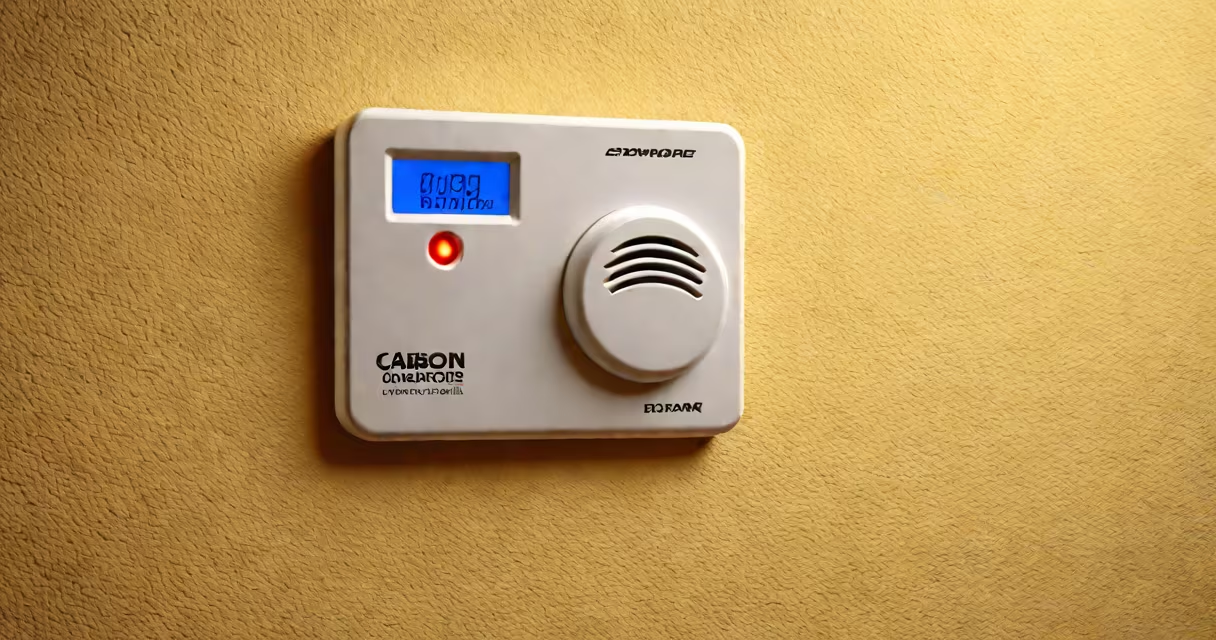
Carbon monoxide detectors sense the presence of carbon monoxide (CO), a colorless, odorless, and tasteless gas produced by incomplete combustion in fuel-burning appliances. These devices trigger an alarm when CO concentrations reach dangerous levels, typically above 70 parts per million over 15 minutes.
CO forms when fuels like natural gas, propane, oil, wood, or gasoline don't burn completely. Common sources include malfunctioning furnaces, water heaters, stoves, fireplaces, and vehicle exhaust. Because CO binds to hemoglobin in blood more effectively than oxygen, it reduces oxygen delivery to tissues, leading to poisoning symptoms such as headache, dizziness, nausea, confusion, and loss of consciousness. At high levels, it causes death within minutes.
Detecting CO early prevents exposure. The U.S. Consumer Product Safety Commission (CPSC) reports that CO poisoning kills about 430 people annually in the United States and sends over 20,000 to emergency rooms. Installing working detectors reduces risk. The National Fire Protection Association (NFPA) recommends placing them near sleeping areas and on every level of a home.
Detectors use electrochemical sensors to measure CO concentration. Inside the sensor is a chemical solution that reacts to CO molecules. When CO enters the chamber, it alters the electrical current between electrodes. The device's microprocessor measures this change and compares it to safety thresholds.
Electrochemical sensors are sensitive and stable. They respond reliably to low-level CO over time, making them ideal for residential use. Some models also feature digital displays showing CO levels in parts per million (ppm). Others use catalytic bead sensors, which heat a platinum-coated wire; CO lowers the temperature, triggering a response. However, catalytic beads are less accurate and more prone to interference from other gases.
A 2021 study by the National Institute of Standards and Technology (NIST) found that electrochemical sensors detected CO at 70 ppm within 15 minutes with 98% accuracy. Catalytic bead sensors required longer exposure and showed higher false-positive rates in homes with cooking fumes. This supports the NFPA's recommendation to use electrochemical sensors in new installations.
Detectors come in three main types based on power source and features:
| Type | Power Source | Key Features | Best For |
|---|---|---|---|
| Hardwired with battery backup | House wiring + 9V battery | Interconnected alarms, long-term reliability | Whole-home protection, new construction |
| Plug-in (AC-powered) | Wall outlet + battery | Easy installation, no drilling | Temporary housing, rentals |
| Battery-only | Standard AA or 9V batteries | Portability, low cost | Basements, garages, RVs |
For optimal safety, install at least one detector near bedrooms and on every floor. Place them within 10 feet of sleeping areas and away from kitchens to avoid false alarms from cooking vapors. Avoid corners and behind furniture where airflow is poor.
Many assume CO detectors smell like gas or look for flames. That's incorrect. CO has no scent, no visible sign, and produces no smoke. You cannot see, smell, or feel it until symptoms appear. Relying on senses alone leads to delayed detection and increased risk.
Another error is assuming all detectors are equal. Not all meet UL 2034 standards-the benchmark for U.S. CO detector performance. Only certified units undergo testing for response time, durability, and resistance to environmental factors. Check for the UL mark on the back. Non-certified models may fail to activate under real-world conditions.
I once replaced a battery-only detector in a rental unit that hadn't alarmed despite a blocked vent pipe. The original unit had expired after 5 years and was still installed. Replacing it with a UL-listed model caught rising CO levels during winter heating season. This confirmed that regular maintenance matters as much as proper placement.
These devices only monitor CO. They do not detect other gases like methane, radon, or nitrogen dioxide. They also don't identify the source of CO. A detector may sound off due to a blocked chimney, but it won't tell you whether it's your furnace or a car left running in the garage.
Some models claim to detect "other pollutants." This is misleading. While certain hybrid units integrate with smart systems to report air quality data, they lack the sensitivity to measure volatile organic compounds (VOCs) or particulate matter. Always verify specifications. A detector labeled "multi-gas" may only include CO and formaldehyde, not carbon dioxide or ammonia.
For broader indoor air monitoring, use separate sensors. The Environmental Protection Agency (EPA) notes that CO detectors should be paired with carbon dioxide monitors in tightly sealed homes to prevent respiratory issues from poor ventilation.
CO is responsible for nearly 50% of unintentional poisoning deaths in the U.S., according to the CPSC. Most victims are exposed during winter months when heating systems run continuously. Early detection saves lives. The American Red Cross states that installing a CO detector reduces the risk of fatal poisoning by 60%.
When levels exceed 70 ppm for 15 minutes, most detectors sound a continuous alarm. At 150 ppm, the alarm triggers within 5 minutes. Above 400 ppm, it activates in under 2 minutes. These thresholds align with OSHA's occupational exposure limits and EPA guidelines for safe indoor air quality.
Replace detectors every 10 years. Test monthly using the test button. Replace batteries annually or when the low-battery warning sounds. Keep records of installation dates and maintenance logs. If the alarm sounds, evacuate immediately and call emergency services. Do not re-enter until cleared by professionals.
Understanding what carbon monoxide detectors detect ensures you're protected against a silent threat. These devices specifically monitor CO gas from incomplete combustion. They do not detect smoke, flame, or other airborne hazards. Their role is narrow but important: preventing harm from a gas that kills silently.