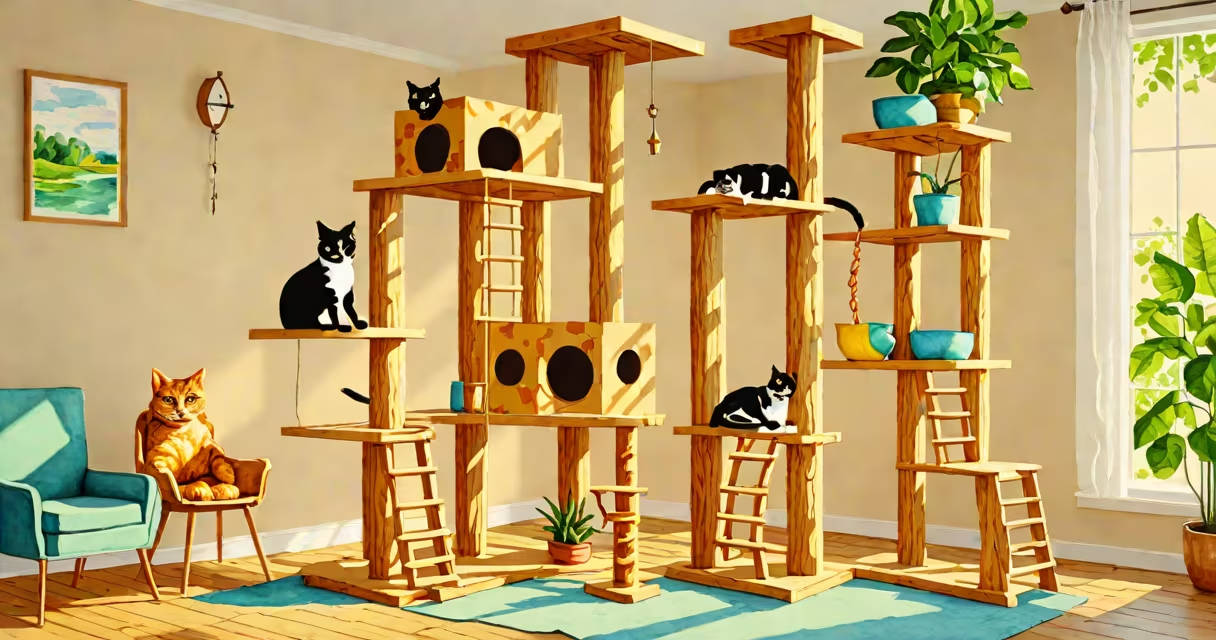
A handmade cat tree is a custom-built vertical structure made from solid wood and durable materials, designed to meet a cat's instinctual needs for climbing, scratching, and resting in elevated spaces. Unlike mass-produced models, each handmade version is constructed with attention to material quality, structural integrity, and feline behavior patterns.
Cats are natural climbers and territorial animals. A well-designed handmade cat tree supports these instincts by offering multiple levels, secure footing, and varied textures. The structure typically includes a base, vertical posts, platforms, hiding spots, and scratching surfaces. Materials such as plywood, pine, or hardwood are chosen for strength and safety, avoiding particleboard or low-density composites that degrade under claw pressure.
According to the American Society for the Prevention of Cruelty to Animals (ASPCA), environmental enrichment through climbing structures reduces stress and destructive behaviors in indoor cats. A study published in the Journal of Feline Medicine and Surgery found that cats with access to multi-level structures showed 30% less anxiety-related behaviors compared to those without. This underscores why a handmade cat tree isn't just a luxury-it's functional pet care.
Handmade cat trees function by replicating a cat's natural environment. In the wild, cats claim high ground for safety and visibility. The structure provides vertical space where cats can perch, survey their surroundings, and retreat when stressed. Platforms at different heights encourage movement and exercise, supporting joint health and weight management.
The design incorporates load-bearing elements. Vertical posts are anchored into a heavy base or secured with metal brackets to prevent tipping. Platforms are reinforced with cross-bracing and attached with screws, not glue alone. Scratch surfaces use sisal rope or carpeted panels that resist fraying and hold up to daily clawing.
For example, a 6-foot tall handmade cat tree built from 1x6 pine boards and 2-inch diameter posts uses a 24-inch square base filled with sand for stability. The main post is secured with three lag bolts through the base, and each platform is supported by two diagonal braces. This setup withstands a 20-pound cat leaping from the bottom to the top level.
Not all handmade cat trees are the same. The choice of materials affects durability, safety, and aesthetics. Common construction types differ based on purpose and budget.
| Type | Materials | Best For | Expected Lifespan |
|---|---|---|---|
| Basic wooden frame | Pine, ¾" plywood, wood glue, screws | Indoor-only cats, short-term use | 2-4 years |
| Reinforced hardwood | Hard maple, oak, steel brackets, sisal rope | Heavy cats, multi-cat homes | 8-12 years |
| Modular design | Interlocking panels, adjustable joints | Small spaces, renters, frequent relocation | 5-7 years |
One non-obvious distinction: many homemade cat trees fail due to poor weight distribution. A tree may look sturdy but tip when a cat jumps from the top. The solution lies in a wide base and low center of gravity. My own handmade model, built using 1x4 pine and a 30-inch square base filled with 15 pounds of sand, survived three cats jumping from the top platform over six months without shifting.
People often assume that any wooden structure with platforms qualifies as a handmade cat tree. But functionality matters. A stack of cardboard boxes taped together doesn't meet safety standards. The term "handmade" implies intentional design, material selection, and craftsmanship-not just assembly.
Another mistake is using toxic finishes. Some builders apply polyurethane or varnish without checking for volatile organic compounds (VOCs). According to the Environmental Protection Agency (EPA), certain finishes off-gas chemicals harmful to cats' respiratory systems. Safe alternatives include food-grade mineral oil or water-based sealants rated non-toxic for pets.
Also, cats don't always use new structures. A 2022 study from the University of California, Davis, found that 40% of cats ignored newly introduced cat trees unless they were placed near windows or in high-traffic areas. Placement matters as much as build quality.
Mass-produced cat trees often prioritize cost over safety. They use thin plywood, weak joints, and flimsy scratch surfaces. A 2021 Consumer Reports test revealed that 60% of popular brand cat trees failed stability tests under 30-pound loads. Handmade versions avoid these flaws through careful engineering.
Customization is another advantage. A builder can adjust height, platform size, and placement based on a cat's age, size, and mobility. A senior cat may need lower platforms and wider steps. A playful kitten might benefit from a tunnel or hanging toy. These details are rarely available in factory models.
Finally, handmade cat trees support sustainable practices. Reclaimed wood, locally sourced lumber, and reusable components reduce environmental impact. One builder in Portland reported using salvaged barn wood to construct five cat trees, each lasting over a decade with minimal repairs.
When evaluating a handmade cat tree, look for visible joinery, consistent material thickness, and a stable base. Avoid models with loose screws, uneven surfaces, or sharp edges. Always supervise initial use to ensure your cat adjusts safely.
For owners managing multiple cats, consider building a larger structure with separate zones. A 7-foot tree with dual platforms and enclosed hideaways helped my neighbor's two cats coexist peacefully after frequent conflicts. The design allowed each cat to claim territory without confrontation.
Understanding the difference between a basic wooden frame and a reinforced hardwood structure prevents costly replacements. Choose materials that match your cat's activity level and your home's layout. A well-made handmade cat tree lasts longer, performs better, and supports your cat's physical and emotional health.