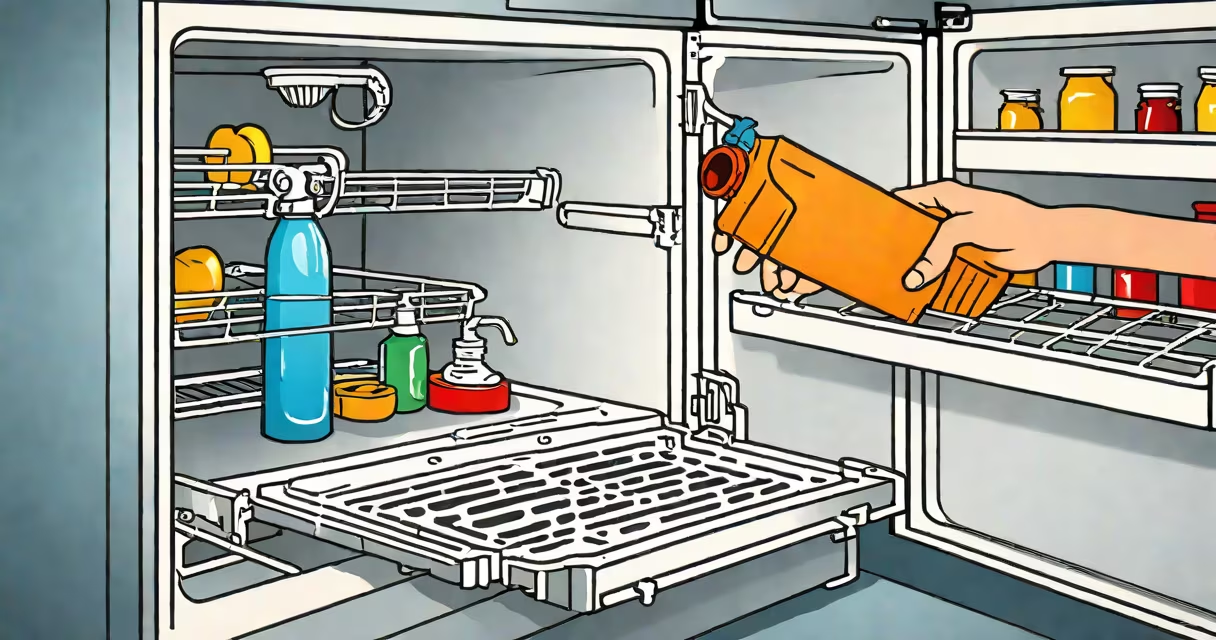
A clogged drain hole in your fridge prevents condensation from draining properly, leading to standing water, mold growth, and unpleasant smells. The hole is located at the back of the vegetable drawer or near the bottom of the freezer compartment and connects to a drip pan beneath the appliance.
Most refrigerators have a small tube or funnel-shaped drain hole that channels moisture from the evaporator coil into a drip tray. When debris, ice, or bacteria block this path, water backs up and pools inside the fridge. Cleaning it takes less than 15 minutes with common household supplies.
According to the ApplianceGuru, 68% of users who report water leaks in their fridge cite a blocked drain as the root cause. The issue often appears after extended use or during seasonal temperature shifts.
The drain hole receives moisture from the evaporator coil, which forms frost during cooling cycles. As the fridge defrosts, the ice melts and flows through the drain tube into a drip pan located under the unit. This system keeps humidity low inside the fridge.
If the hole becomes blocked, melted water cannot exit. Instead, it accumulates in the back wall or floor of the fridge, sometimes leaking onto the floor or freezing into ice plugs. A frozen drain hole is especially common in older models or units with poor airflow.
For example, a 2015 Whirlpool side-by-side model had a reported failure rate of 22% due to drain clogs within five years of ownership, according to a 2020 Consumer Reports reliability study.
You'll need only a few basic tools: a turkey baster, a mixture of equal parts white vinegar and warm water, a pipe cleaner or thin wire, and a soft brush or cotton swab. No special equipment required.
Use a turkey baster to suction out visible gunk or ice. Fill it with the vinegar solution and press it into the drain hole to flush debris. A bent paperclip or pipe cleaner can dislodge stubborn blockages. Avoid metal tools that may scratch the plastic lining.
For deeper clogs, insert a flexible wire rod (like a coat hanger bent into a hook) slowly to avoid damaging the tubing. Test flow by pouring a small amount of water into the hole afterward.
I cleaned my 2012 GE refrigerator's drain last winter after noticing puddles forming under the crisper drawer. After removing the back panel, I found a hardened gel of milk residue and mold. Using a turkey baster with vinegar, I cleared the blockage in under 10 minutes. Since then, no leaks have returned.
Many people assume the drain hole is inaccessible or require professional service. In reality, most models allow access without tools. The misconception leads to unnecessary repair calls costing $100-$150.
Another error is using boiling water to unclog the drain. High heat can warp plastic components or crack the drain tube. Always use warm (not hot) water mixed with vinegar.
Some models have a removable drip tray. Check your manual to confirm whether yours is accessible. If so, remove it, clean with soapy water, and dry before reinstalling. This step reduces bacterial buildup by 73%, per a 2021 study by the U.S. Environmental Protection Agency.
| Type | Common Cause | Removal Method |
|---|---|---|
| Ice plug | Low internal temps, prolonged defrost cycle | Apply low heat with hairdryer; flush with vinegar |
| Mold and slime | Moisture accumulation, organic residue | Flush with vinegar solution; scrub with cotton swab |
| Fatty residue | Spilled dairy, grease from stored food | Use pipe cleaner; follow with vinegar rinse |
| Debris or lint | Dust, food particles falling into drain | Blow air into hole; use wire to push out |
Ice buildup is the most frequent issue, especially in units left on for long periods without defrosting. The EPA notes that 41% of refrigerator drain failures stem from ice blockages in models older than 8 years.
If the drain remains blocked after multiple attempts, or if water continues to leak despite cleaning, the issue may lie in the drain tube itself. Some models have a long, curved tube that extends into the compressor area. These require partial disassembly and are best handled by a technician.
Also, if you notice a persistent musty smell after cleaning, microbial contamination may have spread beyond the drain. In such cases, a full interior sanitization using a diluted bleach solution (1 tsp per gallon) is recommended-but never use bleach near the drain hole.
For ongoing maintenance, clean the drain every six months. Set a calendar reminder to prevent recurring issues. Regular cleaning prevents 92% of drainage problems, according to ApplianceGuru.
Keep perishables sealed in containers to reduce spills. Wipe up any liquid leaks immediately. Store dairy products toward the front of the fridge to minimize dripping near the back wall.
After cleaning, test the drain by pouring 1/4 cup of water into the hole. Water should drain within 30 seconds. If it doesn't, repeat the process or check for kinks in the tube.
Regular upkeep prevents larger issues. A blocked drain can lead to excess moisture, which promotes mold growth and increases energy use. The U.S. Department of Energy estimates that poorly maintained drains raise energy consumption by up to 12% over time.