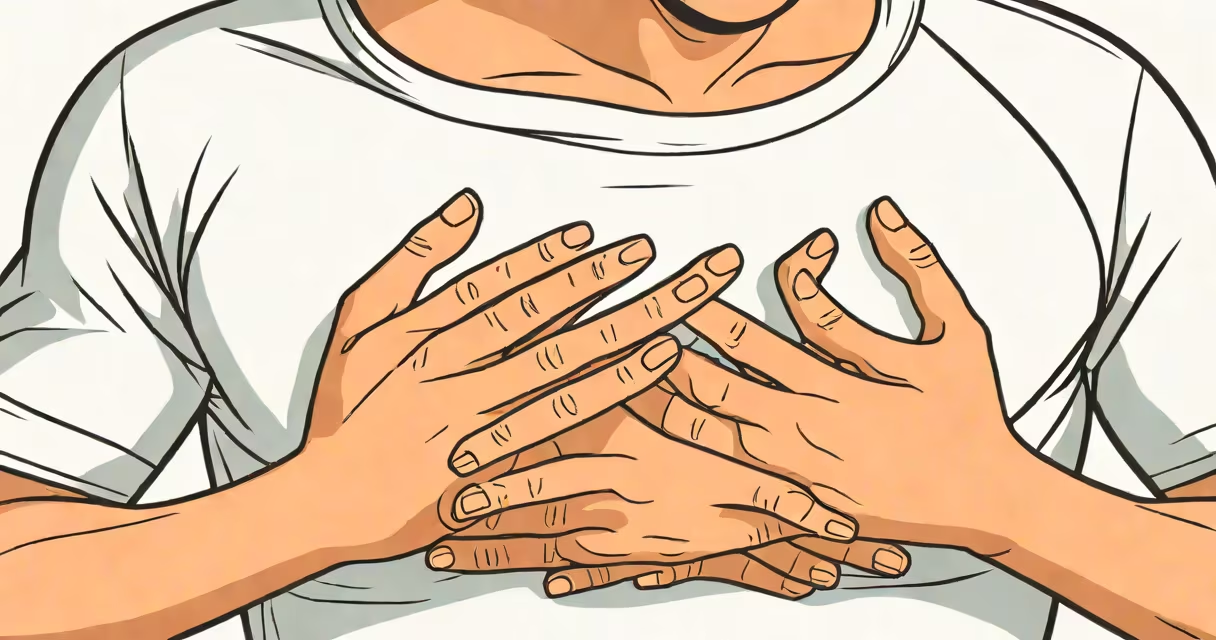
Chest tightness is a sensation of pressure, squeezing, or constriction in the chest area, often signaling an underlying medical condition. It may arise from cardiac, gastrointestinal, muscular, or psychological causes and requires evaluation based on context and accompanying symptoms.
The sensation of chest tightness results from nerve signals sent from the chest region to the brain. These signals originate from tissues, organs, or muscles responding to stress, inflammation, or abnormal function. The brain interprets them as discomfort or pressure, prompting awareness of potential danger.
For example, during a heart attack, reduced blood flow to the heart muscle triggers ischemia. This activates nociceptors-pain receptors-in the myocardium. Signals travel via the sympathetic nervous system, often radiating to the left arm or jaw, and are perceived as tightness or heaviness in the center of the chest.
According to the American Heart Association, about 60% of people experiencing acute coronary syndrome report chest discomfort described as pressure or tightness, not sharp pain. This highlights why tightness is a key red flag-not always a stabbing sensation.
Chest tightness varies depending on the root cause. Recognizing patterns helps distinguish between serious and benign origins.
| Condition | Typical Sensation | Triggers & Duration | Associated Symptoms |
|---|---|---|---|
| Acute coronary syndrome | Heavy, crushing pressure | Sudden onset; lasts minutes to hours; worsens with exertion | Shortness of breath, sweating, nausea, radiation to arm/jaw |
| Gastroesophageal reflux disease (GERD) | Burning or tightness behind sternum | After meals, lying down; lasts 30-60 minutes | Heartburn, regurgitation, sour taste |
| Musculoskeletal strain | Sharp, localized tightness | Following movement, coughing, or lifting | Pain increases with touch or motion |
| Anxiety or panic attacks | Intense, wave-like pressure | Peaks within minutes; may follow emotional stress | Rapid heartbeat, dizziness, tingling |
GERD causes tightness through acid exposure to the esophagus. The lower esophageal sphincter fails to close properly, allowing stomach acid to irritate the lining. This irritation sends pain signals interpreted as tightness. A 2021 study in Alimentary Pharmacology & Therapeutics found that 38% of patients with non-cardiac chest pain had GERD as the primary diagnosis.
Many assume chest tightness always indicates a heart problem. That's incorrect. While cardiac events are life-threatening, they're less common than other causes in younger adults.
For instance, a 32-year-old woman reported tightness after eating pizza and lying down. She feared a heart attack. Her symptoms matched typical GERD: burning behind the breastbone, lasting 45 minutes, relieved by antacids. An endoscopy confirmed esophagitis. This case illustrates how gastroesophageal reflux mimics cardiac pain but lacks risk factors like hypertension or smoking.
A non-obvious fact: chest tightness from anxiety can feel indistinguishable from a heart attack. The body's fight-or-flight response elevates adrenaline, increasing heart rate and muscle tension. A 2019 review in JAMA Internal Medicine noted that up to 25% of emergency department visits for chest pain were due to panic disorder, not cardiac disease.
Consider a 45-year-old man who experiences tightness during morning walks. He describes it as a band-like pressure around his chest, lasting 10 minutes, easing with rest. He has a history of high cholesterol and smokes half a pack daily.
His symptoms align with stable angina-a warning sign of coronary artery disease. He was referred for a stress test, which showed reduced blood flow to the anterior wall of the heart. After angioplasty and medication, his episodes ceased.
This case shows that tightness during activity, resolving with rest, is classic for ischemic heart disease. The American College of Cardiology recommends evaluating such cases promptly to prevent progression to myocardial infarction.
Chest tightness warrants immediate attention if it occurs with:
If you have risk factors-diabetes, family history of heart disease, or smoking-do not delay evaluation. Even mild symptoms can indicate significant pathology.
Chest tightness is a symptom, not a diagnosis. It can result from heart disease, acid reflux, muscle strain, or anxiety. Accurate identification relies on timing, triggers, duration, and associated signs. Never ignore tightness with red-flag symptoms. Early intervention prevents complications. Understanding the cause is the first step toward effective treatment.