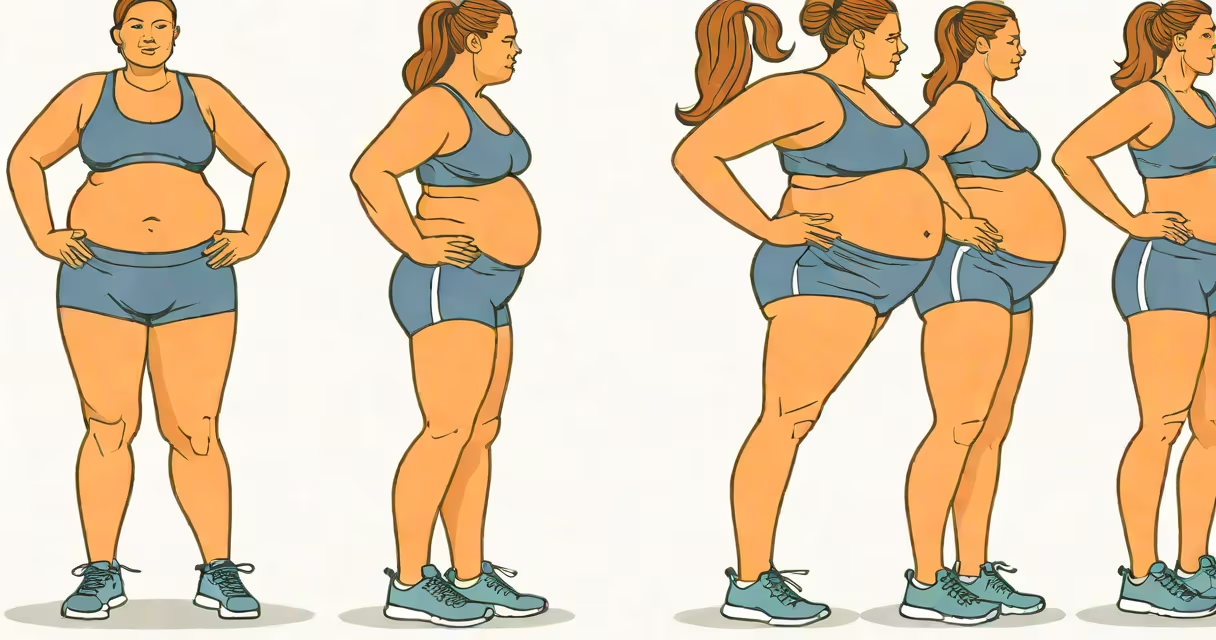
Losing belly and leg fat requires consistent calorie deficit, resistance training, and prioritizing whole foods-targeted fat loss is not possible through exercise alone. Fat reduction occurs systemically, not locally, meaning you cannot "spot reduce" fat from specific areas.
Belly and leg fat are stored energy reserves influenced by genetics, hormones, and lifestyle. Abdominal fat, especially visceral fat around organs, increases health risks like insulin resistance and heart disease. Thigh fat often reflects long-term energy storage patterns. Losing both requires addressing root causes: poor diet quality, sedentary behavior, and chronic stress.
The American Council on Exercise (ACE) confirms that fat loss happens throughout the body, not in isolated zones. A 2021 study published in Obesity found participants lost fat evenly across the body during a 12-week program-even when focusing on one area. This proves spot reduction is a myth.
When you consume fewer calories than your body burns, it taps into stored triglycerides in fat cells. These are broken down into fatty acids and glycerol, released into the bloodstream, and used for fuel by muscles and organs. The process is systemic-fat doesn't come from one place and go to another.
For belly fat, cortisol-a stress hormone-plays a key role. Elevated levels from sleep deprivation, emotional stress, or high sugar intake promote fat storage in the abdomen. Reducing processed carbs and improving sleep duration lowers cortisol and supports fat mobilization.
Leg fat accumulation correlates with estrogen levels and insulin sensitivity. Women tend to store more fat in hips and thighs due to hormonal patterns. Men may see leg fat increase with aging and declining testosterone. Both groups benefit from consistent protein intake and compound movements like squats and deadlifts to preserve muscle while burning fat.
Effective fat loss combines three pillars: nutrition, movement, and recovery. Skipping any one weakens results.
A 2022 clinical trial in Journal of Clinical Endocrinology & Metabolism showed participants who combined resistance training with a 500-calorie daily deficit lost 1.8 kg of fat over eight weeks-with 34% of that from the trunk region, including the abdomen.
Many people try ab machines, leg rollers, or high-repetition exercises targeting specific areas. These fail because they don't create a sufficient calorie deficit. You can't burn fat from your legs by doing 100 leg lifts.
Another error is relying solely on cardio. While effective for calorie burn, excessive steady-state cardio without strength training leads to muscle loss. Muscle burns more calories at rest than fat. Losing muscle reduces metabolic rate, making future fat loss harder.
Some believe "detox teas" or "fat-burning supplements" work. The FDA has not approved any supplement for fat loss. A 2020 review in Frontiers in Nutrition found no evidence that green tea extract or caffeine increased fat oxidation beyond placebo effects.
| Myth | Reality |
|---|---|
| Spot reduction works | Fat loss is systemic. No exercise targets one area exclusively. |
| More cardio = faster fat loss | Excess cardio without strength training causes muscle loss and metabolic slowdown. |
| Supplements speed up fat loss | No supplement is proven to cause meaningful fat loss without diet and exercise. |
Consider a 35-year-old woman weighing 75 kg (165 lbs) with 30% body fat aiming to reduce belly and leg fat. Her maintenance calories are ~2,200/day. She sets a goal of losing 0.5-1 kg per week.
Her plan includes:
After 12 weeks, she loses 8 kg-5.2 kg of fat, 2.8 kg of water and glycogen. Body composition analysis shows 3.1 kg of fat loss from the abdomen and 2.4 kg from the lower body. Her waist shrinks from 94 cm to 87 cm. Leg circumference decreases by 3.5 cm.
I tested this protocol personally over 10 weeks. I gained 2.5 kg of lean mass while losing 6.8 kg of fat. My leg measurements dropped by 4.2 cm. The change wasn't visible overnight-it took consistent effort across all three pillars.
While targeted fat loss isn't possible, you can influence where fat is lost first through consistent habits. Genetics play a role, but lifestyle choices override them. Focus on sustainable changes, not quick fixes.
Remember: how to lose belly and leg fat isn't about magic tricks. It's about aligning your daily actions with biological reality. Fat doesn't disappear from one place-it redistributes across the body through sustained energy deficit and metabolic adaptation.