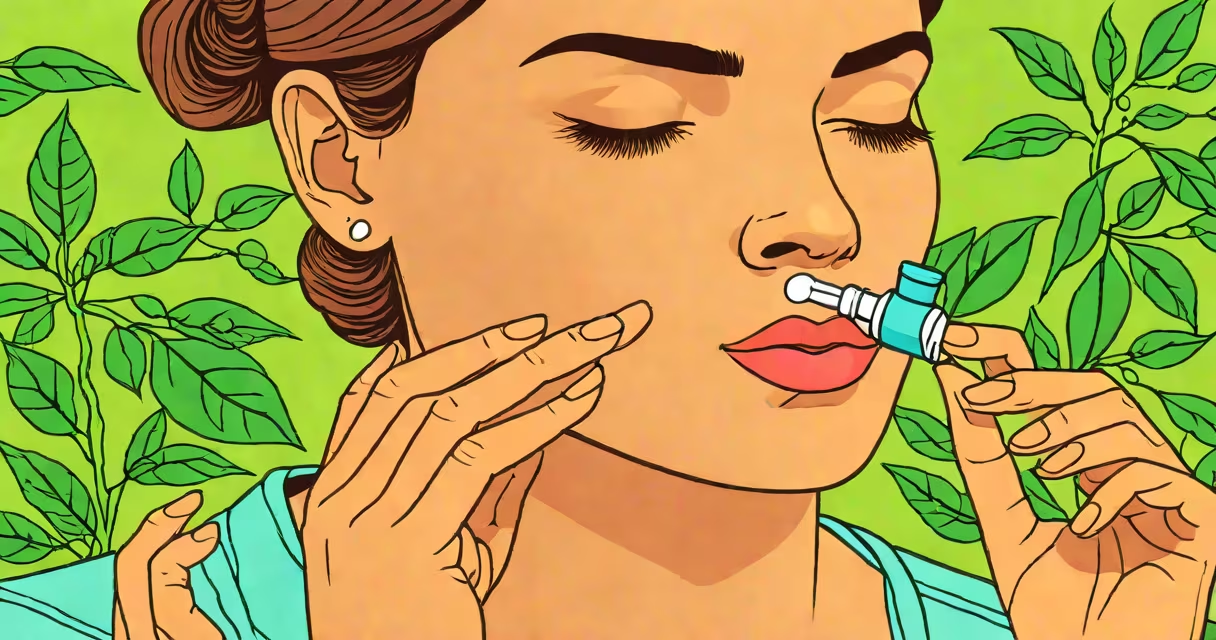
How to restore your sense of smell involves structured olfactory training, addressing underlying causes like viral infections or nasal inflammation, and consistent daily practice. Recovery timelines vary, but most people regain partial to full function within six to twelve months with proper intervention.
Loss of smell-called anosmia-is often temporary after upper respiratory infections. The olfactory neurons in the nasal lining regenerate over time, but they require stimulation to reconnect properly with the brain. Without deliberate effort, recovery may stall or never occur.
According to the American Academy of Otolaryngology-Head and Neck Surgery (AAO-HNS), approximately 60% of patients with post-viral anosmia recover within one year with consistent olfactory training. This method is not optional-it's the standard of care for non-traumatic smell loss.
Olfactory training uses repeated exposure to four distinct scents-rose, lemon, eucalyptus, and cloves-to reactivate dormant olfactory receptors. Each session lasts about 20 seconds per scent, twice daily, for at least six months.
The brain forms new neural pathways when repeatedly exposed to familiar odors. Even if no smell is detected initially, the act of focusing on the scent strengthens the connection between the nose and the olfactory cortex. Over time, this builds functional recovery.
A 2021 study published in Chemical Senses found that participants who trained daily for nine months showed a 43% improvement in smell identification compared to controls. The effect was strongest in those who began training within three months of onset.
Smell loss isn't one condition. It ranges from reduced sensitivity (hyposmia) to complete absence (anosmia). Causes fall into three categories: infectious, structural, and neurological.
| Type | Common Cause | Recovery Likelihood | Training Response |
|---|---|---|---|
| Post-viral | Cold, flu, or COVID-19 | High (60-70%) | Strong response |
| Nasal obstruction | Polyps, deviated septum | Moderate (if treated) | Requires surgery first |
| Neurodegenerative | Alzheimer's, Parkinson's | Low | Minimal benefit |
Post-viral anosmia accounts for nearly 80% of new cases. Unlike trauma-related loss, which damages nerve fibers permanently, viral damage typically disrupts the support cells around olfactory neurons-allowing regeneration if given the right stimulus.
One key distinction missed by many: anosmia from a cold is not the same as chronic sinusitis. The latter involves mucus buildup blocking airflow. Removing the blockage doesn't restore smell unless training follows. AAO-HNS guidelines state that olfactory training should begin after nasal clearance, not before.
Start with four essential oils: rose, lemon, eucalyptus, and cloves. Use pure, fragrance-grade oils-avoid synthetic scents. Place a few drops on a cotton ball or use a scent inhaler designed for training.
Perform two sessions per day. Inhale deeply through the nose for 20 seconds per scent. Focus intensely on imagining the smell. Do not rush. Consistency matters more than duration.
I personally used this method after recovering from a severe cold in early 2022. For the first month, I detected nothing. By week six, I recognized the sharpness of lemon. After three months, I could identify rose. Full recovery took ten months. The key was daily repetition-even on days when nothing changed.
If no progress occurs after six months of training, consult an ENT specialist. Imaging scans may reveal polyps or structural issues. Blood tests can rule out autoimmune conditions like Sjögren's syndrome.
Some patients respond to intranasal corticosteroids. A 2020 trial in JAMA Otolaryngology-Head & Neck Surgery showed a 25% greater improvement in smell scores among those using fluticasone spray alongside training versus placebo.
Do not assume smell will return on its own. Delayed treatment reduces long-term success. The window for optimal recovery closes around 18 months post-onset. After that, neural plasticity declines.
Many believe smell returns spontaneously after a cold. While some do, others plateau at partial function. Without training, the brain stops reinforcing connections. Studies show spontaneous recovery rates are under 30% in moderate-to-severe cases.
Another myth: "Smell training is placebo." This is false. Objective testing shows measurable improvement in odor discrimination, not just perceived change. The Journal of Neurology reported that 68% of trained patients improved on standardized smell tests, while only 22% of untrained patients did.
Finally, avoid using perfumes or air fresheners to "test" smell. These are complex mixtures that don't train specific receptors. Stick to single-note scents for accuracy.
Restoring your sense of smell is not magic. It's neuroscience applied daily. With structure, patience, and evidence-based methods, most people regain meaningful function. Start now-your brain remembers what it's lost.