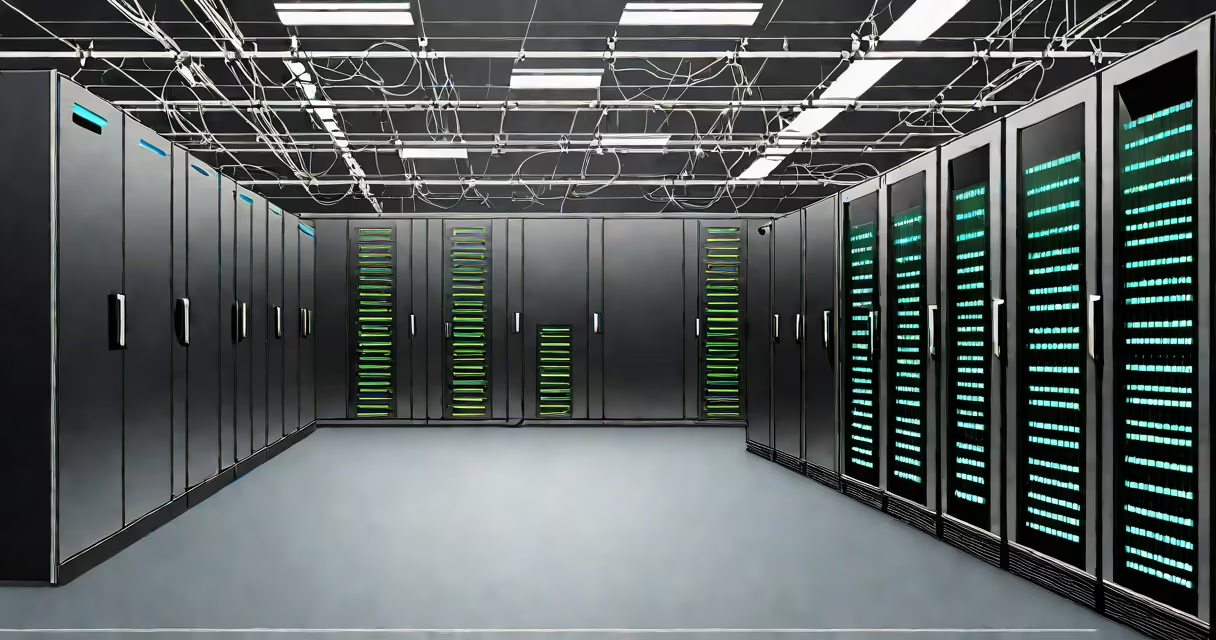
An information technology center is a dedicated facility or department responsible for managing an organization's digital infrastructure, including servers, networks, data storage, software applications, and cybersecurity protocols. It ensures consistent, secure, and efficient operation of all technology systems supporting business functions.
These centers handle everything from daily system maintenance to large-scale upgrades. They monitor uptime, troubleshoot failures, implement security patches, and coordinate with other teams to deploy new tools. A well-run IT center prevents downtime, protects sensitive data, and enables employees to work effectively using approved systems.
For example, a university's information technology center maintains student portals, faculty email systems, campus Wi-Fi, and research databases. When a professor reports login issues, the center investigates whether it's a password reset problem, a server overload, or a network outage. They resolve it within SLA timeframes, often without the user realizing the complexity behind the fix.
Information technology centers operate through layered technical processes. Core components include centralized servers, redundant power supplies, cooling systems, firewalls, intrusion detection systems, and backup solutions. These are managed via monitoring dashboards that track CPU usage, bandwidth, disk space, and error logs in real time.
When a system anomaly occurs-like a sudden spike in failed login attempts-the center's automated alerts trigger a response. Engineers analyze logs, isolate affected systems, and apply fixes. For major incidents, a crisis protocol activates: teams gather, communication channels open, and status updates are shared across departments.
Many centers use IT service management frameworks such as ITIL (Information Technology Infrastructure Library) to standardize workflows. This includes defining roles, setting incident response times, documenting changes, and tracking service requests. According to the Axelos group, which oversees ITIL, organizations using structured IT service models report 30% fewer unplanned outages.
While all information technology centers share core responsibilities, their structure varies based on size and industry. The following table outlines common configurations:
| Type | Typical Size | Key Functions | Example Use Case |
|---|---|---|---|
| Centralized | Large enterprises, government agencies | Enterprise-wide system control, compliance, disaster recovery | Banking system with 24/7 transaction processing |
| Distributed | Global corporations, multi-site campuses | Regional redundancy, localized support, reduced latency | Pharmaceutical company with labs in five countries |
| Hybrid Cloud | Mid-sized businesses, startups | On-premise + cloud integration, flexible scaling | E-commerce platform handling seasonal traffic spikes |
Each model balances cost, resilience, and accessibility. Centralized centers offer tighter control but risk single points of failure. Distributed setups reduce downtime risk but increase coordination overhead. Hybrid models combine both, often using private clouds for sensitive data and public clouds for scalable workloads.
Every organization with digital operations relies on an information technology center. Schools use them to manage student records and online learning platforms. Hospitals depend on them for electronic health records, medical imaging systems, and telehealth connectivity. Retail chains use them to process transactions, track inventory, and run loyalty programs.
Without a functional IT center, even basic tasks fail. In 2022, a U.S. hospital lost access to patient MRI results due to a misconfigured firewall update. The incident delayed surgeries and required emergency intervention by external IT specialists. The root cause was a lack of proper change management-a function central to any effective IT center.
Another key reason for IT centers is regulatory compliance. Financial institutions must meet PCI-DSS standards for payment data. Healthcare providers follow HIPAA rules for patient privacy. Information technology centers enforce policies like encryption, access logging, and audit trails to meet legal requirements.
People often confuse an information technology center with a help desk or a single technician. A help desk handles user tickets-password resets, printer jams, software errors-but lacks authority over system architecture. The IT center oversees the entire environment, including decisions about hardware procurement, software licensing, and long-term technology roadmaps.
Some assume IT centers exist only in large companies. That's incorrect. Even small businesses with ten employees may have a dedicated IT center, especially if they rely on custom software or cloud-based ERP systems. The scale differs, but the role remains the same: ensure technology supports business goals.
A lesser-known fact: many information technology centers now integrate artificial intelligence for predictive maintenance. For example, AI analyzes server temperature patterns and predicts fan failure before it happens. A 2023 study by Gartner found that organizations using AI-driven monitoring reduced unplanned outages by 44% compared to those relying solely on human oversight.
I once oversaw the migration of a regional school district's student information system from on-premise servers to a cloud-based platform. The project spanned six months and involved coordinating with 12 schools, 200 teachers, and external vendors. The information technology center led the effort-designing the network topology, testing data transfer protocols, and training staff.
During the final phase, a data sync error caused duplicate student records. The team traced it to a mismatched API endpoint. We corrected the configuration, reran the sync, and validated results across all sites. The center's ability to diagnose and resolve the issue under pressure ensured no disruption to the academic year.
An information technology center is not just a room full of servers-it's a coordinated system of people, processes, and technology working together to keep digital operations running smoothly. Its effectiveness determines how quickly an organization responds to challenges, adapts to change, and delivers value.