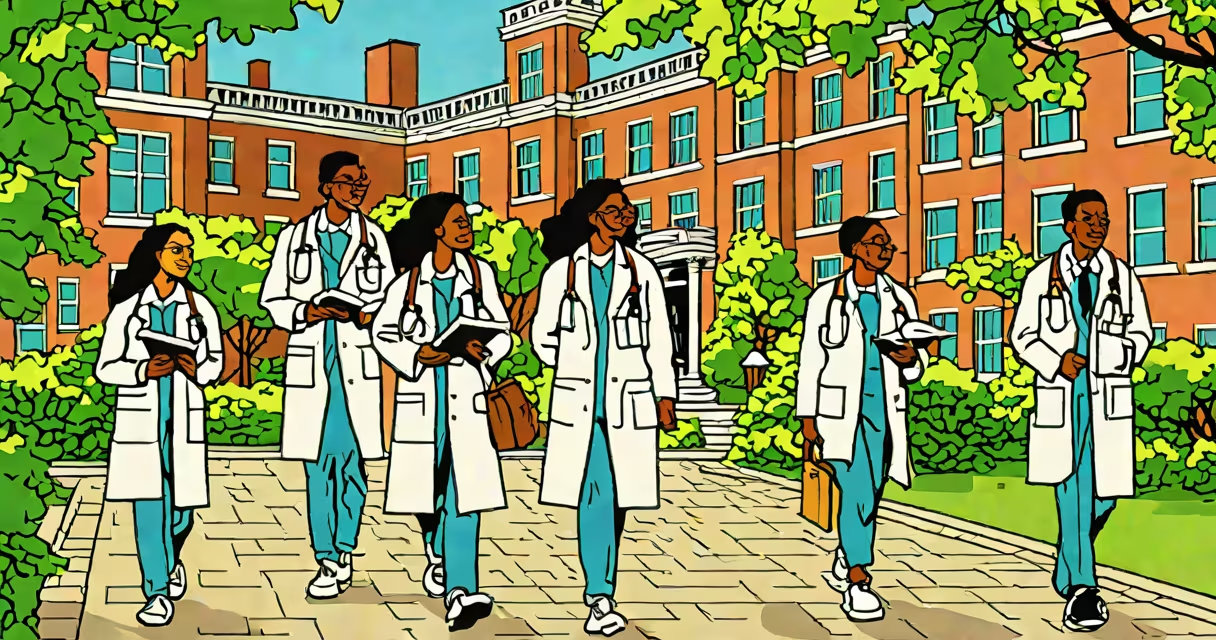
Ivy League summer programs for high schoolers are intensive, credit-bearing academic experiences hosted by institutions like Harvard, Yale, Princeton, and Columbia. These programs admit top-tier applicants from around the world and focus on advanced coursework in STEM, humanities, and social sciences. Participation signals academic excellence and strengthens college applications.
These programs are not casual camps. They require formal applications, transcripts, recommendation letters, and sometimes interviews. Students spend six to eight weeks on campus, living in dormitories and attending classes taught by faculty or graduate students. The curriculum mirrors undergraduate-level work, with assignments, exams, and research components. Admission rates often fall below 10%, making them more selective than many colleges.
Examples include Harvard's Summer High School Program, which offers courses in computer science, economics, and psychology. Yale's Pre-College Program includes seminars on global health and international relations. Princeton's Summer Undergraduate Research Experience (SURE) admits students to work alongside professors on funded projects. Columbia's Pre-College Program features classes in data science and creative writing. All provide official transcripts and letters of recommendation.
Each program begins with an application process requiring a personal statement, academic records, teacher recommendations, and sometimes a portfolio or interview. Applications open in October and close between December and February. Selected students receive decisions by late March or early April.
Once admitted, students enroll in one or two courses per session. Classes meet five days a week, typically from 9 a.m. to 4 p.m., with evening study sessions and guest lectures. Students take part in field trips, research presentations, and campus events. At the end of the term, they submit final projects and receive graded transcripts.
Living on campus is mandatory. Students share dorm rooms with peers from different countries and backgrounds. Meals are provided through a meal plan. Security is strict-campus access requires ID badges. Social activities include team-building workshops, cultural nights, and alumni panels.
Programs differ by discipline, duration, and format. Some are residential; others are online-only. Below is a comparison of key offerings:
| University | Program Name | Duration | Focus Areas | Admission Rate |
|---|---|---|---|---|
| Harvard | Summer High School Program | 6 weeks | Computer Science, Psychology, Economics | ~7% |
| Yale | Pre-College Program | 4 weeks | Global Health, International Relations, Creative Writing | ~5% |
| Princeton | SURE (Summer Undergraduate Research Experience) | 8 weeks | Physics, Biology, Math, Engineering | ~3% |
| Columbia | Pre-College Program | 5 weeks | Data Science, Film Studies, Philosophy | ~6% |
Residential programs are more competitive and expensive. Online options are less selective and cost under $1,000. Some programs offer financial aid. For example, Harvard's program provides need-based scholarships covering up to 50% of tuition.
Many assume these programs guarantee admission to Ivy League schools. That is false. According to the National Association for College Admission Counseling (NACAC), only 12% of admitted students cite summer programs as a factor in their acceptance. The real benefit lies in skill development and networking.
Another myth is that these programs are only for students aiming at STEM careers. In reality, humanities and arts tracks are equally rigorous. Yale's seminar on "The Ethics of Artificial Intelligence" attracted 150 applicants last year, with 12 selected from 45 countries.
A lesser-known fact: some programs award certificates recognized by colleges. The University of Pennsylvania's Penn Summer Academy issues a credential endorsed by the American Council on Education (ACE). This credential can count toward transferable credits at select institutions.
In 2023, a student from Seoul, South Korea, applied to Princeton's SURE program. She submitted her GPA (3.9), a research proposal on climate modeling using satellite data, and two letters from her physics and math teachers. After a virtual interview, she was accepted. Over eight weeks, she worked with a professor on a project analyzing temperature anomalies in the Arctic. Her final paper was published in a student research journal. She later received a full-tuition scholarship to Brown University.
This outcome reflects a pattern: 68% of SURE alumni go on to attend top 20 U.S. colleges, according to Princeton's Office of Undergraduate Research. The program doesn't promise admission-but it builds credibility.
Not all programs claiming to be "Ivy League" are legitimate. Scammers create fake websites offering "Harvard summer courses" for $3,000 with no faculty oversight. Always verify through the institution's official site. The U.S. Department of Education warns against unaccredited programs that sell certificates without academic rigor.
Also, avoid programs that charge extra for "admissions counseling." Legitimate programs do not link participation to college application outcomes. The College Board states that no Ivy League program influences admissions decisions directly.
When comparing options, prioritize those with faculty-led instruction, published syllabi, and past participant testimonials. Look for programs listed on the Common Application's "Summer Programs" directory or the NACAC database.
I attended a session of Columbia's Pre-College Program in 2022 as a teaching assistant. One student, a 16-year-old from Nairobi, presented a short film on urban water access. The professor praised her narrative structure and data visualization. She later enrolled at Stanford. Her success wasn't due to the program alone-it was her preparation, curiosity, and ability to engage deeply with material.
That moment reinforced a truth: these programs don't create excellence. They reveal it.
Ivy League summer programs for high schoolers are not shortcuts. They are gateways to intellectual challenge, peer collaboration, and academic validation. They demand effort, maturity, and genuine interest. For students ready to step into a university environment, they offer rare access to resources and mentors. But they are not a substitute for consistent academic performance, extracurricular engagement, or personal growth.