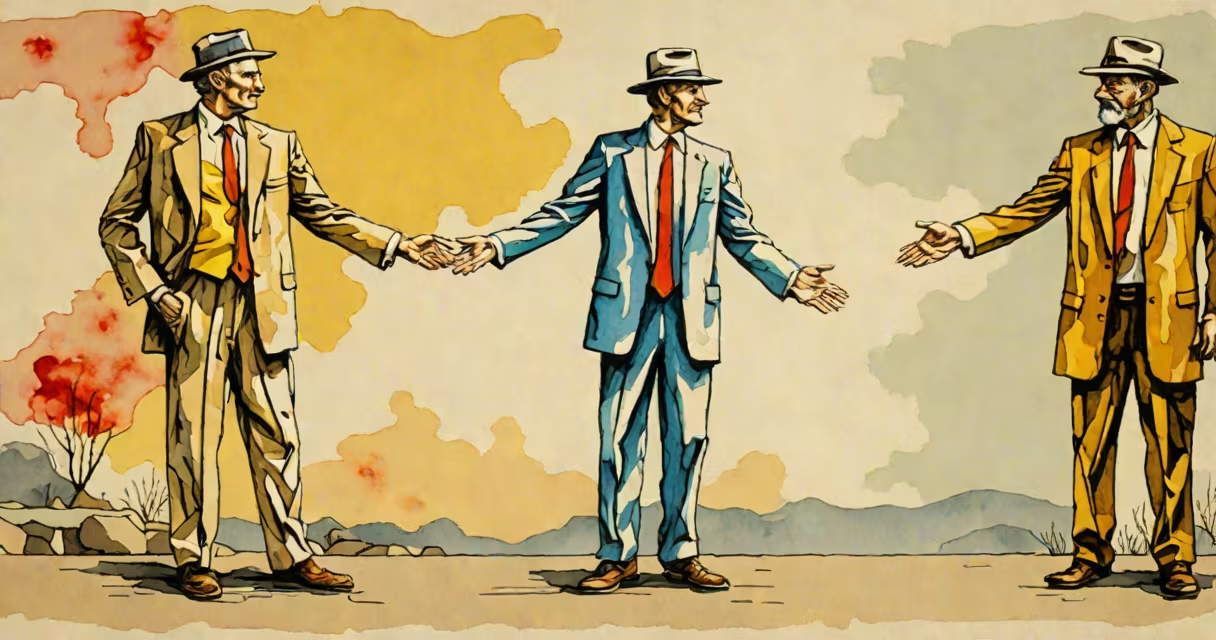
Liberal and libertarian are distinct political ideologies. Liberalism focuses on social equality, civil rights, and government action to reduce inequality. Libertarianism centers on individual liberty, property rights, and minimal state involvement. They share a commitment to personal freedom but differ sharply on the role of government.
Liberalism emerged from Enlightenment ideals emphasizing reason, progress, and human dignity. Modern liberalism supports policies like universal healthcare, progressive taxation, and anti-discrimination laws. It accepts that government can correct market failures and protect vulnerable populations. The U.S. Democratic Party reflects this tradition, advocating for expanded social safety nets and regulatory oversight.
Libertarianism traces its roots to classical liberalism and 18th-century thinkers like John Locke and Adam Smith. It argues that individuals should be free to make their own choices unless they harm others. Libertarians oppose most forms of taxation, regulation, and state coercion. The U.S. Libertarian Party promotes abolishing the IRS, ending drug prohibition, and eliminating military interventions abroad.
Despite both valuing freedom, liberals and libertarians disagree on what kind of freedom matters most. Liberals prioritize freedom from want, insecurity, and systemic disadvantage. Libertarians prioritize freedom from coercion, especially by the state.
A concrete example: public healthcare. A liberal supports a government-run system like Medicare for All because it ensures access regardless of income. A libertarian opposes it on grounds that it forces people to fund services they may not want and violates property rights. Both claim to value health as a fundamental good, but their solutions diverge based on core principles.
Another contrast appears in criminal justice. Liberals often support reforming policing, reducing incarceration, and investing in community programs. Libertarians argue that mass incarceration stems from over-policing and excessive sentencing-issues rooted in state overreach. Their solution is not more funding for rehabilitation, but dismantling the entire enforcement apparatus.
| Issue | Liberal View | Libertarian View |
|---|---|---|
| Healthcare Access | Government must ensure coverage for all | Individuals should choose private providers; state involvement is coercion |
| Taxation | Progressive taxes fund public goods and reduce inequality | Taxes are theft; voluntary contributions should replace them |
| Drug Policy | Regulate and tax substances to reduce harm | Decriminalize all drugs; individuals should decide risks |
| Education | Public schools funded by taxes ensure equal opportunity | Parents should choose schools; vouchers or homeschooling preferred |
Many assume that anyone who values freedom must be a libertarian. This confuses liberty with autonomy. Liberals defend freedom from oppression, poverty, and discrimination. Libertarians defend freedom from authority, even when that authority acts to protect people.
For example, a liberal might support mandatory vaccinations during a pandemic to prevent widespread illness. A libertarian would see this as an unjustified infringement on bodily autonomy. Both sides cite freedom-but define it differently. The liberal sees freedom as the ability to live safely; the libertarian sees it as the right to refuse state mandates.
A non-obvious distinction: liberals often accept that some inequalities are inevitable and seek to mitigate them through policy. Libertarians reject the idea that inequality is a problem at all-unless it results from force or fraud. To a libertarian, wealth disparities are natural outcomes of individual effort and choice. To a liberal, they reflect structural barriers that require intervention.
In 2020, the U.S. federal government passed the CARES Act, providing direct payments and unemployment benefits during the pandemic. Liberals widely supported it as essential relief. Libertarians criticized it as unconstitutional overreach and warned of long-term economic damage. The divide wasn't about compassion-it was about whether the state should act to stabilize society during crisis.
I once attended a town hall in Portland where a liberal city council member argued for rent control to prevent displacement. A libertarian resident responded that such laws discouraged housing investment and hurt low-income tenants by reducing supply. The debate wasn't about caring for people-it was about which policy mechanism better served individual rights and economic efficiency.
Historically, the term "liberal" evolved from 19th-century European movements advocating constitutional government and civil liberties. By the 20th century, especially in the U.S., it came to mean support for social welfare and civil rights. Meanwhile, libertarianism solidified in the 1970s and 1980s as a reaction to rising taxes and perceived government overreach, influenced by thinkers like Milton Friedman and Robert Nozick.
Mixing up liberal and libertarian positions leads to poor policy decisions and ineffective advocacy. Voting for a candidate based on shared values like "freedom" without understanding how those values are interpreted can result in unintended consequences.
For instance, supporting a candidate who promises lower taxes (a libertarian goal) while also advocating for stronger environmental regulations (a liberal goal) requires clarity on trade-offs. A libertarian might oppose carbon taxes as government interference. A liberal might see them as necessary to address climate change. Both claim to care about the future-but their paths differ.
The question "is liberal and libertarian the same" has a clear answer: no. They are different frameworks for organizing society around freedom, equality, and responsibility. Recognizing their differences strengthens democratic discourse and enables more precise political alignment.