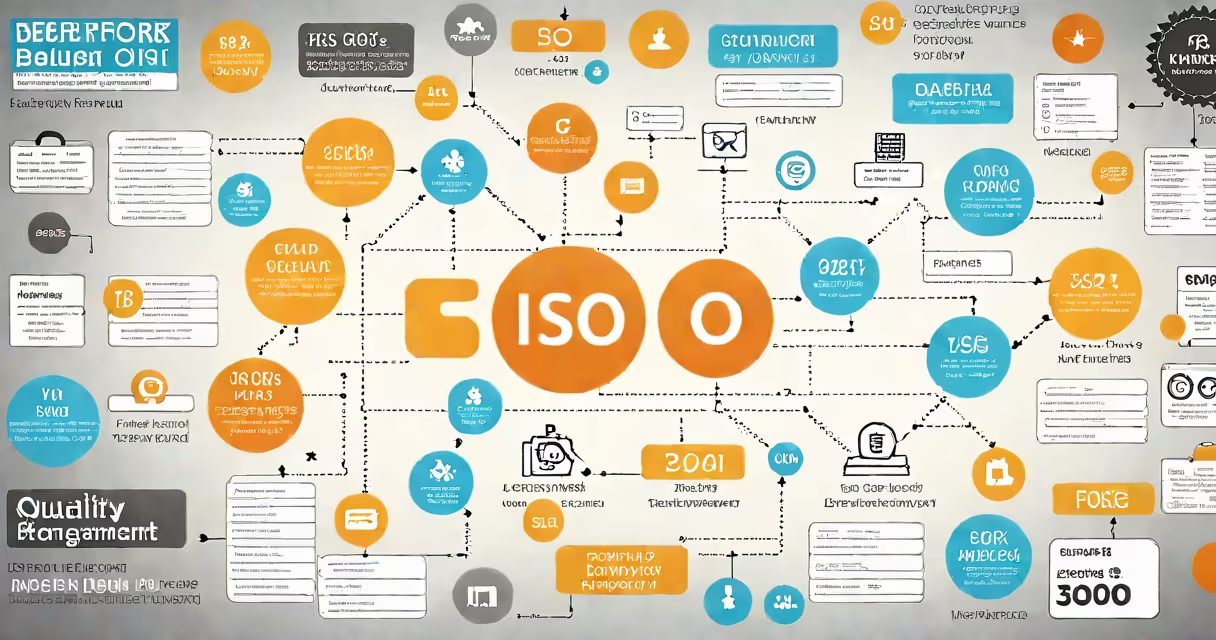
The iso9001 2015 quality management system is an international standard that specifies requirements for organizations to consistently deliver products and services meeting customer and regulatory needs. It applies to any organization regardless of size or industry, focusing on leadership, risk-based thinking, and continual improvement.
Organizations implement iso9001 2015 quality management system to demonstrate their ability to meet customer expectations and comply with applicable laws. The standard replaces ISO 9001:2008 and introduces a new high-level structure based on Annex SL, making it easier to integrate with other management systems like ISO 14001 (environmental management) or ISO 45001 (occupational health and safety).
Key elements include defining processes, documenting procedures, measuring performance, and reviewing results regularly. Certification requires an independent audit by a recognized accreditation body. Organizations must maintain records showing how they identify risks, monitor outcomes, and take corrective actions when needed.
The system operates through a structured cycle known as PDCA-Plan, Do, Check, Act. This model ensures ongoing evaluation and refinement of processes. For example, a manufacturing company using iso9001 2015 quality management system would plan production schedules based on demand forecasts, execute them under controlled conditions, check output against specifications, and act on deviations by adjusting inputs or training staff.
Each process must have clear objectives, responsibilities, resources, and monitoring methods. A service provider might define steps for handling client requests: assign a team member, set a response deadline, log interactions, and follow up after resolution. These steps are documented and reviewed quarterly to ensure consistency.
Top management plays a central role. They must establish quality policies, allocate resources, and review performance metrics. Without visible commitment from leaders, the system fails. One automotive supplier lost its certification after internal audits revealed that executives had not attended quality meetings for six months.
iso9001 2015 quality management system is built around seven principles:
These principles guide implementation. For instance, "evidence-based decision making" means decisions must be supported by data-not opinions. A hospital using iso9001 2015 quality management system tracks infection rates per department monthly. When one unit exceeds the threshold, leadership investigates staffing levels, equipment maintenance logs, and staff training records before acting.
The standard uses a risk-based approach. Instead of reacting to failures, organizations assess potential issues early. A software development firm identifies risks such as delayed testing cycles or unapproved code changes. They mitigate these by enforcing peer reviews, automated testing, and version control policies.
| Element | Description | Example |
|---|---|---|
| Scope | Defines what the system covers | Only the customer support division, not R&D |
| Context of the organization | Identifies internal/external factors affecting quality | Supply chain disruptions due to climate events |
| Risk and opportunity assessment | Proactive identification of threats and growth areas | Forecasting demand spikes during holidays |
| Performance indicators | Measurable outputs tracking success | First-call resolution rate of 87% |
Over 1 million certificates are issued annually worldwide. Industries including aerospace, healthcare, food processing, and IT services adopt iso9001 2015 quality management system to win contracts requiring certification. A medical device manufacturer in Germany secured a €12 million contract with the EU health agency solely because it held valid iso9001 2015 certification.
Public sector agencies use it too. The UK National Health Service (NHS) implemented iso9001 2015 quality management system across 14 regional clinics to reduce patient wait times. After two years, average appointment delays dropped from 47 minutes to 19 minutes.
Smaller businesses benefit as well. A family-run bakery in Portland, Oregon, adopted iso9001 2015 quality management system to standardize recipes and ingredient sourcing. Within nine months, customer complaints about inconsistent product quality fell by 68%, and sales increased 22% year-over-year.
Many assume iso9001 2015 quality management system is about paperwork. In reality, it's about outcomes. The standard allows flexibility in documentation-organizations can use digital tools, flowcharts, or even visual aids as long as they're accessible and accurate.
Another myth is that certification guarantees quality. It doesn't. Certification confirms the existence of a compliant system, not flawless execution. A logistics company in Singapore passed its audit but later failed a major client shipment due to untrained drivers. The audit had not caught the gap in training oversight.
A less obvious point: iso9001 2015 quality management system does not require ISO 9001:2015-specific software. Many companies use existing ERP or CRM platforms with custom modules. One electronics assembler used Microsoft Dynamics 365 to track nonconformities, approvals, and corrective actions-all aligned with iso9001 2015 requirements.
A mid-sized engineering firm in Toronto wanted to bid on a federal infrastructure project requiring iso9001 2015 certification. They began by mapping all processes involved in project design, procurement, and field inspections. They identified gaps: no formal method for approving subcontractor work, no record retention policy.
They assigned a cross-functional team to develop procedures. For example, they created a checklist for site inspections: verify permits, confirm material specs, photograph findings, and file reports within 24 hours. All employees completed training on the new workflow.
After six months of internal audits and adjustments, they hired a third-party auditor. The auditor found minor nonconformities-such as outdated templates-but no critical failures. The firm corrected them within 30 days and received certification. They won the contract and reported a 30% reduction in rework costs in the first year.
iso9001 2015 quality management system is not a substitute for technical expertise or innovation. It does not dictate how to engineer a product or design a marketing campaign. It provides a structure for managing the process of delivering consistent results.
It is also not a one-time effort. Maintenance is required. Organizations must conduct annual management reviews, update documents, and retrain staff. A construction firm in Calgary lost its certification after failing to renew training records for supervisors who had not participated in refresher courses since 2018.
Some confuse it with ISO 9000, which outlines terminology and concepts. ISO 9001 2015 is the only standard in the series that can be certified against. ISO 9004 offers guidance on performance improvement but is not auditable.
I observed a small manufacturing plant in Michigan implement iso9001 2015 quality management system. Before adoption, defects were reported inconsistently. After introducing standardized forms and weekly review meetings, defect reporting rose by 40%-not because quality worsened, but because problems were finally being captured and addressed.
This shift proved the system's value: visibility leads to accountability. The plant reduced scrap rates by 27% in 14 months and won two new contracts requiring certification.