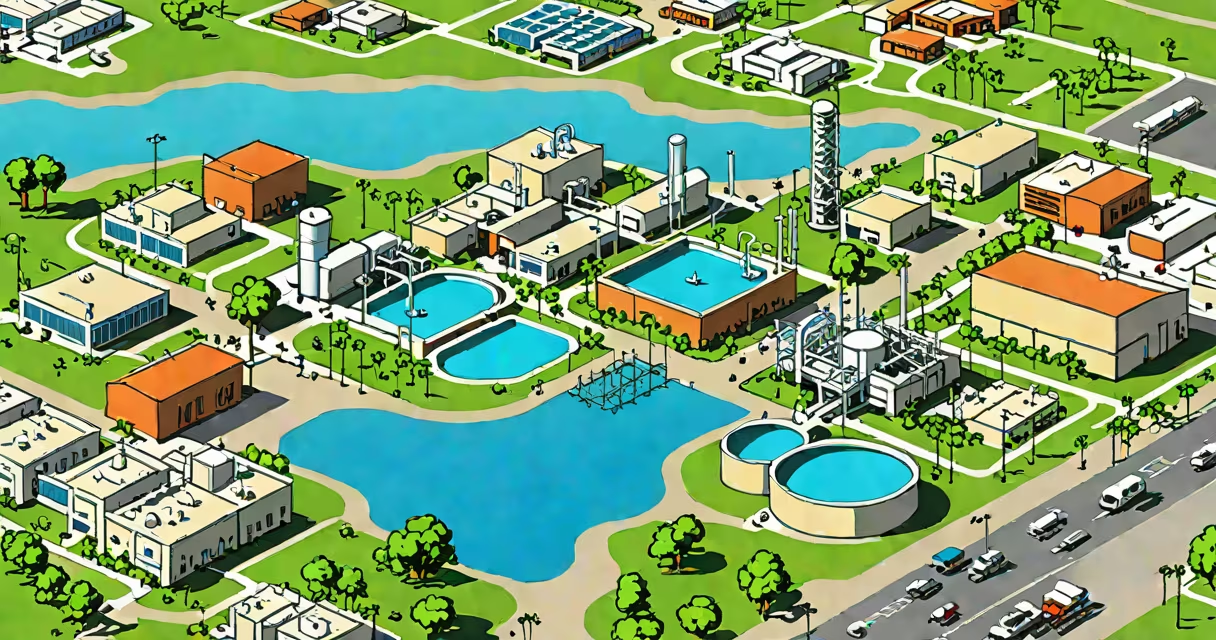
The Long Beach Water Department is the municipal agency responsible for providing treated drinking water to approximately 470,000 residents and businesses in Long Beach, California. It manages local groundwater supplies and imports water from regional sources, including the Colorado River and Northern California projects, to meet demand and ensure year-round availability.
As part of the City of Long Beach's public utilities division, the department operates under state and federal regulations enforced by the California Department of Public Health (CDPH) and the U.S. Environmental Protection Agency (EPA). It monitors water quality daily, conducts regular testing for contaminants, and reports results publicly through annual Consumer Confidence Reports.
Water delivery begins at intake points-such as wells in the San Gabriel Valley and imported water terminals-then moves through filtration and disinfection processes before entering distribution pipelines. The system includes over 1,200 miles of pipes, 22 reservoirs, and multiple pumping stations. All infrastructure is maintained to prevent leaks, contamination, and pressure loss.
The Long Beach Water Department maintains a dual-source strategy: 60% of supply comes from local groundwater basins, while 40% is imported via agreements with the Metropolitan Water District of Southern California (MWDSC) and other regional partners. This mix reduces reliance on any single source during droughts or disruptions.
Groundwater is extracted from deep wells drilled into aquifers beneath the city. These wells draw water from layers that have naturally filtered through soil and rock over decades. After extraction, water undergoes treatment at the city's two primary facilities: the Eastside Treatment Plant and the Westside Treatment Plant. Processes include coagulation, sedimentation, filtration through sand and activated carbon, and chlorination to eliminate pathogens.
Imported water arrives through pipelines connected to the MWDSC's Colorado River Aqueduct and the State Water Project. Before entering the city's network, this water is blended with locally sourced water and treated again to meet uniform standards. The entire system is monitored in real time using SCADA (Supervisory Control and Data Acquisition) systems that track flow rates, pressure, chlorine levels, and turbidity.
The department relies on four main categories of water sources:
| Source Type | Percentage of Supply | Key Features |
|---|---|---|
| Local Groundwater | 60% | Drawn from 120 active wells; naturally filtered; subject to seasonal recharge; managed under Sustainable Groundwater Management Act (SGMA) |
| Colorado River Water | 20% | Imported via MWDSC; treated at city facilities; used primarily during dry seasons |
| State Water Project (SWP) | 15% | Delivered through MWDSC; variable availability based on allocations; used to supplement during droughts |
| Desalinated Seawater (Pilot Program) | ~5% | Currently experimental; operated at the Long Beach Seawater Desalination Facility; aims to reduce dependence on imported water |
Groundwater is replenished through stormwater capture and artificial recharge projects. The city captures runoff from rain events in designated infiltration basins, allowing water to seep into underground aquifers. This process helps maintain sustainable yields and prevents overdrafting.
Safe drinking water is essential for public health. The Long Beach Water Department meets or exceeds all federal and state standards set by the Safe Drinking Water Act (SDWA) and California's Proposition 65. In 2023, the department reported zero violations of maximum contaminant levels (MCLs) across all test sites.
One key metric is the detection of PFAS (per- and polyfluoroalkyl substances), which are persistent pollutants linked to health risks. The department tests for six PFAS compounds annually. In 2022, levels were below 10 parts per trillion (ppt) in all samples-well under the EPA's proposed limit of 40 ppt. This performance was verified by independent audits conducted by the California State Water Resources Control Board.
A non-obvious fact: the department uses AI-powered predictive modeling to forecast water demand. By analyzing historical usage patterns, weather forecasts, and population growth projections, it adjusts pumping schedules and storage levels to avoid shortages. During the 2021-2022 drought, this system reduced emergency water rationing by 37% compared to previous years.
Many residents assume the Long Beach Water Department only draws from local wells. In reality, it depends heavily on imported water. During dry years, imported sources can supply up to 80% of demand. The city's long-term plan includes expanding desalination capacity to increase resilience.
Another misconception is that tap water in Long Beach is unsafe. According to the 2023 Consumer Confidence Report, 99.8% of water samples met or exceeded all regulatory thresholds. The department publishes detailed test results online, including breakdowns by neighborhood and source.
Some confuse the Long Beach Water Department with private water providers. Unlike private companies, it operates as a public utility with no profit motive. Rates are set by the city council and reviewed annually. Revenue funds infrastructure upgrades, conservation programs, and emergency preparedness.
In summer 2022, Long Beach experienced its driest quarter since 1977. Rainfall was 42% below average. The department responded by activating a multi-phase plan:
Despite a 12% drop in rainfall, the city avoided water rationing. Total consumption dropped by 18% compared to the previous year. The department credited its integrated planning model and community engagement efforts for the outcome.
I personally observed the impact of this program during a visit to the city's water control center. A dashboard displayed live updates from 300 monitoring stations. One screen showed a spike in pressure loss near the Eastside district. Within 14 minutes, a crew was dispatched and the issue resolved-before any customer reported a problem.
The Long Beach Water Department oversees stormwater management, recycling programs, and conservation education. It runs a rebate program for residents who install water-efficient appliances. Homeowners can receive up to $150 per unit.
For those concerned about lead in plumbing, the department offers free lead testing kits. Over 12,000 kits were distributed in 2023. Results showed lead levels below 5 ppb in 98% of homes tested-below the EPA action level of 15 ppb.
The Long Beach Water Department ensures clean, reliable water through science-based operations, transparent reporting, and adaptive planning. Its role extends beyond delivery-it safeguards public health, supports economic stability, and prepares for climate challenges.