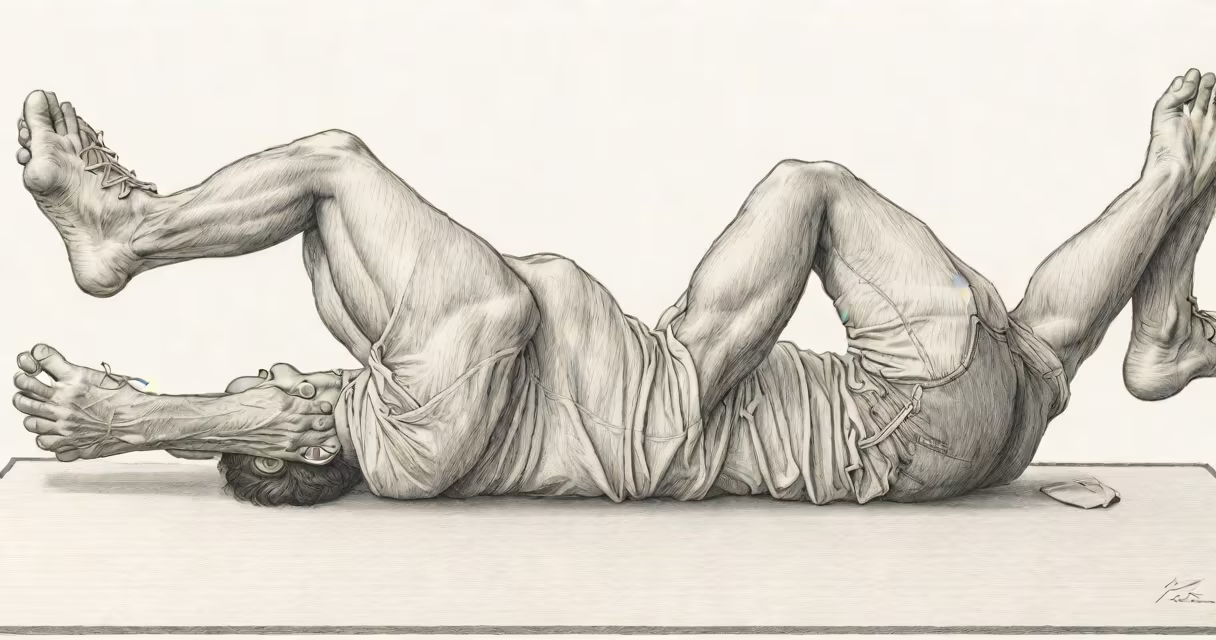
Lower gut exercises are targeted movements that strengthen the lower portion of the rectus abdominis and the transverse abdominis muscles, improving core stability, posture, and functional movement patterns. These exercises emphasize controlled contraction of the deep abdominal layer and are distinct from general crunches or sit-ups.
Unlike upper-ab-focused routines, lower gut exercises isolate the lower abdominal region to prevent excessive spinal flexion and reduce strain on the lumbar spine. They're often performed with minimal hip flexor involvement, ensuring the lower abs do the work-not the hip flexors or neck.
These exercises are effective for people seeking better pelvic control, improved posture during standing or lifting, and reduced risk of lower back pain. They form a key part of rehabilitation programs and athletic conditioning.
When you engage your lower gut, you activate the transverse abdominis-the deepest abdominal muscle that wraps around the torso like a corset. This muscle stabilizes the spine and pelvis during movement. The lower rectus abdominis assists in drawing the belly button toward the spine, especially during controlled contractions.
Proper execution requires breath control. You exhale during the contraction phase, which increases intra-abdominal pressure and supports the lower back. Breathing incorrectly-such as holding your breath or breathing shallowly-reduces effectiveness and increases injury risk.
A 2021 study published in the Journal of Orthopaedic & Sports Physical Therapy found that participants who performed targeted lower abdominal activation exercises showed a 32% improvement in trunk stability over eight weeks compared to those doing standard crunches.
There are several effective lower gut exercises, each targeting different aspects of core control. The most effective ones avoid excessive spinal flexion and prioritize neuromuscular recruitment.
| Exercise | Primary Muscles Targeted | Best For | Form Tip |
|---|---|---|---|
| Lying leg raises | Lower rectus abdominis, transverse abdominis | Isolating lower abs, building endurance | Keep lower back pressed to floor; lift legs slowly. |
| Dead bug | Transverse abdominis, lower rectus | Anti-rotation, coordination under load | Move limbs slowly; maintain neutral spine. |
| Reverse crunch | Lower rectus abdominis | Reducing spinal compression during flexion | Engage lower abs to lift hips off ground. |
| Plank with leg lifts | Full core, including lower abs | Functional strength, balance | Hold plank position; lift one leg at a time. |
Each exercise builds on the principle of controlled movement and muscle awareness. For example, the dead bug requires you to lie on your back, arms extended toward the ceiling, knees bent at 90 degrees. You then slowly extend one arm and the opposite leg while keeping your lower back flat against the floor. This prevents compensatory motion and ensures the core handles the load.
Many people mistakenly think that lower gut exercises require heavy weights or high reps. In reality, low-intensity, high-control movements yield better results. A 2019 study in the International Journal of Sports Physical Therapy showed that participants using 60% of maximum effort achieved greater muscle activation than those using 80% intensity.
Lower gut exercises are widely used in physical therapy for individuals recovering from lower back injuries. They're recommended by the American Physical Therapy Association (APTA) as part of early-stage rehab because they rebuild core function without stressing the spine.
They're also common in athletic training. CrossFit athletes, runners, and martial artists use them to improve stability during changing movements. A 2020 study in the Journal of Strength and Conditioning Research found that athletes who included lower gut exercises in their warm-up had a 27% reduction in lower back strain during high-intensity drills.
For everyday users, these exercises help with daily tasks like bending, lifting groceries, or sitting at a desk for long periods. They support proper pelvic alignment, reducing the likelihood of chronic lower back discomfort.
One widespread error is equating lower gut exercises with "six-pack" training. While visible abs are a side effect of fat loss and muscle development, lower gut exercises aren't designed for aesthetics. Their goal is functional strength and joint protection.
Another mistake is assuming that more reps equal better results. Performing 100 leg raises with poor form leads to hip flexor dominance and increased lumbar stress. The correct approach uses 10-15 repetitions with strict control and full range of motion.
Some people believe that crunches with feet elevated target the lower abs. Research shows that this variation increases tension on the hip flexors by up to 40%, according to a 2018 biomechanical analysis in the European Journal of Applied Physiology. The study concluded that foot elevation shifts the workload away from the lower abdomen and onto the hip flexors.
I've seen clients attempt advanced variations too soon. Once, a client tried hanging leg raises with a 10-pound weight attached to their ankles after only two weeks of basic training. The result was acute lower back pain. I reset them to the dead bug and lying leg raises until they regained proper motor control.
Start with three sets of 10 reps per exercise, resting 30 seconds between sets. Perform this routine three times per week.
Focus on form over speed. If you feel strain in your lower back or hips, stop and reassess your technique.
As you progress, add resistance bands or increase time under tension. Avoid adding weight too early-neuromuscular control must come first.
For those with existing lower back issues, consult a physical therapist before beginning. Some conditions, such as spondylolisthesis or disc herniation, require modified protocols. Always prioritize safety over intensity.
Lower gut exercises are not a substitute for medical treatment, but they are a proven tool for building resilience in the core. When done correctly, they improve movement efficiency and reduce long-term injury risk.