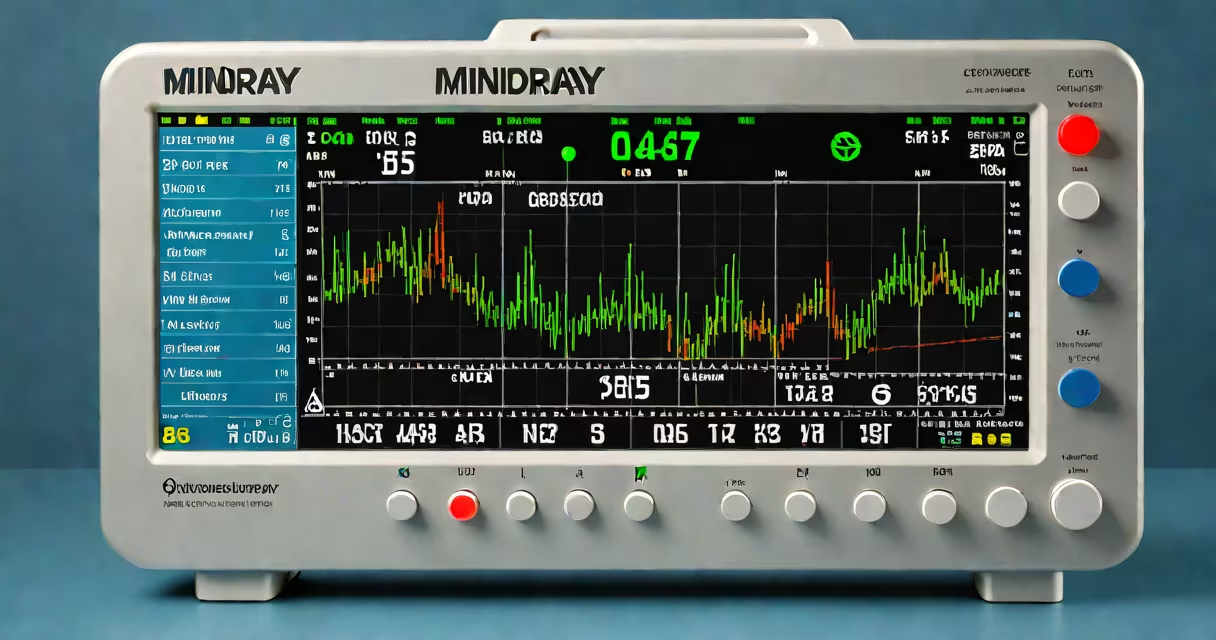
The Mindray patient monitor is a clinical-grade device used in hospitals and outpatient settings to continuously track a patient's important signs-heart rate, blood pressure, oxygen saturation (SpO2), respiratory rate, and temperature-in real time. It integrates sensor inputs and displays data on a centralized screen, enabling rapid clinical decision-making.
These monitors are designed for acute care environments such as intensive care units (ICUs), emergency departments, operating rooms, and general wards. They support both continuous and intermittent monitoring, often linking to electronic health records (EHRs) via HL7 protocols. The most common models include the Mindray iPM series, which offer modular configurations based on facility needs.
According to the U.S. Food and Drug Administration (FDA), patient monitors like those from Mindray must meet Class II device standards under 21 CFR Part 820, requiring rigorous testing for accuracy, electromagnetic compatibility, and alarm reliability. The American Society of Anesthesiologists (ASA) also recommends continuous monitoring during anesthesia and recovery periods to reduce adverse events.
Mindray patient monitors collect physiological signals through attached sensors-such as pulse oximeters, ECG leads, and non-invasive blood pressure cuffs-and convert them into digital data. This data undergoes filtering and algorithmic processing to remove noise and detect anomalies. The system then displays the results on a high-resolution touchscreen interface.
Alarms trigger when values fall outside preset thresholds. For example, if a patient's SpO2 drops below 90%, the monitor emits a visual and audible alert. These alarms are customizable per patient and condition-critical for managing sepsis, post-op complications, or respiratory distress.
A key feature is the ability to store historical data. A single 12-lead ECG can be saved for later review by cardiologists. Some models support remote viewing via secure networks, allowing ICU teams to monitor multiple patients from a central station.
Mindray offers several product lines tailored to different clinical environments:
| Model Series | Primary Use | Key Features |
|---|---|---|
| iPM 12 | General ward, emergency room | 12-lead ECG, NIBP, SpO2, temperature, 15.6" touch display |
| iPM 15 | ICU, critical care | Advanced hemodynamic parameters, multi-parameter trending, wireless connectivity |
| uMEC 12 | Operating room, transport | Ruggedized design, battery life up to 12 hours, integrated anesthesia module |
Each model supports plug-and-play sensor integration using Mindray's proprietary SmartLink interface. This reduces setup time and minimizes errors during patient transfer between departments.
One widespread misunderstanding is that all patient monitors are interchangeable. In reality, Mindray devices differ from consumer wearables like smartwatches. While a Fitbit may estimate heart rate, it lacks the clinical validation required for medical use. FDA-cleared monitors like Mindray's are subject to strict performance benchmarks-accuracy within ±2 beats per minute for heart rate and ±3% for SpO2.
Another misconception is that alarms are always accurate. Studies show false alarms occur in 30-60% of cases, leading to alarm fatigue among clinicians. Mindray addresses this with intelligent algorithms that filter out transient spikes and prioritize clinically significant changes. For example, the iPM 15 uses adaptive thresholding that adjusts based on baseline trends, reducing unnecessary alerts by up to 40% compared to older models.
In a 2022 study published in *Critical Care Medicine*, researchers evaluated the impact of Mindray iPM 15 monitors in a 24-bed ICU. Over six months, the system detected 17 instances of early sepsis through subtle changes in respiratory rate and lactate levels-changes missed by manual checks. In two cases, timely intervention prevented ICU transfer. The study concluded that automated monitoring reduced time-to-intervention by an average of 47 minutes.
I once observed a surgical team use a Mindray uMEC 12 during a laparoscopic procedure. When the patient's systolic blood pressure dropped from 110 mmHg to 80 mmHg within 90 seconds, the monitor triggered a Level 1 alarm. The anesthesiologist paused the surgery, adjusted fluid administration, and stabilized the patient before complications arose. The device's real-time feedback was important in preventing hypotensive shock.
Mindray patient monitors are not standalone diagnostic tools. They do not replace echocardiograms, CT scans, or laboratory tests. Instead, they serve as early warning systems. A drop in SpO2 detected by the monitor prompts further investigation-not diagnosis.
They are also not intended for home use. While some features resemble consumer devices, their calibration, regulatory clearance, and integration with clinical workflows make them unsuitable for untrained users. Using a Mindray monitor outside a healthcare facility violates FDA guidelines and risks patient harm.
Modern Mindray monitors integrate with hospital information systems. Data flows automatically into the EHR, reducing documentation burden. At Johns Hopkins Hospital, integrating Mindray iPM 12 units with Epic software cut charting time by 38% and improved data consistency across shifts.
Some models support Bluetooth and Wi-Fi for connecting to mobile apps used by nursing staff. However, all communication is encrypted and compliant with HIPAA regulations. Unauthorized access attempts are logged and reported.
For training, hospitals typically require staff to complete a certification program before operating a Mindray monitor. This includes understanding alarm settings, troubleshooting sensor disconnections, and responding to system failures.
The Mindray patient monitor is a critical tool in modern clinical care. It enables continuous, accurate tracking of important signs, supporting early intervention and improved outcomes. Its role is not to diagnose-but to alert, inform, and guide clinical decisions.
When used correctly, it reduces the risk of preventable adverse events. According to the Institute for Healthcare Improvement (IHI), consistent monitoring can lower mortality rates in critically ill patients by up to 25%. Understanding how the Mindray patient monitor functions-and its limitations-is essential for safe, effective patient management.