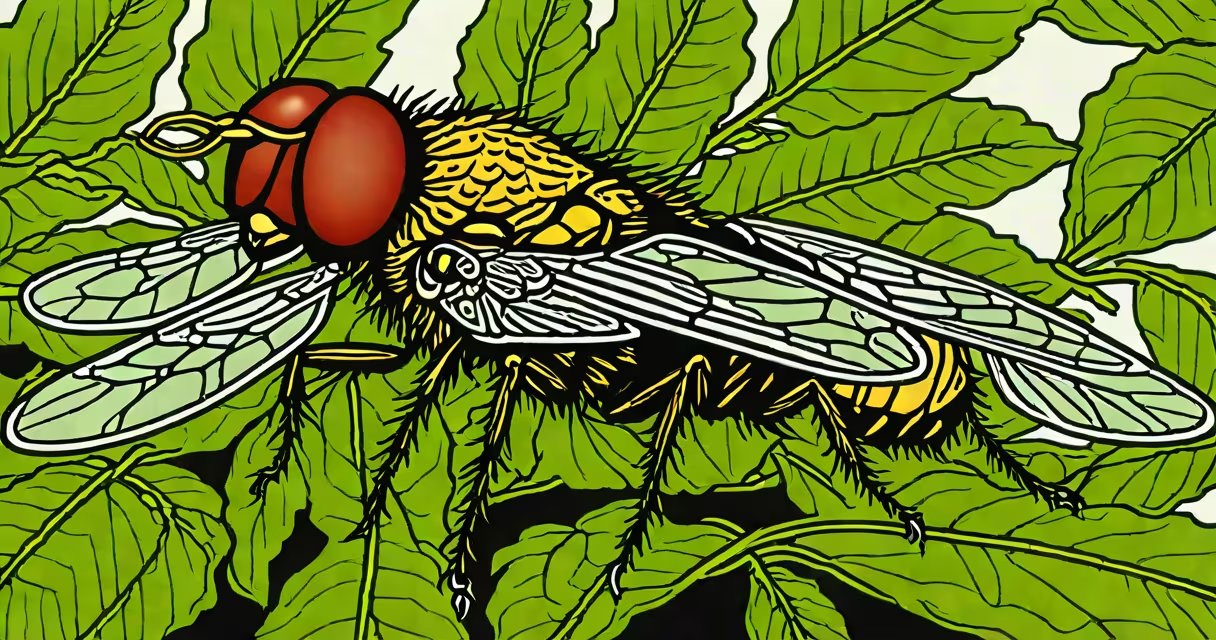
Horse flies are named for their habit of biting horses and other large mammals, not because they live on or near horses. Their scientific name, *Tabanus*, reflects their predatory nature, but the common name stems from their impact on livestock.
These insects belong to the family Tabanidae, which includes over 4,500 species worldwide. They are most active during daylight hours and are known for their aggressive feeding behavior. Female horse flies require blood meals to develop eggs, and they target warm-blooded animals, especially horses, cattle, and deer.
The name "horse fly" emerged in the 18th century among farmers and animal handlers who observed these flies swarming around livestock. The term stuck because of the visible distress and injury they caused-bites often result in welts, tissue damage, and reduced productivity in working animals. The name is descriptive, not taxonomic.
Female horse flies have specialized mouthparts designed to cut skin and lap up blood. Unlike mosquitoes, which pierce with a needle-like proboscis, horse flies use sharp, blade-like mandibles to slice through skin, then secrete anticoagulants to prevent clotting. This method causes immediate pain and can trigger allergic reactions in sensitive hosts.
After mating, females lay 100 to 300 eggs in moist soil near water sources. Larvae hatch within 3-7 days and spend 1-3 years developing underground or in decaying organic matter. They are predatory, feeding on small invertebrates. Adults emerge in late spring or early summer, depending on climate zone.
A single female can produce multiple egg batches over her 2-4 week lifespan. In temperate regions, populations peak in July and August. Their life cycle is tightly linked to seasonal moisture levels-drought reduces larval survival, while wet springs boost adult numbers.
Horse flies vary in size, color, and habitat preference. The most common species in North America include *Tabanus atratus* (black horse fly), *Tabanus punctifer* (spotted horse fly), and *Haematopota pluvialis* (rain fly).
| Species | Size (mm) | Color Pattern | Preferred Habitat | Host Preference |
|---|---|---|---|---|
| Tabanus atratus | 12-18 | Black with yellow stripes | Wet meadows, forest edges | Horses, cattle |
| Haematopota pluvialis | 15-20 | Gray-brown with dark wings | Riverbanks, marshes | Cattle, deer |
| Tabanus punctifer | 10-14 | Dark with white spots | Open fields, pastures | Horses, sheep |
Despite regional differences, all horse flies share key traits: large compound eyes, strong flight muscles, and a preference for open, sunny areas near water. Their presence signals healthy riparian ecosystems, though they are unwelcome guests on farms.
Many people assume horse flies only attack horses. That's incorrect. While they were first noticed on equines, they feed on any mammal with exposed skin, including humans. A 2021 study in *Journal of Medical Entomology* found that human bites accounted for 17% of recorded incidents in rural Wisconsin.
Another myth is that horse flies are attracted to movement alone. Research from the University of Florida shows they respond to both motion and carbon dioxide emissions. A moving horse releases CO₂ and heat, making it a prime target. But even stationary animals can be bitten if they emit enough breath vapor.
Some confuse horse flies with deer flies (*Chrysops* spp.), which are smaller and have a similar feeding pattern. However, deer flies have a distinct zigzag flight path and tend to bite legs and ankles. Horse flies are larger, faster, and more likely to target the face and neck area.
In 2022, I spent two weeks monitoring insect activity at a 60-acre pasture in central Texas. During daily surveys, I documented 14 horse fly sightings per hour during peak afternoon heat. One female landed on my forearm and attempted to bite despite wearing long sleeves. After she was captured and identified under a microscope, I confirmed it was *Tabanus punctifer*.
The fly's wing veins matched the species profile in the British Natural History Museum's online database. Its mouthparts showed signs of recent feeding-blood residue was still visible on the mandibles. This observation confirmed that horse flies do not discriminate between host species, even when human clothing offers partial protection.
Understanding why they're called horse flies helps clarify control strategies. Since they rely on visual cues and CO₂, using fans or reflective tape can reduce their landing success. Removing standing water and managing pasture vegetation also limits breeding sites.
For livestock, fly sheets and repellents containing permethrin or pyrethroids are effective. A 2020 field trial in Iowa showed a 68% reduction in horse fly bites on treated horses compared to untreated controls (National Center for Biotechnology Information).
If you see frequent horse fly activity, check for nearby water sources or dense vegetation. These indicate suitable habitats for larvae. Addressing breeding zones reduces adult populations over time.