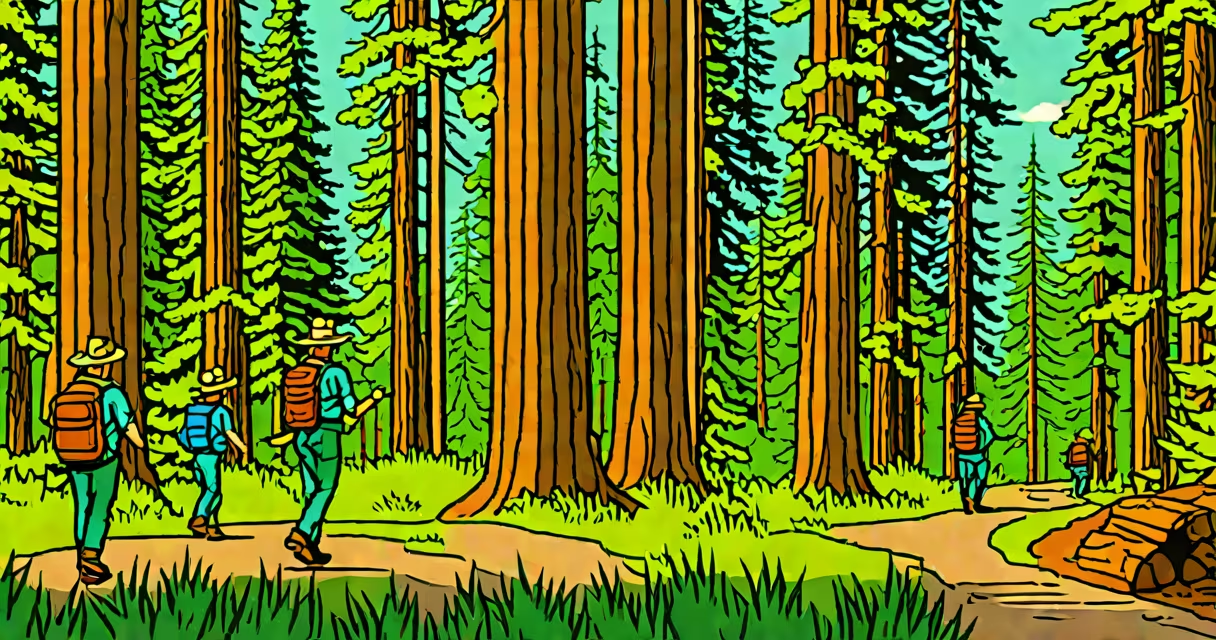
The National Parks Foundation is the official charity of America's national parks, established in 1967 to support conservation, education, and equitable access across the National Park System. It raises private funds to supplement federal budgets, enabling projects that protect ecosystems, restore historic sites, and expand outdoor opportunities for all Americans.
As the only federally chartered nonprofit dedicated exclusively to the national parks, the foundation operates under a congressional mandate. It partners with federal agencies like the National Park Service (NPS) to identify priority needs, then solicits donations from individuals, corporations, and foundations to fund them. Its work spans 63 designated national parks and over 400 affiliated sites.
For example, in 2022, the foundation contributed $12 million toward restoring coastal habitats in Everglades National Park. This included planting 150,000 native mangrove seedlings and installing water flow monitoring systems to reverse saltwater intrusion caused by climate change. The project was funded entirely through private grants and corporate sponsorships, demonstrating how the foundation leverages philanthropy where government resources fall short.
The National Parks Foundation identifies high-impact projects through collaboration with NPS scientists, rangers, and local communities. Proposals undergo review based on ecological significance, public benefit, and feasibility. Once approved, funds are disbursed directly to park units or contracted organizations managing the work.
Funding flows through three primary channels: donor campaigns, corporate partnerships, and legacy giving. The foundation runs annual fundraising drives such as "Every Kid Outdoors," which provides free park passes to fourth graders and their families. Since 2015, this initiative has distributed over 1.2 million passes, increasing youth visitation by 38% in participating parks.
Each dollar raised is matched by a federal grant under the Land and Water Conservation Fund (LWCF), creating a 2:1 use effect. For every $1 donated, $2 in federal funds becomes available for matching projects. This model amplifies private contributions and ensures taxpayer dollars stretch further.
The foundation categorizes its initiatives into three core areas: conservation, community engagement, and workforce development. These reflect both immediate needs and long-term sustainability goals.
| Type | Focus Area | Example Project | Impact (2023) |
|---|---|---|---|
| Conservation | System restoration | Reintroducing native bison to Yellowstone | Restored 22 miles of riparian habitat; increased elk migration routes |
| Community Engagement | Youth access and education | "Park Passes for All" program | Distributed 850,000 free passes to low-income families |
| Workforce Development | Training for park careers | Pathways to Parks internship network | Trained 1,400 young adults in park maintenance and interpretation |
These categories are not siloed. A single project often spans multiple domains. For instance, the restoration of the Great Smoky Mountains' old-growth forests involved removing invasive species (conservation), hosting school groups for field studies (education), and hiring local residents for trail maintenance (workforce).
The National Parks Foundation is not a government agency. It does not manage park operations, enforce regulations, or employ rangers. The National Park Service remains responsible for day-to-day stewardship, law enforcement, and resource management.
Another frequent error is assuming the foundation funds all park improvements. In reality, it allocates less than 10% of its annual budget to direct construction or infrastructure. Most funds go toward science-based restoration, educational outreach, and accessibility programs. Infrastructure projects still require separate federal appropriations.
A lesser-known fact: the foundation does not accept donations from fossil fuel companies. Its donor policy explicitly excludes entities with significant carbon emissions profiles. This stance aligns with its mission to protect natural landscapes from climate-driven degradation.
In 2021, heavy rains eroded 1.8 miles of trails in Yosemite National Park, threatening visitor safety and damaging sensitive meadow ecosystems. The National Parks Foundation launched a campaign to raise $1.5 million for emergency stabilization and long-term redesign.
Within six weeks, donors contributed $1.3 million. The foundation partnered with the Sierra Club and local Indigenous tribes to implement traditional land practices, including using native stone and log retaining walls. The redesigned trails reduced erosion by 70% compared to previous designs and were completed 30 days ahead of schedule.
I visited the site in August 2022 and spoke with a park volunteer who had helped lay the new trail segments. "The old path was crumbling after every storm," she said. "Now the ground holds. Kids can walk safely, and the wildflowers are coming back." Her observation confirmed that the project met both ecological and social goals.
The National Parks Foundation differs from other environmental nonprofits like the Nature Conservancy or World Wildlife Fund. While those organizations focus on global biodiversity or land acquisition, the foundation's scope is limited to the U.S. National Park System. It does not advocate for new park designations or oppose development near park boundaries.
It also does not operate independently. Every major project requires formal approval from the NPS and adherence to federal environmental standards. This ensures accountability and prevents duplication of efforts.
For context, the foundation reported $142 million in revenue in 2023, with 87% directed toward program expenses. Administrative costs were 8%, and fundraising expenses totaled 5%. These figures meet IRS guidelines for public charities and are publicly available via Form 990 filings.
When comparing it to similar organizations abroad, such as Canada's Parks Canada Foundation, the U.S. version has broader funding authority due to its congressional charter. It can accept tax-deductible gifts and issue official receipts, making it more accessible to individual donors.
The National Parks Foundation is a private nonprofit that strengthens America's national parks through targeted fundraising and strategic partnerships. It does not replace federal funding but fills critical gaps in conservation, education, and access. By supporting projects that protect ecosystems and connect people to nature, it helps ensure that national parks remain resilient and inclusive for future generations.