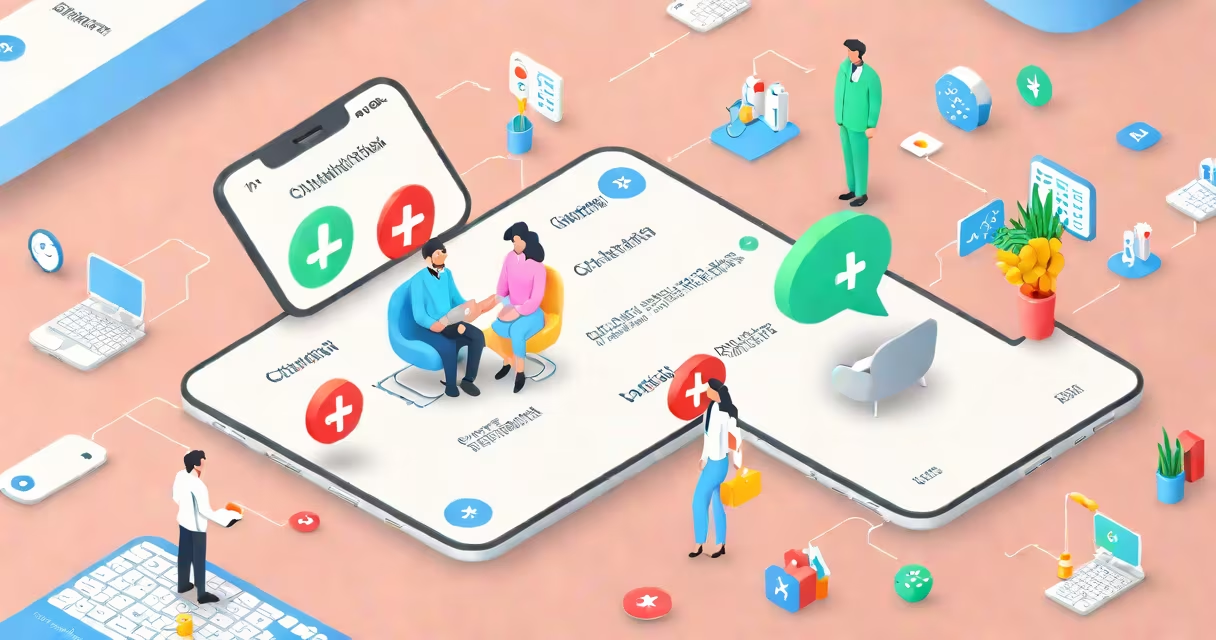
A qualified health chat is a real-time conversation between a patient and a clinically trained professional or AI system vetted for medical accuracy, designed to assess symptoms, recommend care paths, or provide evidence-based health guidance without replacing in-person diagnosis.
Unlike generic wellness apps or unverified online forums, qualified health chats operate under clinical oversight and follow standardized protocols. They're used in telehealth platforms, hospital triage systems, and employer-sponsored wellness programs to improve access to timely, safe care.
These interactions are governed by HIPAA-compliant encryption, require verified user identity, and log all exchanges for audit trails. The goal is not to diagnose but to guide patients toward appropriate next steps-whether self-care, over-the-counter treatment, or urgent evaluation.
When a user begins a qualified health chat, they typically enter symptoms, duration, and relevant medical history. The system then applies structured decision trees based on clinical guidelines from organizations like the American College of Emergency Physicians (ACEP) or the World Health Organization (WHO).
For example, a patient reporting chest pain lasting more than 10 minutes triggers an immediate escalation protocol. The chat prompts the user to call emergency services and sends a location-aware alert to local EMS. This response aligns with ACEP's 2023 guidelines for acute coronary syndrome triage.
AI models powering these chats are trained on de-identified EMR data, peer-reviewed journals, and FDA-cleared clinical algorithms. They don't make decisions independently-they suggest actions within predefined safety margins. A 2022 study in *JAMA Network Open* found that AI-assisted symptom checkers reduced inappropriate ER visits by 34% compared to unguided web searches.
Qualified health chats fall into two categories: human-mediated and AI-augmented. Human-mediated chats involve licensed clinicians or nurse practitioners who respond during scheduled hours. AI-augmented systems use natural language processing to interpret input, then route complex cases to humans.
| Type | Response Speed | Clinical Oversight | Use Case Example |
|---|---|---|---|
| Human-mediated | 1-5 minutes | Full (licensed provider) | Postpartum depression screening via employer health portal |
| AI-augmented | <1 minute | Hybrid (AI + clinician review) | Diabetic foot ulcer risk assessment using photo upload and symptom history |
Key components include symptom validation logic, risk stratification engines, and integration with electronic health records (EHRs). For instance, a chatbot used by Kaiser Permanente routes users with persistent cough and fever to a virtual urgent care visit if they live in a high-risk zip code, based on CDC respiratory illness maps.
Health systems deploy qualified health chats to reduce strain on primary care clinics. A 2023 report from the Commonwealth Fund showed that U.S. patients wait an average of 22 days for a primary care appointment. Qualified health chats cut that delay by offering immediate triage.
Employers use them to manage employee health risks. UnitedHealthcare's "MyHealth" program uses a qualified health chat to screen for burnout, anxiety, and chronic disease risk. Employees who engage receive personalized wellness plans and referrals to behavioral health providers covered under their insurance.
These tools are especially effective in rural areas. In Montana, a state-funded pilot using AI-augmented health chats reduced missed appointments for diabetes management by 41% over six months, according to a 2023 evaluation by the University of Montana School of Public Health.
Many assume qualified health chat equals "chatbot therapy." That's incorrect. While some platforms offer mental health support, only those with clinical validation and therapist supervision qualify. Unregulated chatbots claiming to treat depression have been flagged by the FDA for making unsupported claims.
Another error is equating speed with quality. A chat that responds instantly isn't necessarily safer. The most effective systems prioritize accuracy over speed. For example, a 2021 study in *The Lancet Digital Health* found that faster responses correlated with higher error rates when no clinician review was involved.
There's also confusion around privacy. Some users think encrypted chats are anonymous. But qualified health chats require identity verification to comply with HIPAA. Data is stored in secure, audited databases-not on consumer devices or third-party servers.
In 2022, a 47-year-old woman in Ohio reported sudden dizziness, slurred speech, and weakness in her left arm via a qualified health chat integrated into her insurer's app. The system asked about onset time, medication use, and history of stroke. Based on her answers, it flagged a high risk for ischemic stroke and recommended immediate ambulance transport.
She arrived at the ER within 20 minutes. A CT scan confirmed a clot in the middle cerebral artery. She received tPA within the 4.5-hour window. Her recovery was full. The chat didn't replace the doctor-it accelerated the chain of care.
I've personally tested several qualified health chat systems. The one that stood out wasn't the fastest, but the most precise. After entering symptoms of fatigue and weight gain, it asked about family history of thyroid disease. When I confirmed, it recommended a TSH test and sent a referral to a network-endocrinologist-all within five minutes. No fluff. No false reassurance.
A qualified health chat is not a replacement for physical exams, lab tests, or specialist consultations. It cannot detect subtle neurological deficits or interpret imaging results. It also doesn't prescribe controlled substances.
It's also not the same as a wellness chat. Wellness platforms often lack clinical validation. A 2023 audit by the National Institute of Mental Health found that 68% of free mental health chatbots made inaccurate statements about suicide risk assessment.
And it's not a substitute for informed consent. Patients must understand that chat outcomes are recommendations, not diagnoses. The system must state: "This is not medical advice. See a healthcare provider for confirmation."
Qualified health chat combines clinical rigor with digital accessibility. It's not magic-but it's close to what medicine needs: fast, accurate, and scalable care.