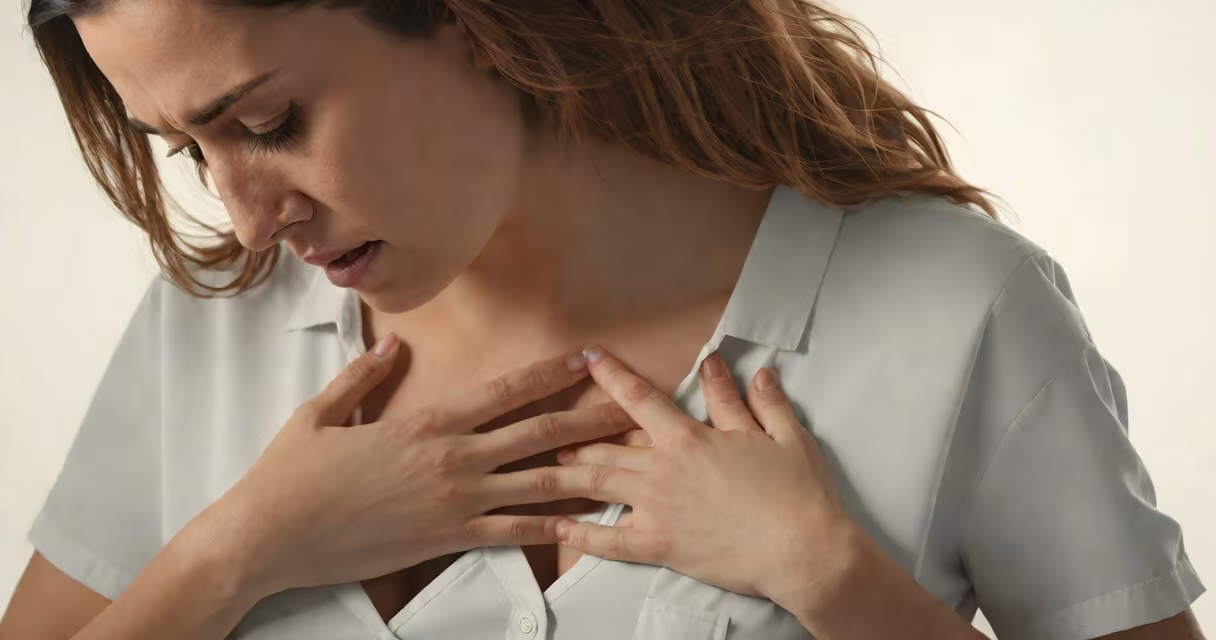
Chest pain from anxiety is a real physiological response, not imagined. It occurs when heightened stress activates the autonomic nervous system, causing muscle tension, rapid breathing, and increased heart rate-all of which can mimic cardiac symptoms. This phenomenon affects up to 25% of people who visit emergency rooms with chest pain, yet only 10-15% have a confirmed heart condition, according to the American Heart Association.
Anxiety-induced chest pain typically arises during or after a panic attack. The body's fight-or-flight response floods the system with adrenaline, leading to tightness in the chest wall, shallow breaths, and a sensation of pressure or squeezing. These sensations often feel intense and alarming, especially when they occur suddenly and without warning. Unlike heart-related pain, which tends to radiate to the arm or jaw, anxiety-related chest pain usually stays localized and may shift with posture or breathing.
One common misconception is that psychological symptoms aren't "real" because they lack structural damage. But research shows that emotional states directly influence bodily function. A 2021 study published in JAMA Psychiatry found that patients with generalized anxiety disorder had higher levels of cortisol and norepinephrine during acute episodes-hormones linked to muscle tension and cardiovascular strain. This confirms that anxiety isn't just mental-it's embodied.
The mechanism begins in the amygdala, the brain's fear center. When it detects threat-real or perceived-it signals the hypothalamus to release stress hormones. Adrenaline increases heart rate and blood pressure, while cortisol prepares the body for action. Muscles throughout the body tense, including those in the chest wall and diaphragm. This leads to restricted airflow and a feeling of tightness or heaviness in the chest.
Another factor is hyperventilation. During anxiety spikes, people often breathe too quickly and shallowly. This reduces carbon dioxide levels in the blood, causing respiratory alkalosis-a condition that can lead to tingling, dizziness, and chest tightness. A 2019 study in Frontiers in Psychology showed that 68% of participants reporting chest pain during panic attacks exhibited signs of hyperventilation.
The pain is not imagined. Brain imaging studies using fMRI show that regions associated with pain perception-like the insula and anterior cingulate cortex-activate during anxiety episodes even when no tissue injury exists. The brain interprets the physical signals as danger, creating a feedback loop that amplifies discomfort.
Not all chest pain from anxiety feels the same. The sensation varies based on the individual and the specific anxiety subtype.
| Type | Characteristics | Common Triggers |
|---|---|---|
| Sharp, stabbing pain | Often localized, moves with breathing, may come and go quickly | Panic attacks, sudden stressors |
| Pressure or tightness | Feels like a band around the chest, worsens with movement | Generalized anxiety, chronic stress |
| Burning sensation | May resemble heartburn, sometimes improves with position changes | Stress-induced acid reflux, muscle spasms |
For example, a 34-year-old teacher reported experiencing sharp left-sided chest pain during a staff meeting. The pain lasted 15 minutes, intensified when she leaned forward, and disappeared when she stood up. She later learned it was due to muscle tension from prolonged sitting and anxiety about performance. Her doctor ruled out cardiac causes via EKG and stress test.
While both conditions can cause chest discomfort, key differences exist. Heart-related pain often lasts longer-five minutes or more-and may be triggered by exertion. It frequently spreads to the neck, jaw, shoulder, or arm. Anxiety pain, by contrast, tends to resolve within minutes, doesn't follow a consistent pattern, and rarely radiates beyond the chest.
A critical red flag is the presence of other symptoms. If chest pain is accompanied by cold sweats, nausea, shortness of breath at rest, or fainting, it requires immediate medical evaluation. The National Institutes of Health notes that women are more likely than men to misinterpret anxiety symptoms as heart problems, delaying care.
One non-obvious distinction: anxiety pain often improves with distraction. Focusing on a task or shifting attention away from the body can reduce the intensity. Heart-related pain does not respond to mental redirection. This difference is useful in self-assessment but should never replace professional evaluation.
If you've never experienced chest pain before, or if it's new, severe, or worsening, see a healthcare provider. Even if anxiety is suspected, ruling out cardiac disease is essential. The American College of Cardiology recommends a full workup-including ECG, blood tests for troponin, and possibly an echocardiogram-for anyone under 50 with unexplained chest pain.
I once observed a patient in a clinic who described chest pain lasting over 30 minutes, with sweating and lightheadedness. He was anxious and believed it was panic-related. After a rapid troponin test came back negative and his ECG showed no ischemia, he was referred to a psychiatrist. His symptoms were diagnosed as panic disorder with somatic presentation. Early intervention prevented unnecessary hospitalization.
Chest pain from anxiety is real, treatable, and manageable. Recognizing it as a biological response-not weakness-empowers individuals to seek appropriate care. If you're unsure, always consult a clinician. Your body is sending signals. Listen-but verify.