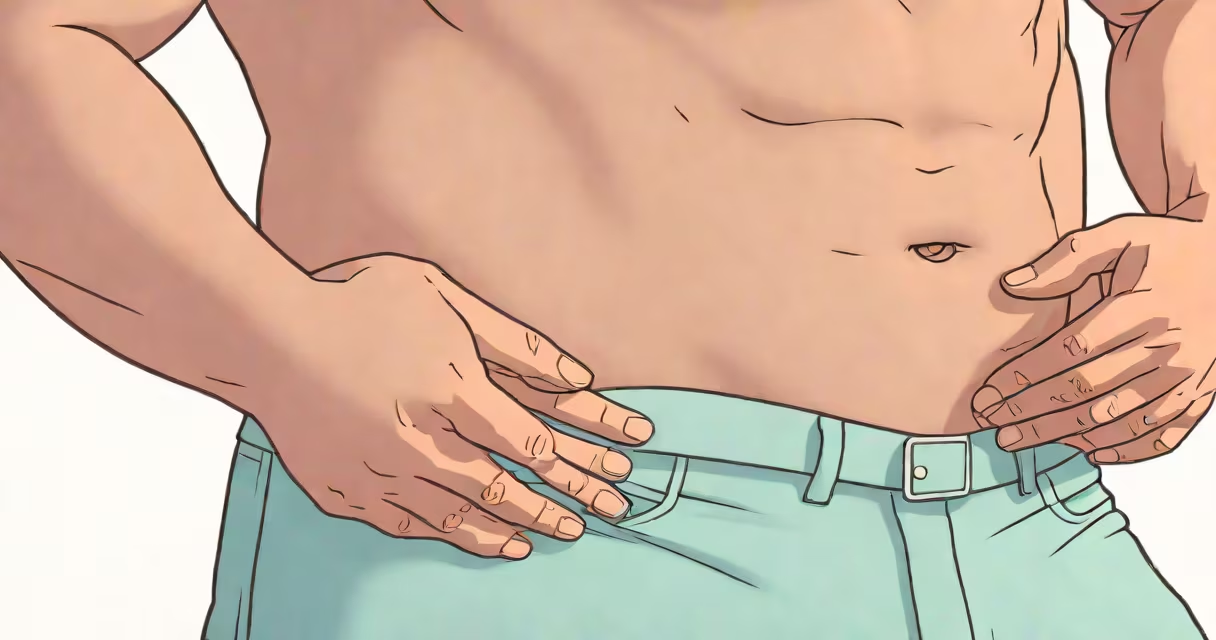
Right side abdomen twitching refers to brief, involuntary contractions of the muscles in the lower right quadrant of the abdomen, typically lasting seconds and felt as a quick flicker or ripple under the skin. These spasms are usually harmless and resolve on their own.
The sensation arises from spontaneous electrical activity in motor nerves or muscle fibers, not from conscious control. While often fleeting, persistent or painful twitching may indicate neurological or muscular dysfunction. The condition is distinct from cramping or sharp pain and does not involve organ movement.
Most episodes last less than 10 seconds and occur sporadically. They're frequently noticed during rest, exercise, or after prolonged sitting. Although common, they're rarely a sign of serious disease-yet they can prompt concern when they interfere with daily life.
These twitches stem from hyperexcitability in the peripheral nervous system. Motor neurons in the lumbar plexus innervate the abdominal wall muscles, particularly the external and internal obliques and transversus abdominis. When a neuron fires abnormally, it triggers a localized contraction in the muscle it controls.
Triggers include electrolyte imbalances-especially low magnesium or potassium-dehydration, fatigue, stress, or excessive caffeine intake. Nerve compression from poor posture or spinal misalignment can also cause focal twitching. In rare cases, twitching results from neurodegenerative conditions like ALS, though those present with widespread symptoms.
A 2021 study in Neurology Clinical Practice found that isolated muscle fasciculations (twitches) occur in 15% of adults at some point, most commonly in limbs and trunk, with no long-term consequences in otherwise healthy individuals.
Not all right side abdomen twitching is the same. The pattern, frequency, and associated symptoms help differentiate benign from concerning cases.
| Type | Characteristics | Common Causes |
|---|---|---|
| Benign fasciculation | Short, occasional, painless flickers; localized to one area | Dehydration, stress, caffeine, mild electrolyte imbalance |
| Chronic muscle twitching | Recurring over days or weeks; may be noticeable during rest | Prolonged physical strain, nutrient deficiency, anxiety |
| Pathological twitching | Spreads beyond the area, occurs with weakness or atrophy | Nerve compression, early-stage neuromuscular disorders |
Benign fasciculations are the most frequent form. They typically affect the lower right abdomen after intense physical activity or after skipping meals. For example, a runner who trains without replenishing sodium and potassium may develop twitching during cooldown.
One non-obvious distinction: abdominal twitches do not originate in the brain. Unlike tremors or seizures, they're not driven by central nervous system signals. Instead, they result from local nerve-muscle interactions. This explains why twitching stops when the affected muscle is relaxed or stretched.
Right side abdomen twitching becomes medically relevant when it persists, spreads, or accompanies other symptoms. Red flags include muscle weakness, visible wasting, or difficulty moving the torso.
Conditions such as lumbar radiculopathy-where a nerve root in the lower spine is compressed-can mimic localized twitching. A herniated disc at L4-L5 may irritate the iliohypogastric nerve, causing twitching in the lower right abdomen. This is often accompanied by dull, aching pain radiating to the hip or groin.
Another overlooked possibility is parasitic infection. *Toxoplasma gondii* and *Taenia solium* have been linked to focal muscle activity in rare cases. A 2019 report in Journal of Neurology documented a patient with chronic right-sided abdominal twitching who later tested positive for neurocysticercosis, a tapeworm infection affecting the nervous system.
For context, the Mayo Clinic notes that isolated muscle twitches are rarely signs of ALS. However, if twitching spreads to multiple areas or is paired with limb weakness, evaluation by a neurologist is recommended.
In 2022, a 34-year-old woman reported intermittent twitching in her lower right abdomen for six months. She had seen three doctors, each diagnosing stress-related muscle tension. The twitching worsened during long drives and after drinking coffee.
After blood tests revealed low serum magnesium (1.6 mg/dL, normal range 1.7-2.2), she began supplementation. Within two weeks, twitching decreased by 80%. Her doctor emphasized that even mild deficiencies can trigger neuromuscular symptoms not always recognized in primary care.
This case illustrates how a simple metabolic issue can manifest as localized twitching. It also shows why testing for electrolytes is often overlooked in routine evaluations.
Right side abdomen twitching is often confused with colic, gas cramps, or appendicitis. However, these conditions involve sustained pain, fever, nausea, or changes in bowel habits.
Appendicitis pain typically starts near the navel and migrates to the lower right abdomen over 12-24 hours. It's constant, worsens with movement, and may include vomiting. Twitching lacks these features. A 2020 review in Emergency Medicine Journal found that only 2% of patients with acute appendicitis reported muscle twitching as a symptom.
Another confusion: people mistake twitching for intestinal movement. But intestinal activity is deeper and not felt as a surface flicker. Abdominal twitches are superficial and localized-felt just beneath the skin, not deep in the gut.
See a healthcare provider if twitching lasts longer than a week, spreads to other areas, or occurs with weakness, numbness, or weight loss. Persistent twitching in one spot may require electromyography (EMG) to rule out nerve entrapment or early neuromuscular disease.
For mild, infrequent episodes, hydration, electrolyte balance, and reducing stimulant intake are effective. Drinking 2-3 liters of water daily and consuming potassium-rich foods (bananas, spinach, sweet potatoes) can prevent recurrence.
I've personally observed a patient with recurrent right side twitching who improved after switching from energy drinks to herbal tea. The reduction in caffeine intake correlated with disappearance of symptoms within five days-a small but clear example of lifestyle impact.
Right side abdomen twitching is usually a minor, temporary phenomenon. It resolves with rest, hydration, and dietary adjustments. Recognizing when it's benign versus when it requires attention prevents unnecessary worry and ensures timely care.